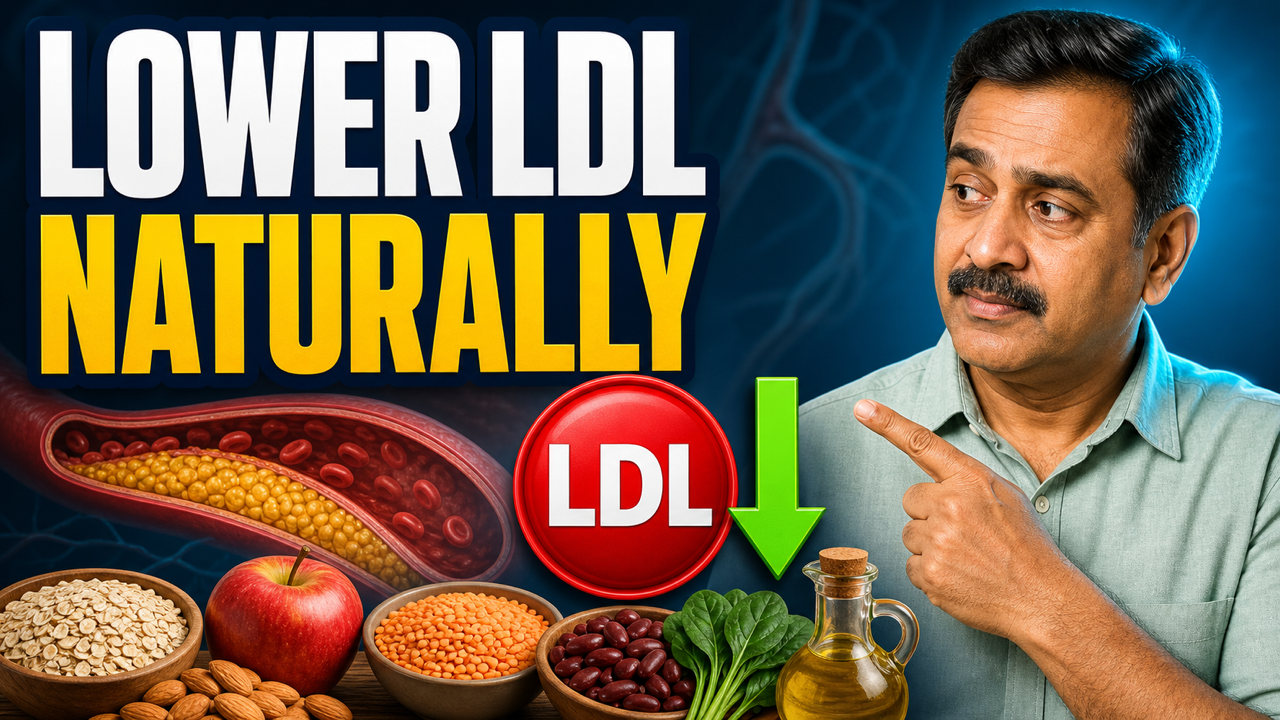
In short: You can lower LDL cholesterol naturally — but it helps to know how much. Diet and lifestyle changes typically lower LDL by around 5–15%, and stacking several together (oats and psyllium, plant sterols, nuts, pulses, soy, weight loss and exercise) can add up to more. Statins lower it by 30–50% or more. So natural steps are genuinely worth taking and are the right first move for many people — but if your risk is high or your LDL is very raised, they usually work best alongside medicines, not instead of them. Talk to your doctor before starting supplements, especially red yeast rice.
Key takeaways
- Food changes work, modestly. Most single steps lower LDL by a few per cent — they add up when combined.
- The strongest evidence is for plant sterols (~2 g/day), soluble fibre from oats and psyllium, nuts, pulses and soy.
- Red yeast rice is a statin in all but name — it contains monacolin K, is unregulated, and carries the same risks. Do not treat it as a “natural” shortcut.
- Fish oil does not lower LDL — it may raise it slightly. It is taken for triglycerides, not LDL.
- Statins lower LDL by 30–50%+ — far more than diet alone. Natural steps complement them; they rarely replace them.
- Never stop a prescribed medicine to try a natural approach without talking to your doctor.
If you have just been told your LDL cholesterol is high, there is a good chance your first instinct was to search for a natural fix. Oats? Garlic? Some supplement a relative swears by? It is one of the most common questions we hear at HHIF: “Can I bring my cholesterol down without medicines?”
The honest, evidence-based answer is genuinely encouraging — but it comes with an important caveat. Several natural approaches really do lower LDL cholesterol, and the science behind them is solid. But the strongest results do not come from a single “miracle food.” They come from changing your overall eating pattern and adding a few specific, well-proven items. And for people at high risk, even a perfect home programme is usually not a substitute for medication.
This guide walks through what the peer-reviewed evidence actually shows — the real numbers, the honest limitations, and where each approach fits. New to these topics? Start with our plain-language guide to beating bad cholesterol and our overview of understanding heart health.
Why LDL is worth targeting at all
LDL cholesterol is worth taking seriously because it is not just a number on a lab report. Across randomised LDL-lowering trials, larger LDL-C reductions track with lower major vascular risk — meaning the more you lower LDL, the more you reduce the risk of heart attacks and strokes. That is what makes LDL a sensible target for both home measures and medical treatment.
A quick note on how this evidence was judged. Priority here goes to PubMed-indexed meta-analyses and systematic reviews of randomised controlled trials, individual randomised trials where especially informative, Cochrane-style syntheses, and official sources such as NHLBI, WHO, NCCIH, ACC/AHA guidance, and FDA or EFSA material where supplement safety matters. Evidence is treated as stronger when multiple consistent randomised trials point the same way, and weaker when data are short-term, geographically narrow, highly variable, or dependent on poorly standardised supplements.
It is worth being upfront about the main limitation across all “natural remedy” research: many trials are short, use very different foods or supplement formulations, report side effects incompletely, and measure blood markers rather than actual heart attacks. This matters most for red yeast rice, berberine, garlic and green tea extracts, where what is actually in the product can vary a great deal.
Eating patterns: which ones actually lower LDL?
Vegetarian and vegan diets — the strongest pattern
Among the named dietary patterns, vegetarian and vegan diets show the largest LDL reduction in recent randomised evidence. In a 2023 meta-analysis of 30 randomised trials, plant-based diets lowered LDL-C by 0.30 mmol/L (roughly 11.6 mg/dL) compared with omnivorous diets, and also reduced apolipoprotein B by about 14%. That is a real, clinically relevant effect — though still well short of typical statin potency.
One important nuance: “plant-based” does not automatically mean “cholesterol-lowering.” The randomised data are strongest for patterns that are not only meat-free but also lower in saturated fat and richer in fibre, legumes, soy and minimally processed plant foods. In a randomised comparison of a low-fat vegan diet with a Mediterranean diet, the low-fat vegan diet improved lipids and body weight more — reinforcing that the benefit comes from the combination of more fibre, less saturated fat, and replacing animal foods, not from a label. Evidence quality: high.
Mediterranean diet — modest for LDL, excellent overall
For LDL specifically, the Mediterranean diet is a modest performer — but it has one of the best overall cardiovascular evidence bases of any pattern. In a Cochrane-style review of Mediterranean-style diets in higher-risk adults, Mediterranean-style advice or food provision lowered LDL-C by about 0.15 mmol/L (roughly 5.8 mg/dL) versus minimal intervention.
The practical message: Mediterranean eating is genuinely worthwhile, especially because it improves much more than LDL alone — but if LDL reduction is your main goal, do not expect statin-like results from it by itself. At home this means replacing butter and other saturated fats with extra-virgin olive oil, emphasising vegetables, fruit, legumes, wholegrains, nuts and fish, and cutting ultraprocessed foods and high-saturated-fat meats. Our guide to heart-healthy Indian cooking shows how these principles translate into an Indian kitchen. Evidence quality: moderate.
DASH diet — best if blood pressure is also an issue
The DASH diet lowers LDL modestly. A meta-analysis of controlled DASH trials found a mean LDL-C reduction of about 3.53 mg/dL, alongside broader benefits for blood pressure and some cardiometabolic markers. If you are dealing with both high blood pressure and mildly raised LDL, DASH is especially attractive because it tackles both at once. For LDL alone, though, its effect is usually smaller than plant sterols, psyllium, or a stronger plant-based pattern.
DASH means plenty of fruit, vegetables, legumes, wholegrains and low-fat dairy, with less sodium and saturated fat. Safety is generally good, though anyone with advanced kidney disease or conditions requiring potassium or fluid restriction needs individual advice. Evidence quality: moderate.
Low-carbohydrate diets — not a reliable LDL strategy
This is where we have to be straight with you. Low-carbohydrate diets are the least reliable of the named patterns for lowering LDL. A meta-analysis of carbohydrate-restricted diets found no significant difference in LDL-C at 6, 12 and 24 months — even though these diets often improve weight, triglycerides and HDL. More recent work suggests that in adults of normal body weight, and especially with ketogenic or very-low-carb high-fat patterns, LDL-C can increase, sometimes substantially.
This does not mean all lower-carb eating is bad. Some people with insulin resistance or high triglycerides benefit metabolically in other ways. But if LDL-C is your primary target, it is not the right default — particularly if carbohydrate is replaced with large amounts of saturated fat. Evidence quality for LDL lowering: low.
The specific foods and fibres with the best evidence
Plant sterols and stanols — the most predictable option
Plant sterols and stanols are among the most predictable non-drug LDL-lowering interventions available. Meta-analyses of plant sterols and stanols show that around 2 g/day in fortified foods or supplements lowers LDL-C by about 12 mg/dL, or roughly 4.1–15%, with larger and more consistent effects at intakes of 2 g/day or more. In phytosterols in familial hypercholesterolaemia, LDL-C fell by 10–15% with about 2.3 ± 0.5 g/day over roughly 6.5 weeks.
This is one of the easiest things to do at home because the dosing is fairly standardised — a fortified yoghurt drink, spread or supplement providing about 2 g/day, ideally split across meals. Because plant sterols reduce cholesterol absorption in the intestine, they work rather like a food-based version of the ezetimibe mechanism, and are best used alongside statins rather than instead of them when big reductions are needed. Evidence quality: high.
Psyllium and soluble fibre — the best non-prescription add-on
Psyllium is among the best-supported non-prescription options. In a systematic review and meta-analysis of psyllium, psyllium at a median dose of about 10.2 g/day lowered LDL-C by 0.33 mmol/L, with a similar effect on non-HDL cholesterol; a 2024 Plantago meta-analysis found a near-identical 0.35 mmol/L reduction. A broader 2023 meta-analysis of soluble fibre supplementation found soluble fibre reduced LDL-C by 8.28 mg/dL, with each extra 5 g/day associated with about 5.57 mg/dL further reduction.
That is a big enough effect to matter clinically. A practical home regimen is 5 g once or twice daily with plenty of water, usually with or before meals, building up gradually so your gut adjusts. Because psyllium works by binding in the intestine and altering bile acid handling rather than by blocking cholesterol production in the liver, it is mechanistically complementary to statins and is generally used as an add-on rather than a substitute. Evidence quality: high.
Oats and oat beta-glucan — the easiest daily habit
Oat beta-glucan is one of the most practical evidence-based home interventions. Reviews of oat beta-glucan show oat consumption is associated with about a 7% reduction in LDL-C on average, and more recent systematic review evidence confirms that both whole oats and isolated beta-glucan improve lipid profiles. The target used in many trials and regulatory discussions is about 3 g/day of oat beta-glucan, achievable with a substantial serving of oats or oat bran daily.
The key is replacement, not addition: a daily oats breakfast works best when it takes the place of refined cereals or butter-rich bakery foods, rather than being piled on top of an unchanged diet. Evidence quality: moderate to high.
Legumes and pulses — modest but consistent
Pulses lower LDL modestly but reliably. A recent meta-analysis of pulses reported a pooled LDL-C reduction of 0.19 mmol/L (about 7.3 mg/dL), and earlier evidence also concluded that diets rich in non-soy legumes reduce total and LDL cholesterol.
A realistic target is at least one daily serving of beans, lentils, chickpeas or peas, typically replacing refined starches or part of the animal-protein portion of a meal. Their real value is not just their own effect but the way they shift the whole diet towards more fibre and less saturated fat. Day-to-day, the limit is usually digestive tolerance and adherence rather than any safety concern. Evidence quality: moderate.
Soy protein — small but well replicated
Soy has a smaller but well-replicated effect. A meta-analysis of 46 studies identified by the FDA found soy protein reduced LDL cholesterol by approximately 3–4%, and earlier meta-analysis found soy protein containing isoflavones lowered LDL-C by 0.18 mmol/L — about 7.0 mg/dL or 4.98%. Soy product consumption in another meta-analysis lowered LDL-C by about 6.94 mg/dL.
The trial-based target is about 25 g/day of soy protein, from tofu, soy milk, tempeh, edamame or soy yoghurt. As with everything here, soy works best when it replaces foods rich in saturated fat rather than simply accompanying them. Evidence quality: moderate to high.
Nuts — favourable, with a caveat on precision
The evidence for nuts is favourable overall, though the exact pooled figure varies by nut type. A systematic review of foods and LDL cholesterol concluded that hazelnuts and walnuts caused small-to-moderate LDL reductions, and an updated meta-analysis reported an advantageous effect of nut consumption on LDL-C — although the precise averaged magnitude was not specified in the source excerpts available for this review.
The most evidence-consistent pattern is about 30 g/day of unsalted nuts, especially when they replace biscuits, crisps, confectionery or processed meat rather than being added in excess. Evidence quality: moderate for a class effect.
Supplements: the honest verdict on each
Red yeast rice — powerful, but not really a “natural remedy”
Red yeast rice is the most potent LDL-lowering supplement reviewed here — and it carries the most important safety caveat. According to a JACC review of red yeast rice, it lowers LDL-C by 15–25% within 6–8 weeks, largely because it contains monacolin K, a weak reversible HMG-CoA reductase inhibitor closely related to lovastatin. Meta-analyses also conclude it significantly lowers LDL-C, total cholesterol and triglycerides.
Here is the part that matters most. Because some products contain pharmacologically meaningful amounts of lovastatin-like monacolins, regulators have warned about red yeast rice products on safety and regulatory grounds. In practice, red yeast rice can carry the same categories of risk as statins — muscle symptoms, liver injury and drug interactions. It should not be casually combined with a statin unless a doctor explicitly recommends and monitors it. For anyone at high risk who needs statin-level LDL lowering, prescription therapy is usually safer and far more standardised than a self-selected supplement. Think of red yeast rice less as a gentle home remedy and more as an unregulated statin. Efficacy evidence: moderate; safety certainty: lower.
Berberine — promising but less mature evidence
Berberine has a plausible effect, but a less mature evidence base than fibre or food. A 2023 meta-analysis of berberine reported that berberine lowered LDL-C by 0.46 mmol/L (about 18 mg/dL) across 14 studies and 1,447 participants; another meta-analysis of berberine-containing products reported a drop of about 14.98 mg/dL. Usual doses were 900–1,500 mg/day, mostly short- to medium-term.
The caution is generalisability and interactions. Many trials were conducted in mainland China and Hong Kong, several had limitations in bias or size, and NCCIH and MSK both note that berberine can interact with medicines and cause gastrointestinal side effects. It is best seen as a possible adjunct for selected people with mild dyslipidaemia or metabolic syndrome — not a proven statin alternative. Evidence quality: low to moderate.
Omega-3 supplements — not an LDL treatment
This one surprises people. Omega-3 supplements are useful mainly for triglycerides, not LDL. A 2023 meta-analysis of omega-3 supplementation in adults with metabolic syndrome found no significant LDL-C reduction, while another meta-analysis in postmenopausal women found LDL-C actually increased by about 4.1 mg/dL despite triglycerides falling.
Oily fish remains part of heart-healthy eating. But as a supplement strategy for lowering LDL, omega-3 is weak or even counterproductive. Evidence quality for “not an LDL-lowering intervention”: moderate.
Niacin — the evidence is against routine use
Niacin can lower LDL and raise HDL numerically, but modern outcome evidence argues strongly against routine use, especially added to a statin. In AIM-HIGH, adding extended-release niacin to statin therapy produced no incremental clinical benefit despite significant lipid changes. In HPS2-THRIVE, niacin-laropiprant added to intensive statin-based treatment produced no cardiovascular benefit but did increase serious adverse effects, including new-onset diabetes, bleeding and infection. A Cochrane review of niacin concluded that niacin does not reduce mortality or major cardiovascular outcomes.
So even though niacin moves the LDL number, it is not a good general recommendation for lowering LDL at home. Evidence quality for the conclusion against routine use: high.
Garlic and green tea — small effects, supportive at best
Garlic may lower LDL slightly, but the best-supported effect is small. NCCIH states that garlic supplements may reduce total and LDL cholesterol to a small extent in people with high cholesterol, and a recent head-to-head trial found low-dose rosuvastatin clearly outperformed garlic and several other supplements. That makes garlic a fine culinary habit but a weak primary strategy. Evidence quality: low.
Green tea has a measurable but small effect. A meta-analysis of 14 randomised controlled trials found green tea beverages or extracts lowered LDL-C by 2.19 mg/dL and total cholesterol by 7.20 mg/dL, with no significant HDL effect. That is too small to be a central tool, but reasonable as a supportive habit if you enjoy it. Dosing is hard to standardise because trials used both beverages and extracts. Evidence quality: low to moderate.
Lifestyle measures: important, but be realistic about LDL
Weight loss
If you carry excess weight, losing some helps LDL and usually improves several risk markers at once. NHLBI states that losing more than 3–5% of body weight can lower LDL-C, and a meta-analysis summarised in Endotext reported that with lifestyle interventions, each 1 kg lost at 12 months reduced LDL-C by about 1.28 mg/dL. Another summary reported that a 5–10% loss can reduce LDL-C by about 10 mg/dL, though estimates vary.
The best target is not a crash diet but a sustained 5–10% reduction if overweight or obesity is present. The LDL effect is smaller than a statin’s, but it adds to dietary changes and simultaneously improves blood pressure, insulin resistance and triglycerides. Our guide to weight and heart health covers this in depth — including why waist size matters especially for South Asians. Evidence quality: high overall; moderate for the exact LDL slope.
Exercise
Exercise is essential for your heart — but it is easy to oversell its direct LDL effect. Recent meta-analytic evidence on exercise and blood lipids shows exercise training improves some lipid markers, but LDL reductions are generally small and less reliable than effects on triglycerides, HDL, fitness and blood pressure. Aerobic exercise appears more consistent than resistance work for lipids, though combined training is often best overall.
The recommendation with the strongest support remains at least 150 minutes per week of moderate aerobic activity plus resistance training twice weekly, as NHS guidance reflects. That is justified even if LDL barely moves, because exercise improves the wider risk picture. See returning to fitness after a cardiac event for how to build up safely. Evidence quality: moderate for LDL, high for overall benefit.
Alcohol and smoking
Alcohol should not be recommended as an LDL-lowering strategy. WHO states that alcohol is a toxic and psychoactive substance with substantial health harms, and the reviewed literature did not show a convincing or consistent benefit of alcohol reduction on LDL specifically. The evidence-based reasons to cut down are overall risk — blood pressure, liver disease, cancer, arrhythmia burden and triglycerides — not a dependable LDL effect. Our article on alcohol and your heart unpacks the myths.
Smoking cessation is one of the most important cardiovascular interventions available, but it is not mainly an LDL intervention. CDC and WHO make clear that smoking harms nearly every organ and sharply increases cardiovascular risk, yet the lipid benefit of quitting is usually clearer for HDL and overall vascular biology than for LDL. That does not weaken the case to quit — it strengthens the point that LDL is only one piece of prevention. See smoking and your heart.
How all of this compares with statins
This is the comparison that matters most, and it is straightforward. Moderate-intensity statins are expected to lower LDL-C by 30–49%, and high-intensity statins by more than 50%, per the 2018 AHA/ACC multisociety cholesterol guideline. That makes them substantially more potent than any single food, fibre supplement or lifestyle change reviewed here. In recent head-to-head testing, even rosuvastatin 5 mg/day lowered LDL-C significantly more than fish oil, garlic, plant sterols, red yeast rice, turmeric or cinnamon.
The implication is nuanced rather than defeatist. Home measures are still worth doing: they improve your baseline diet, lower LDL modestly, may reduce the medication dose ultimately needed, and often improve blood pressure, blood sugar and weight at the same time. But if you have familial hypercholesterolaemia, established atherosclerotic disease, high-risk diabetes, or markedly elevated LDL-C, a home-only approach is unlikely to reach evidence-based targets. Red yeast rice is the exception in potency — but because it behaves like an unregulated statin analogue, it deserves the same seriousness as drug therapy. If you are on medication, our guide to understanding your heart medicines explains why stopping because you “feel fine” is one of the most common and dangerous mistakes.
One more thing worth knowing: if your cholesterol is high despite doing everything right, ask about lipoprotein(a) — an inherited particle that standard panels miss, and that no amount of diet will meaningfully shift.
The evidence at a glance
Here is every intervention reviewed, side by side. Where a precise figure was not recoverable from the accessible source, it is marked unspecified rather than guessed.
| Intervention | Typical home dose or pattern | Typical LDL-C reduction | Evidence strength | Safety notes | Practicality |
|---|---|---|---|---|---|
| Vegetarian / vegan diet | Whole-food plant-based; lower saturated fat | −0.30 mmol/L (~11.6 mg/dL); apoB ~−14% | High | Food-based, generally safe | Moderate |
| Mediterranean diet | Olive oil, veg, legumes, wholegrains, nuts, fish | −0.15 mmol/L (~5.8 mg/dL) | Moderate | Generally safe | High |
| DASH diet | High fruit/veg/legumes/wholegrains; low sodium | −3.53 mg/dL | Moderate | Safe; individual advice if kidney/potassium limits | High |
| Low-carbohydrate diet | Often <130 g/day carbs; ketogenic much lower | Unreliable; often no benefit, sometimes LDL rise | Low for LDL lowering | Can worsen LDL, especially ketogenic/high-fat | Moderate |
| Plant sterols / stanols | ~2 g/day fortified foods or supplements | ~12 mg/dL; roughly 4.1–15% | High | Well tolerated; adjunct, not replacement | High |
| Psyllium | ~10 g/day total, often split | −0.33 to −0.35 mmol/L (~13 mg/dL) | High | Mainly GI tolerance | High |
| Soluble fibre overall | Add 5–10 g/day from psyllium, oats, legumes, fruit | −8.28 mg/dL; −5.57 mg/dL per extra 5 g/day | High | Usually safe | High |
| Oats / beta-glucan | Enough oats/oat bran for ~3 g/day beta-glucan | ~7% LDL reduction; absolute mg/dL unspecified | Moderate to high | Food-based, well tolerated | High |
| Legumes / pulses | ~1 serving/day cooked beans, lentils, chickpeas | −0.19 mmol/L (~7.3 mg/dL) | Moderate | Mainly tolerance/adherence | High |
| Soy protein | ~25 g/day soy protein | ~3–5% or ~7 mg/dL depending on analysis | Moderate to high | Food-based, generally safe | High |
| Nuts | ~30 g/day, replacing processed snacks | Small-to-moderate; exact pooled value unspecified | Moderate | Avoid if allergic | High |
| Red yeast rice | Varies; often standardised to monacolin K | ~15–25% in 6–8 weeks | Moderate efficacy, lower safety certainty | Statin-like muscle, liver and interaction risks | Moderate |
| Berberine | Usually 900–1,500 mg/day | −0.46 mmol/L (~18 mg/dL); other review −14.98 mg/dL | Low to moderate | GI effects, drug interactions; limited long-term data | Moderate |
| Omega-3 supplements | Usually ≥1 g/day EPA/DHA | No reliable LDL lowering; may rise (+4.1 mg/dL) | Moderate evidence against use for LDL | Useful for triglycerides, not LDL | High |
| Niacin | Often 2 g/day in outcome trials | Lowers LDL numerically, but not the key point | High evidence against routine use | No added statin outcome benefit; more harms | Low |
| Garlic | Variable foods or supplements | Small effect if any; exact value unspecified | Low | Mild issues; not a primary tool | High |
| Green tea | Beverage or extract; dose varies | −2.19 mg/dL | Low to moderate | Minor; effect too small to prioritise | High |
| Weight loss | 5–10% body-weight reduction if overweight | ~−1.28 mg/dL per kg; 3–5% loss helps | Moderate for LDL, high overall | Safe when done sensibly | Moderate to high |
| Exercise | 150 min/week moderate + 2 resistance sessions | Small/inconsistent LDL effect | Moderate for LDL, high overall | Strongly recommended overall | High |
| Moderate-intensity statin | Prescribed by your doctor | 30–49% | High | Monitored; discuss side effects | High |
| High-intensity statin | Prescribed by your doctor | >50% | High | Monitored; discuss side effects | High |
A stepwise home plan you can actually follow
This prioritises low-risk, food-first measures with the strongest evidence, then escalates. It reflects the central point from the guidelines: home strategies are genuinely worthwhile, but people needing a 30–50%+ reduction usually need medicines too.
- Step 1 — Fix the pattern first. Shift towards a plant-forward, lower-saturated-fat diet. Replace butter, vanaspati, fried and ultraprocessed foods with vegetables, fruit, wholegrains, legumes and nuts. This is the foundation everything else builds on.
- Step 2 — Add soluble fibre. Start psyllium at 5 g once or twice daily with plenty of water, building up gradually. Add a daily oats or oat-bran breakfast targeting ~3 g/day beta-glucan, and at least one serving of pulses.
- Step 3 — Add plant sterols/stanols. About 2 g/day from a fortified product or supplement, split with meals. This is the most predictable non-drug lever you have.
- Step 4 — Add soy and nuts as replacements. Around 25 g/day soy protein and ~30 g/day unsalted nuts — swapped in for saturated-fat-rich foods, not piled on top.
- Step 5 — Address weight and activity. If overweight, aim for a sustained 5–10% loss. Build to 150 minutes/week of moderate activity plus two resistance sessions.
- Step 6 — Recheck, and be honest about the gap. Repeat your lipid profile after about 8–12 weeks. If you are still above your target — especially if you are high-risk — the evidence strongly favours adding proper drug therapy rather than escalating weak supplements indefinitely.
What the research still cannot tell us
Being honest about gaps is part of trustworthy health information. Many food trials are too short to show whether LDL changes persist over years. Many supplement trials do not report product standardisation well enough to replicate in the real world. Adverse-event reporting is often poor. Several supplements with apparently impressive lipid effects — especially berberine and red yeast rice — rest on study bases that are geographically concentrated, formulation-dependent, or both. And for alcohol reduction, smoking cessation and several popular remedies, the evidence for an LDL-specific benefit is much weaker than the evidence for overall cardiovascular benefit.
What patients and caregivers ask
Often you can lower it meaningfully — but how far depends on your starting point and your risk. A well-executed home programme typically produces single-digit to low-double-digit percentage reductions. That may be enough for someone at low risk with mildly raised LDL. If you have familial hypercholesterolaemia, existing heart disease, high-risk diabetes or markedly high LDL, home measures alone are unlikely to reach your target, and the evidence favours adding medication.
Among eating patterns, vegetarian and vegan diets show the largest effect (about 0.30 mmol/L or 11.6 mg/dL). Among specific additions, plant sterols/stanols at ~2 g/day (about 12 mg/dL) and psyllium at ~10 g/day (about 13 mg/dL) are the most predictable. The best results come from combining a plant-forward, low-saturated-fat pattern with soluble fibre and plant sterols — not from any single food.
It is not really a gentle home remedy. Red yeast rice lowers LDL by 15–25% because it contains monacolin K, a lovastatin-like compound — so it carries statin-like risks including muscle symptoms, liver injury and drug interactions, but without standardised dosing. Regulators have raised safety concerns. Never combine it with a statin unless your doctor recommends and monitors it. If you need statin-level lowering, prescription therapy is safer and more predictable.
No. Omega-3 supplements mainly lower triglycerides. A 2023 meta-analysis found no significant LDL reduction, and one meta-analysis in postmenopausal women found LDL actually rose by about 4.1 mg/dL. Oily fish is still part of heart-healthy eating, but fish oil is not an LDL treatment.
Not reliably, if LDL is your target. Meta-analysis found no significant LDL difference at 6, 12 or 24 months, and in lean people on ketogenic or very-low-carb high-fat diets, LDL can rise substantially. Low-carb eating may help weight, triglycerides and HDL — but it is not the right default when LDL is the main concern, especially if carbs are replaced with saturated fat.
Less than most people expect. Exercise reliably improves triglycerides, HDL, fitness, blood pressure and body composition, but its direct LDL effect is small and inconsistent. Still aim for 150 minutes a week of moderate activity plus two resistance sessions — the wider cardiovascular benefit fully justifies it, even if LDL barely moves.
Most trials of fibre, plant sterols and dietary change show effects within about 4–12 weeks. A sensible approach is to make the changes consistently and repeat your lipid profile after roughly 8–12 weeks, then review the results with your doctor.
The bottom line
If your goal is the strongest evidence-based natural reduction in LDL cholesterol, the answer from the literature is clear and refreshingly unglamorous: a plant-forward, lower-saturated-fat diet, plus soluble fibre and plant sterols, supported by weight loss where relevant and regular exercise. That combination is well supported, safe, and improves far more than your cholesterol number. What does not work is chasing single miracle foods or stacking weak supplements.
Be realistic about the ceiling. Even an excellent home programme usually delivers single-digit to low-double-digit percentage LDL reductions, while moderate-intensity statins deliver 30–49% and high-intensity statins more than 50%. That does not make home measures pointless — they are foundational, they may reduce the medication dose you eventually need, and they improve your whole risk picture. But if you are high-risk and still above target, the evidence strongly favours adding proven drug therapy rather than escalating supplements indefinitely.
Above all, do not let a supplement aisle substitute for a conversation with your doctor. Bring your numbers, bring your questions, and decide together.
References (peer-reviewed and official sources)
- Meta-Analysis of Vegetarian or Vegan Diets and Blood Lipids — American College of Cardiology
- Cholesterol-lowering efficacy of plant sterols/stanols — PubMed
- Phytosterols for dyslipidaemia — PubMed
- Red Yeast Rice for Hypercholesterolemia: JACC Focus Seminar
- Regulatory warning on red yeast rice products
- Heart-Healthy Living — Aim for a Healthy Weight | NHLBI, NIH
- 2018 AHA/ACC/Multisociety Guideline on the Management of Blood Cholesterol
- Association Between Lowering LDL-C and Cardiovascular Risk — PubMed
- Mediterranean-style diet for primary and secondary prevention — PubMed
- Diet and Cardiovascular Disease Risk Among Individuals (DASH) — PubMed
- A Mediterranean Diet and Low-Fat Vegan Diet to Improve Body Weight and Cardiometabolic Risk — PubMed
- Effects of carbohydrate-restricted diets on LDL cholesterol — PubMed
- Increased LDL cholesterol on a ketogenic diet — PubMed
- Cholesterol-lowering effects of oat β-glucan — PubMed
- Effect of psyllium (Plantago ovata) fiber on LDL cholesterol — PubMed
- Soluble Fiber Supplementation and Serum Lipid Profile — ScienceDirect
- Legume consumption in adults and risk of cardiovascular disease — PubMed
- A Meta-Analysis of 46 Studies Identified by the FDA (soy protein) — PubMed
- The effects of foods on LDL cholesterol levels: a systematic review — PubMed
- Overall and Sex-Specific Effect of Berberine — PubMed
- Berberine and Weight Loss: What You Need To Know | NCCIH
- Effect of omega-3 supplementation on lipid profile — PubMed
- Niacin in patients with low HDL cholesterol levels (AIM-HIGH) — PubMed
- Niacin for primary and secondary prevention of cardiovascular events (Cochrane) — PubMed
- Garlic: Usefulness and Safety | NCCIH
- Green tea intake lowers fasting serum total and LDL cholesterol — PubMed
- The Effect of Exercise Training on Blood Lipids — PubMed
- Exercise — NHS
- Alcohol — World Health Organization
- Cigarette Smoking | Smoking and Tobacco Use — CDC
Related reading on HHIF
- Beat Bad Cholesterol — Understanding LDL, HDL and Your Heart
- Lipoprotein(a) — The Inherited Cholesterol Risk You Should Know About
- Understanding Your Heart Medicines — A Patient’s Guide
- Heart-Healthy Indian Cooking — Eating for Your Heart Without Losing the Flavour
- How Your Weight Affects Your Heart
- Why Heart Screening Can Save Your Life
- Young Hearts at Risk — Gym, Supplements and Energy Drinks
- Diabetes and Heart Disease — The Dangerous Link
Join the HHIF Heart Health Community
Cutting through cholesterol misinformation is far easier with experts to ask and people who understand. You don’t have to work it out alone.
Heart disease is India’s number one killer, and cholesterol advice is where misinformation is thickest — miracle foods, unregulated supplements, and outdated myths. That’s why patient communities matter: they replace confusion with clear, expert-backed guidance.
The Heart Health India Foundation (HHIF) is India’s first patient-led heart health organisation. Members get real-time guidance from cardiologists and dietitians, myth-busting content, practical challenges, webinars and resources, and focused circles such as Nutrition & Cholesterol. Joining takes about two minutes, connects you to our WhatsApp and Facebook communities, and is 100% free, forever.
Join the HHIF Heart Health Community today »
Medical disclaimer: This article is for general education and awareness only and does not constitute medical advice. It is not a substitute for consultation with a qualified doctor. Always seek the guidance of your physician or cardiologist regarding your specific condition, medicines and treatment — including before starting any supplement, which can interact with prescribed drugs. In an emergency, call your local emergency number immediately.