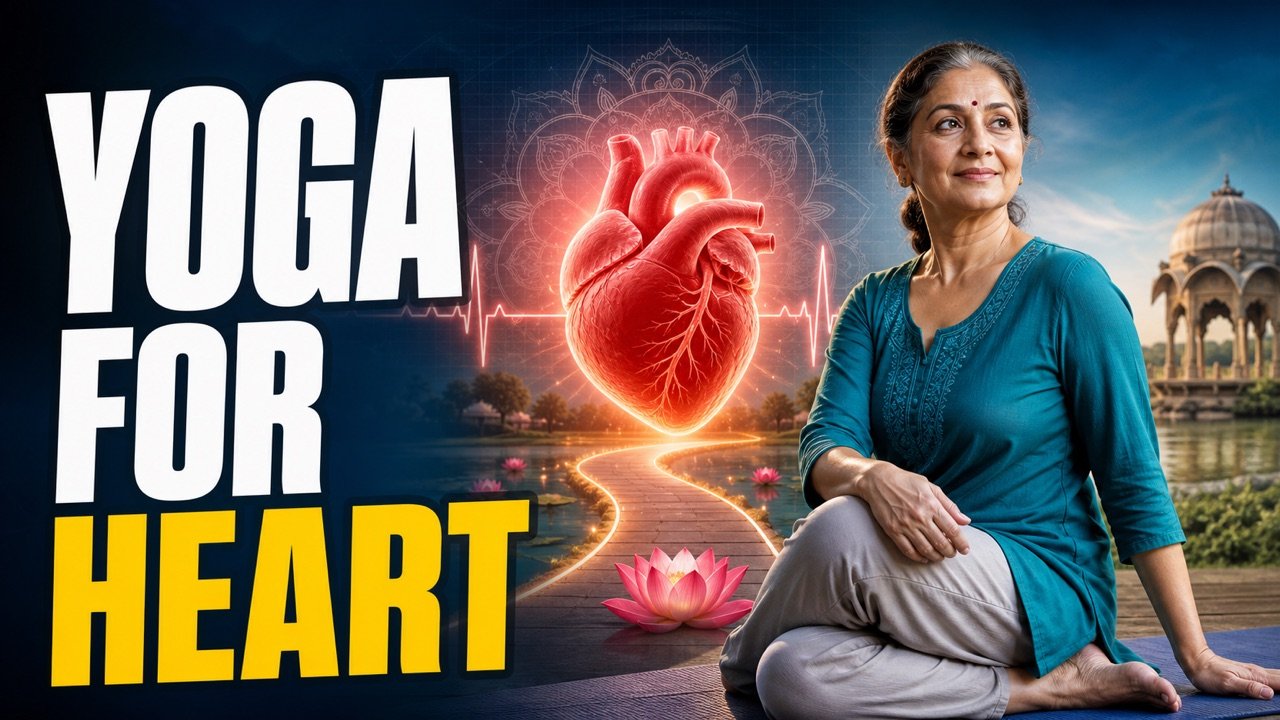
In short: Gentle, well-chosen yoga can support heart recovery by easing stress, calming heart rate and blood pressure, improving flexibility and rebuilding confidence. It works best as a complement to medical cardiac rehabilitation — combining gentle movement, slow breathing and stillness. Heart patients should start gently, get medical clearance, and avoid intense, breath-holding or inverted poses unless cleared.
Key takeaways
- Yoga combines movement, breath and stillness.
- It complements, not replaces, medical cardiac rehabilitation.
- Gentle practice can help stress, blood pressure and confidence.
- Get medical clearance first, and start gently.
- Avoid intense, breath-holding or fully inverted poses unless cleared.
Yoga is one of India’s greatest gifts to the world, and in recent years it has earned a place not just in wellness studios but in serious cardiac care. Yoga-based cardiac rehabilitation — combining gentle postures, controlled breathing and meditation — is increasingly recognised as a valuable, culturally familiar way to support heart patients on their recovery journey. For Indians especially, yoga offers a heart-healthy practice that feels natural, accessible and rooted in tradition. This guide explains how yoga supports the heart, what a safe practice looks like, and the precautions every heart patient should take.
This article draws on the Heart Health India Foundation expert discussion Healing Hearts with Yoga-Based Cardiac Rehabilitation. New to these topics? Start with our guide to understanding heart health.
How yoga supports the heart
Yoga works on the cardiovascular system through several pathways at once. The physical postures (asanas) provide gentle exercise that improves flexibility, strength, balance and circulation without the high impact of strenuous workouts. The breathing practices (pranayama) and meditation activate the body’s relaxation response, lowering heart rate, easing blood pressure and reducing stress hormones. Studies of yoga in heart patients have suggested benefits for blood pressure, stress, quality of life and overall wellbeing, which is why it is increasingly offered as a complement to conventional cardiac rehabilitation.
Importantly, yoga also addresses the emotional and psychological side of heart disease. Anxiety, depression and stress are common after a cardiac event and are themselves linked to worse outcomes. The calming, mindful nature of yoga helps patients feel more in control, more relaxed and more positive — benefits that matter as much as the physical ones.
What yoga-based cardiac rehabilitation looks like
A heart-focused yoga programme is gentle and graded, very different from an intense studio class. It typically emphasises slow, comfortable postures; gentle stretching; relaxation; and slow breathing, woven together with periods of guided meditation or deep relaxation. The aim is to soothe the nervous system and gently recondition the body, not to achieve advanced poses. In a well-designed programme, yoga is integrated with the other pillars of cardiac rehabilitation — supervised exercise, education, risk-factor control, nutrition and psychological support — rather than replacing them.
For most heart patients, the safest path is to practise under a qualified instructor who has experience with cardiac or therapeutic yoga, ideally with the knowledge of your cardiac team. This ensures postures and breathing are adapted to your condition and stage of recovery.
Practices that are generally gentle and helpful
Slow, supported stretches; gentle seated or lying postures; restorative relaxation (such as lying quietly in a comfortable position while consciously relaxing the body); and slow, calming breathing are typically well suited to heart patients. Meditation and mindfulness, even for a few minutes a day, help manage stress and support emotional recovery.
What to avoid and how to stay safe
Not all yoga is suitable for a recovering or vulnerable heart. Heart patients should generally avoid vigorous “power” or “hot” yoga, rapid or forceful breathing techniques, prolonged breath-holding, intense inversions (such as headstands and shoulder stands), and any posture that causes straining, breathlessness or dizziness. Avoid practising immediately after meals, and never push into pain.
Before starting yoga, especially after a heart attack, surgery or with significant heart disease, get clearance from your cardiologist and practise with a qualified, experienced instructor. Begin slowly, listen to your body, and stop and rest if you feel chest discomfort, undue breathlessness, palpitations or light-headedness, seeking medical advice for any concerning symptom. Yoga should leave you feeling calmer and more comfortable, never strained.
The three pillars: movement, breath and stillness
A heart-focused yoga practice rests on three complementary pillars, and understanding them helps you appreciate why it works. The first is gentle movement through asanas, which improves flexibility, circulation, strength and balance while keeping the effort modest and the joints comfortable. The second is breath, through slow, controlled breathing that calms the nervous system, eases blood pressure and improves the awareness of breath that is so valuable for people with heart and lung conditions. The third is stillness, through relaxation and meditation, which is often the most underrated yet most powerful element for the heart, because it directly counters the chronic stress that quietly damages the cardiovascular system. A good cardiac yoga session weaves all three together, typically moving from gentle warming movement, through breath-led postures, into a closing period of deep relaxation. It is this integration of body, breath and mind that distinguishes therapeutic yoga from mere stretching.
Yoga and the emotional recovery of heart patients
For many heart patients, the hardest part of recovery is not physical but emotional. A cardiac event can shatter a person’s sense of safety, leaving anxiety, low mood, fear of exertion and a loss of confidence in their own body. Here yoga offers something medicines cannot. The mindful, gentle nature of the practice helps patients reconnect with their bodies in a safe, controlled way, rebuilding trust and a sense of agency. The emphasis on breath and present-moment awareness can ease anxiety and racing thoughts, and the calm of relaxation and meditation supports better mood and sleep. Practising in a supportive group can also reduce the isolation many patients feel. Because anxiety and depression after a cardiac event are linked to poorer outcomes, this emotional benefit is not a soft extra — it is a meaningful part of recovery that supports the heart itself.
Making yoga a sustainable part of life
The value of yoga for heart health comes from regular, gentle practice over time rather than occasional intense sessions. To make it sustainable, start small — even ten to fifteen minutes of gentle practice most days is worthwhile — and build gradually as comfort and confidence grow. Choose a time that fits your routine, such as morning or evening, and a calm, uncluttered space. Learning initially from a qualified instructor experienced in cardiac or therapeutic yoga ensures your practice is safe and well adapted to your condition; group classes or community sessions can add motivation and companionship. Listen to your body each day, adjusting the practice to how you feel, and never compete or strain. Over time, yoga can become not just an exercise but a daily ritual of calm and self-care — a gentle, culturally familiar practice that supports your heart, your mind and your sense of wellbeing together.
Frequently Asked Questions
Gentle, supervised yoga can be safe and beneficial once your cardiologist clears you. Avoid vigorous styles and strenuous postures, and practise with a qualified instructor experienced in cardiac yoga.
No. Yoga is a valuable complement to, not a replacement for, medical care and structured cardiac rehabilitation. It works best alongside exercise, education, risk-factor control and prescribed treatment.
Generally avoid intense inversions, power or hot yoga, forceful or breath-holding pranayama, and any posture causing strain, breathlessness or dizziness. Favour gentle, restorative practices.
Slow breathing, gentle movement and meditation activate the body’s relaxation response, which can lower heart rate, ease blood pressure and reduce stress hormones over time.
Short, regular sessions are ideal. Start gently and build gradually under guidance, following the plan your instructor and cardiac team recommend for your stage of recovery.
Getting started safely: your first month
If you are new to yoga and want to begin supporting your heart, a gentle, structured start makes all the difference. Before anything else, if you have heart disease, have had a cardiac event or surgery, or have other significant health conditions, get clearance from your cardiologist and choose an instructor experienced in cardiac or therapeutic yoga. In your first weeks, focus on the basics: comfortable seated and lying postures, gentle stretches, slow breathing and relaxation, practised for short sessions of perhaps ten to twenty minutes. Resist any urge to attempt advanced poses, intense styles or anything that causes strain; the goal at this stage is to build comfort, confidence and a calm, steady habit.
Pay close attention to how your body responds. A good session should leave you feeling relaxed and a little more limber, never breathless, dizzy or in pain. Practise on an empty or light stomach, in a quiet space, wearing comfortable clothing, and stop to rest whenever you need to. Keep your cardiac team informed about your practice, and never use yoga to replace your prescribed treatment. As the weeks pass and your comfort grows, you can gradually extend your sessions and gently broaden your practice under guidance. Beginning slowly and safely in this way lays the foundation for a sustainable, heart-supporting yoga practice that you can carry forward for years.
How is cardiac yoga different from a regular yoga class? Cardiac or therapeutic yoga is gentle and graded, emphasising comfortable postures, slow breathing and relaxation rather than intense poses, fast flows or strenuous breathing. It is adapted to a heart patient’s condition and stage of recovery.
How soon can I start yoga after a heart problem? This depends on your individual condition and must be cleared by your cardiologist. Many patients can begin gentle, supervised practice during recovery, starting slowly and progressing under the guidance of an experienced instructor and their cardiac team.
The bottom line for heart patients
Yoga offers heart patients something rare: a practice that addresses the body, the breath and the mind together, in a form that is culturally familiar and deeply rooted in India. Through gentle movement, slow breathing and calming stillness, yoga-based cardiac rehabilitation can support blood pressure, stress, mood and quality of life, complementing — never replacing — medical care and conventional rehabilitation. The keys to benefiting safely are to get medical clearance, learn from a qualified instructor experienced in cardiac yoga, favour gentle practices, avoid strenuous or breath-holding techniques, and listen closely to your body. Beyond the physical, yoga helps rebuild the confidence and emotional steadiness that a cardiac event so often shakes. Begun slowly and practised regularly, it can become a sustaining daily ritual of calm and self-care — a gentle, lifelong companion on the journey to a healthier heart.
Join the HHIF Heart Health Community
A heart-healthy practice like yoga is more sustainable and more enjoyable with guidance and a community beside you. You don’t have to figure out what’s safe alone.
Heart disease is India’s number one killer, and recovery is as much emotional as physical — yet patients often feel isolated after a cardiac event. That’s why patient communities matter: they combine reliable, expert-backed guidance with genuine human support.
The Heart Health India Foundation (HHIF) is India’s first patient-led heart health organisation. Members get real-time guidance from cardiologists, physiotherapists and other experts, myth-busting content, wellbeing challenges, webinars and resources, and supportive circles such as Fitness After Surgery and Emotional Recovery After a Heart Attack. Joining takes about two minutes, connects you to our WhatsApp and Facebook groups, and is 100% free, forever.
Join the HHIF Heart Health Community today »
Medical disclaimer
This article is for general education and awareness and is not a substitute for professional medical advice. Always consult a qualified doctor about your own heart health and before starting, stopping or changing any medication. If you or someone near you may be having a heart attack or other medical emergency, seek emergency care immediately.
Related reading from Heart Health India Foundation
- HHIF session: yoga-based cardiac rehabilitation
- Safe exercise for heart patients
- Simple grounding techniques to reduce stress
- Exercise and target heart rate
- Understanding heart health: the basics