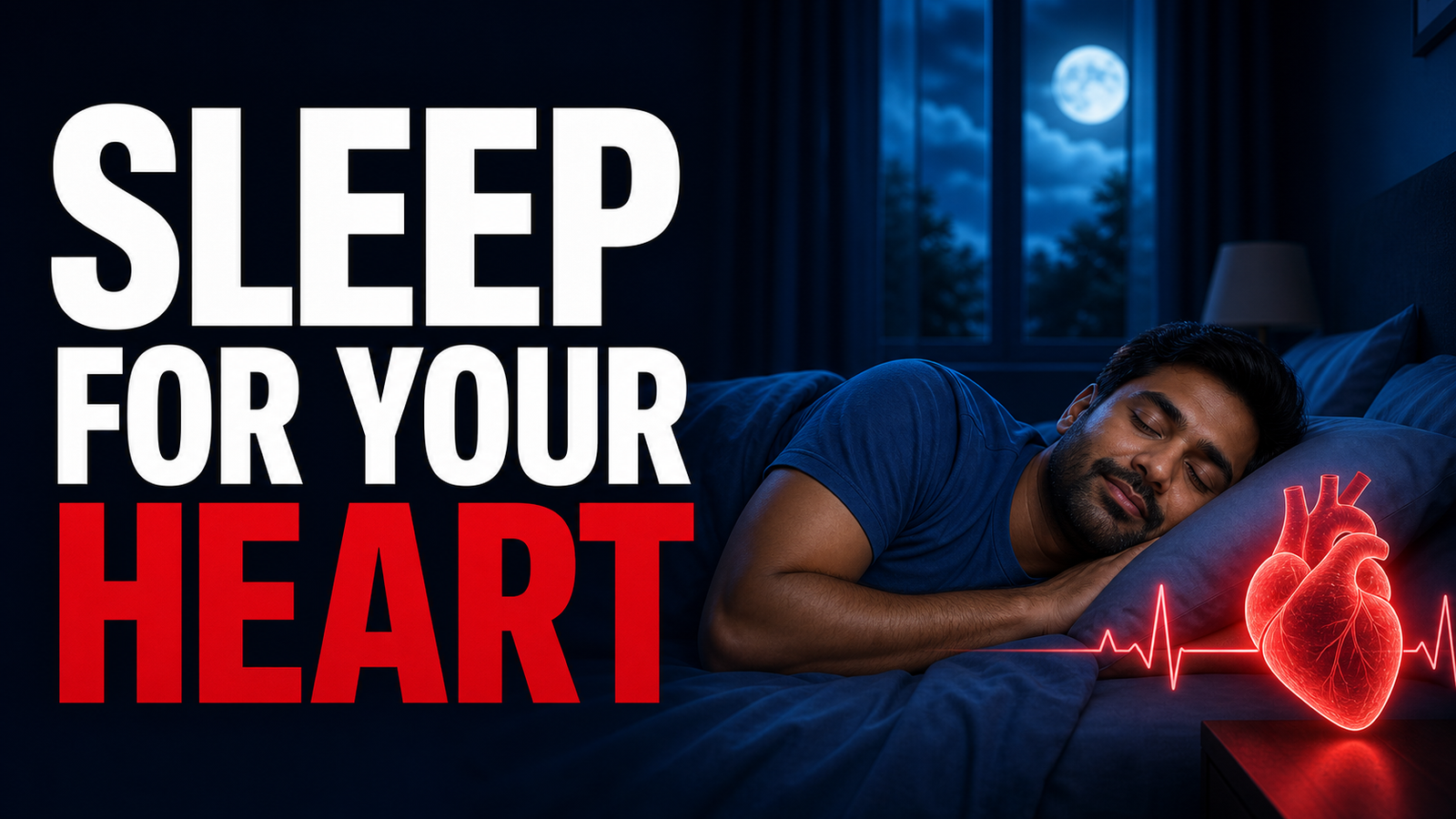
In short: Sleep is a pillar of heart health alongside diet and exercise. Too little or poor-quality sleep raises blood pressure, blood sugar and inflammation and is linked to higher heart-disease risk. Most adults need about 7–9 hours. Sleep apnea — loud snoring with breathing pauses — is a hidden, treatable heart hazard worth flagging to your doctor.
Key takeaways
- Sleep is a genuine heart risk factor, alongside diet and exercise.
- Aim for about 7–9 hours of good-quality sleep.
- The sleep–heart link runs both ways.
- Loud snoring with pauses may be sleep apnea — treatable; tell your doctor.
- A consistent schedule and wind-down routine help.
We spend about a third of our lives asleep, yet sleep is one of the most neglected pillars of heart health — overshadowed by diet and exercise. Patients rarely think to mention their sleep to a cardiologist, and caregivers may not connect a loved one’s loud snoring or daytime exhaustion with heart risk. But the science is clear: how you sleep profoundly affects your blood pressure, your heart rhythm, and your long-term cardiovascular health. This article shines a light on the overlooked connection between sleep and your heart.
Explore more heart-health discussions on the Heart Health India Foundation YouTube channel. New to these topics? Start with our guide to understanding heart health.
How sleep protects — or harms — the heart
During healthy sleep, your blood pressure and heart rate naturally dip, giving your cardiovascular system a nightly period of rest and repair. When sleep is too short, fragmented or poor in quality, this protective dip is disrupted, and the body experiences more stress hormones, inflammation and blood-pressure elevation. Over time, chronic poor sleep is associated with higher blood pressure, weight gain, worse blood-sugar control, and increased cardiovascular risk. As we discuss in workplace stress and heart disease and the mind–heart connection, sleep, stress and the heart are tightly interwoven — poor sleep fuels stress, and stress worsens sleep, in a cycle that wears on the heart.
Sleep apnea: the hidden heart hazard
The most important sleep-related heart risk is obstructive sleep apnea (OSA), a condition in which the airway repeatedly collapses during sleep, causing breathing to pause many times a night. Each pause drops oxygen levels and jolts the body, fragmenting sleep and stressing the cardiovascular system. OSA is strikingly common — and strikingly underdiagnosed — especially in people who are overweight, and it is closely linked to high blood pressure, atrial fibrillation (see atrial fibrillation and palpitations), heart failure (see living with heart failure), and coronary disease.
The warning signs are often noticed by a bed partner: loud, chronic snoring, gasping or choking during sleep, and pauses in breathing, along with daytime sleepiness, morning headaches, waking unrefreshed, and difficulty concentrating. If this sounds familiar, it is worth raising with a doctor, because diagnosing and treating sleep apnea — often with a device called CPAP, weight loss, and other measures — can improve blood pressure, rhythm control and quality of life.
How much sleep, and what kind
Most adults need roughly seven to nine hours of good-quality sleep. Both too little and consistently disrupted sleep are linked to higher cardiovascular risk. But it is not only quantity — the regularity and quality of sleep matter too. Going to bed and waking at consistent times supports the body’s natural rhythms, while irregular schedules, shift work and frequent awakenings take a toll.
Practical steps for heart-healthy sleep
Improving sleep is a genuine form of heart care. Keep a consistent sleep schedule. Create a calming wind-down routine and keep screens, work and stimulating content out of the last part of the evening. Limit caffeine later in the day, avoid heavy meals and alcohol close to bedtime (alcohol fragments sleep, as we note in alcohol and your heart), and keep the bedroom cool, dark and quiet. Daytime physical activity improves sleep, as does managing stress through breathing or relaxation. And if you snore heavily, gasp at night, or feel very sleepy by day, ask your doctor about sleep apnea — treating it can be genuinely heart-protective.
A practical wind-down routine for better heart-protective sleep
Turning the principles of good sleep into a simple nightly routine makes them far easier to keep. Aim to go to bed and wake at roughly the same times each day, even on weekends, to steady your body’s internal clock. In the hour before bed, dim the lights, switch off work and stimulating screens, and do something calming — light reading, gentle stretching, slow breathing or a few minutes of relaxation (see managing stress with EFT and mind-body tools). Keep the bedroom cool, dark and quiet, and reserve it as far as possible for sleep. During the day, get some physical activity and natural light, both of which deepen night-time sleep, and avoid caffeine and energy drinks from the afternoon onward. Be cautious with alcohol in the evening: it may bring on drowsiness but fragments the quality of sleep later in the night (see alcohol and your heart). If a racing mind keeps you awake, jotting worries on paper or practising slow breathing can help settle it. And if, despite good habits, you still wake unrefreshed, snore heavily, or feel very sleepy by day, treat that as a medical question worth raising — sleep apnoea is common, treatable, and genuinely heart-protective to address. Good sleep is not indulgence; it is nightly maintenance for your heart.
What the research says
According to PubMed, an American Heart Association scientific statement on obstructive sleep apnea and cardiovascular disease (Yeghiazarians and colleagues, Circulation, 2021) reports that OSA is highly prevalent — and often underdiagnosed and undertreated — among patients with hypertension, heart failure, coronary artery disease, atrial fibrillation and stroke, and recommends screening for OSA in specific cardiovascular situations such as resistant hypertension and recurrent atrial fibrillation. The takeaway for patients and caregivers: sleep is not a luxury, and persistent snoring or daytime exhaustion deserves medical attention.
The two-way street between sleep and the heart
One reason sleep is so important is that the relationship runs in both directions. Poor sleep harms the heart — through higher blood pressure, stress hormones, inflammation and weight gain — and heart conditions, in turn, disrupt sleep. People with heart failure may wake breathless at night; those with angina or arrhythmias may have symptoms that fragment sleep; and anxiety after a cardiac event commonly causes insomnia. Untreated sleep apnoea sits at the centre of this web, worsening blood pressure and rhythm problems while wrecking sleep quality. Breaking the cycle at any point — treating apnoea, easing anxiety, improving sleep habits — tends to help both sleep and the heart together.
This is why it is worth mentioning sleep to your doctor, something patients rarely think to do. If you sleep poorly, snore heavily, wake unrefreshed, or feel very sleepy by day, that information is genuinely relevant to your heart care.
Building genuinely restorative sleep
Improving sleep is a skill you can build, and it pays direct heart dividends. Keep a consistent sleep and wake time, even on weekends, to support your body’s natural rhythm. Create a wind-down routine and keep screens, work and stimulating content out of the final part of the evening. Limit caffeine and energy drinks later in the day, and avoid heavy meals and alcohol close to bedtime — alcohol may help you fall asleep but fragments the second half of the night (see alcohol and your heart). Keep the bedroom cool, dark and quiet. Daytime activity (see returning to fitness after a cardiac event) deepens sleep, and a few minutes of slow breathing or relaxation (see managing stress with EFT and mind-body tools) can quiet a racing mind at night. If these steps don’t help, or if sleep apnoea is suspected, seek medical assessment — treating the underlying problem is often the missing piece.
What patients and caregivers ask
Yes. Chronic short or poor-quality sleep is linked to higher blood pressure, weight gain, worse blood sugar and increased cardiovascular risk. Good sleep gives your heart a nightly chance to rest and repair.
It’s worth getting checked. Loud snoring with breathing pauses and gasping can indicate sleep apnea, which strains the heart. Treating it can improve blood pressure, rhythm and energy.
Most adults need about seven to nine hours of good-quality sleep, on a regular schedule. Both too little and very disrupted sleep are linked to higher heart risk.
Possibly. Sleep apnea is a known cause of difficult-to-control blood pressure. If you snore, feel unrefreshed or sleepy by day, ask your doctor about a sleep assessment.
It can improve blood pressure, support rhythm control and enhance quality of life. Treatment may include CPAP, weight loss and other measures, guided by your doctor.
Both consistently short and unusually long or very disrupted sleep have been linked to higher heart risk. The goal is adequate, good-quality, regular sleep — roughly seven to nine hours for most adults — rather than extremes in either direction.
A short nap can help with alertness, but it doesn’t fully replace consistent, good-quality night-time sleep, which is when your blood pressure and heart rate get their restorative dip. Focus on improving your core night sleep first.
The bottom line on sleep and your heart
Sleep is the overlooked pillar of heart health — as important as diet and exercise, yet rarely discussed in the cardiology clinic. During healthy sleep, your blood pressure and heart rate dip, giving your cardiovascular system a nightly chance to rest and repair; chronic poor or short sleep robs you of that protection and is linked to higher blood pressure, weight gain, worse blood sugar and increased heart risk. The most important sleep-related hazard is obstructive sleep apnoea, a common and underdiagnosed condition strongly tied to high blood pressure, atrial fibrillation, heart failure and coronary disease — and the warning signs (loud snoring, gasping, breathing pauses, daytime exhaustion) are often noticed first by a bed partner. The encouraging news is that sleep is something you can act on: keep a consistent schedule, build a calming wind-down routine, limit caffeine and evening alcohol, keep the bedroom cool and dark, stay active by day, and address a racing mind with relaxation. And if you snore heavily, wake unrefreshed, or feel very sleepy by day, ask your doctor about sleep apnoea, because treating it can genuinely protect your heart. Sleep is not a luxury or a sign of laziness; it is nightly maintenance for your cardiovascular system, and protecting it is a real and powerful form of heart care.
References (peer-reviewed)
Sources retrieved from PubMed:
Yeghiazarians Y, Jneid H, Tietjens JR, et al. Obstructive Sleep Apnea and Cardiovascular Disease: A Scientific Statement From the American Heart Association. Circulation. 2021;144(3):e56–e67.
Join the HHIF Heart Health Community
Caring for your sleep is caring for your heart — and a community helps you build healthy habits that last. You don’t have to do it alone.
Heart disease is India’s number one killer, and sleep is one of its most overlooked levers. That’s why patient communities matter: they surface the connections, like sleep, that mainstream advice often misses.
The Heart Health India Foundation (HHIF) is India’s first patient-led heart health organisation. Members get real-time guidance from cardiologists and other experts, myth-busting content, wellbeing challenges, webinars and resources, and a supportive community. Joining takes about two minutes, connects you to our WhatsApp and Facebook communities, and is 100% free, forever.
Join the HHIF Heart Health Community today »
Medical disclaimer
This article is for general education and awareness and is not a substitute for professional medical advice. Always consult a qualified doctor about your own heart health and before starting, stopping or changing any medication. If you or someone near you may be having a heart attack or other medical emergency, seek emergency care immediately.
Related reading from Heart Health India Foundation
- Why sleep plays a crucial role in heart function
- Reflecting on sleep, stress and heart health
- How chronic stress impacts heart health
- Why anxiety and heart symptoms often feel similar
- Understanding heart health: the basics