Sudden Cardiac Arrest in Young Indians — The Hidden Role of Genetics
Why seemingly healthy young people suffer sudden cardiac arrest, the genetic heart conditions behind it, warning signs, and when to get screened.
The Prescription We Keep Forgetting: Why Cardiovascular Patients in India Need Social Prescribing
By Ram Khandelwal — Cardiac survivor, Founder & CEO, Heart Health India Foundation (HHIF) This is the case for social prescribing in India — and why, for heart patients, connection is as vital as any medicine. In December 2019, a cardiologist handed me a discharge summary, a strip of medicines, and a follow-up date. What that piece of paper did not contain — could not contain — was the harder half of my recovery. I was 33. Nobody prescribed me a way to manage the fear that arrived at 2 a.m. Nobody prescribed me a peer who had survived what I had survived. Nobody asked whether my wife, suddenly a full-time caregiver, was coping — though, as we would later write about the invisible weight caregivers carry, she was quietly checking, worrying, and absorbing it all alone. The clinical system had done its job brilliantly. The human system around the disease had been left entirely to chance. That gap is what social prescribing is built to close. And for a country carrying one-fifth of the world’s cardiovascular deaths, closing it is not a wellness luxury. It is a survival strategy. What is social prescribing? Social prescribing is a simple but radical idea: that a doctor, nurse, or community health worker can formally “prescribe” not just drugs but connection — referring a patient to non-clinical, community-based support that addresses the social roots of ill health. A link worker (sometimes called a community connector) sits between the clinic and the community, takes the time to understand what actually matters to a patient, and links them to services: peer support groups, supervised exercise, financial counselling, nutrition guidance, mental-health support, or simply companionship. For a chronic condition like cardiovascular disease, the most powerful of those community assets are not built by the health system at all — they are built by patients. Peer support, where a fellow cardiac patient becomes a mentor; patient and caregiver education delivered by people who have lived the diagnosis; and patient advocacy by the patients, for the patients — these are the substance of the social prescription, not its soft accompaniment. At HHIF, this is not theory but our daily work: Monthly Heart Circles and post-discharge follow-up calls, an “Ask An Expert” service connecting patients to cardiologists, and a Facebook and WhatsApp network of over 4,000 heart patients and caregivers — one of India’s largest online heart-support communities. The advocate with lived experience, whether a survivor or a caregiver, is not a volunteer doing charity. They are a node in the health system. When a country embeds them deliberately, it is not being kind; it is building a more resilient health system — one that can absorb a chronic-disease load no number of cardiologists could carry alone. The World Health Organization, in A Toolkit on How to Implement Social Prescribing, frames it precisely this way — a means of connecting patients to a range of non-clinical services in the community to improve their health and well-being, built on the evidence that social determinants such as income, social inclusion, housing, and education are decisive in health outcomes. WHO’s companion philosophy in Community Engagement: A Health Promotion Guide for Universal Health Coverage in the Hands of the People makes the deeper point: health is not something delivered to communities; it is something built with and by them. Social prescribing is the operational bridge between those two documents — it puts a slice of the health system back into the hands of the people. The questions that build understanding The best way to understand social prescribing is not to memorise a definition but to sit with the questions a thoughtful clinician — or a frightened patient — would actually ask. The answers, taken together, are the whole concept. If the medicine is correct, why isn’t the patient getting better? This is the question that starts everything. Across the world, an estimated 80% of a person’s health outcomes are shaped by factors outside the clinic — behaviour, environment, social and economic circumstances. You can stent an artery in ninety minutes; you cannot stent loneliness, poverty, or a sedentary life with a catheter. For cardiovascular disease, where recovery is measured in years of adherence rather than a single procedure, the non-clinical determinants are the disease management. Social prescribing exists because we finally admitted that the prescription pad was only treating half the patient. So what is actually being “prescribed”? Not a drug — a connection. At its heart sit three moving parts: someone who notices the non-medical need (a clinician or health worker), someone who navigates it (a link worker or community connector), and somewhere to go (a community asset — a peer group, an exercise programme, financial counselling, a listening ear). The prescription is the deliberate act of writing that connection into the patient’s care, rather than leaving them to find it by luck. Who is this for, and who does the prescribing? It is for patients whose needs are chronic, recurring, or socially complex — and cardiac patients sit squarely in that group. Crucially, the prescriber need not be a cardiologist. A GP can do it, an ASHA or ANM worker can do it, a trained survivor can do it. And the community asset they prescribe into is increasingly staffed by patients themselves — fellow cardiac patients serving as mentors, caregivers educating newer caregivers, lived-experience advocates translating a diagnosis into a survivable daily routine. The connectors need not be doctors at all. That is precisely why social prescribing scales in low-resource settings where specialists are scarce but community is abundant: it turns the people who already carry the disease into part of the workforce that manages it. Where and when does it happen? In the community — primary health centres, urban health posts, residential welfare associations, places of worship, workplaces, and increasingly on the phone in a patient’s hand. WHO is explicit that there is no single blueprint; the scheme is shaped to local context. And it happens precisely at the
Healing Hearts with Yoga — Yoga-Based Cardiac Rehabilitation in India
How yoga-based cardiac rehabilitation supports heart recovery in India — gentle asanas, breathing and meditation, plus safety tips for heart patients.
Breathe for Your Heart — Simple Breathing Exercises for Cardiac Health
Simple breathing exercises can calm your heart, lower blood pressure and ease stress. Learn easy techniques heart patients can practise safely at home.
Recovering After Bypass Surgery — The Heart-Lung Connection Explained
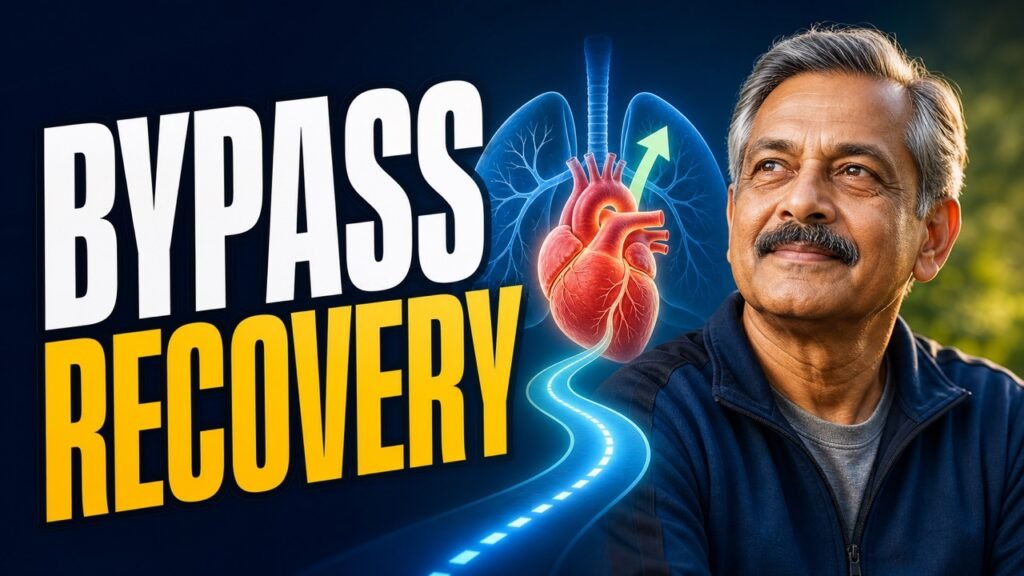
Why breathing and lung care are central to bypass recovery. A patient’s guide to healing after CABG, breathing exercises, activity and avoiding complications.
Beat Bad Cholesterol — Understanding LDL, HDL and Your Heart
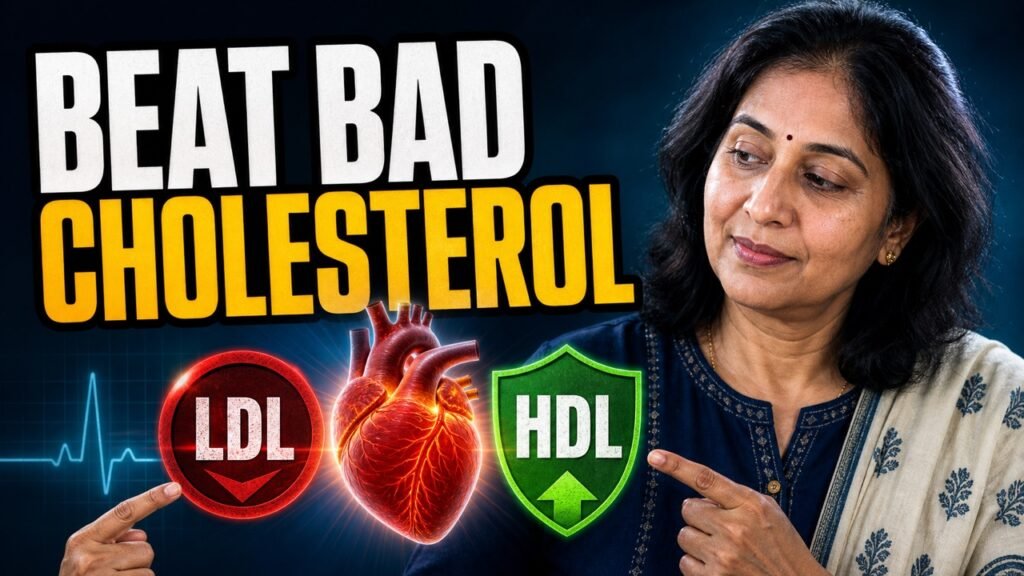
What “good” and “bad” cholesterol really mean, the LDL targets that protect your heart, and how diet, lifestyle and medicine can beat bad cholesterol.
Workplace Stress and Your Heart — Protecting Yourself from Burnout-Related Cardiac Risk
Chronic work stress is a real heart-disease risk. Learn how stress harms the heart and practical ways to protect your cardiac health at work.
Exercise and Target Heart Rate: How To Train Your Heart And Not Strain It
Let’s talk about your heart — that tireless, overworked organ beating around 100,000 times a day. Most of us take it for granted, until it skips a beat or races too fast. But when you exercise, do you know if your heart is working too hard — or not hard enough? The difference could mean everything — better fitness, safer workouts, even longer life. Welcome to the science of target heart rates — the fitness metric that’s not just a number, but your heart’s personal performance review. Heart Rate 101: What’s Normal, What’s Not Your heart rate — beats per minute (bpm) — changes constantly. From deep sleep to peak stress, your pulse tracks your body’s reality. The American Heart Association gives a range: Fitter people often fall below this range — not because something’s wrong, but because their hearts are more efficient. Their heart pumps more blood with each beat, so it doesn’t need to race. But resting rate is only part of the story. The real test comes when you exercise — and your heart kicks into gear. The Many Puppeteers Controlling Your Heartbeat Your pulse isn’t just about how fast you run. Your age, stress, fitness level, medication, even the weather — all have a say. Your heart isn’t just beating — it’s responding, every minute, to everything. Target Heart Rate — The Sweet Spot for Exercise Not every workout is a race to exhaustion. There’s a science-backed range where your heart gets the workout it needs — without tipping into danger. That range is your target heart rate — the bpm zone where you burn calories, build endurance, and strengthen your heart safely. Here’s the rule: But wait — what’s your maximum heart rate? Maximum Heart Rate — The Starting Point The standard formula is simple:220 minus your age = Maximum Heart Rate. But this is just a guideline — not gospel. Genetics, medications, and your fitness history can shift your actual max by 15 to 20 beats in either direction. Karvonen Formula — When One Size Doesn’t Fit All For a truly personal training zone, fitness experts swear by the Karvonen Formula. It factors in your resting heart rate — the real measure of your heart’s efficiency — to calculate your training zone. Here’s how it works for a 25-year-old with a resting heart rate of 65 bpm: This person’s target heart rate for moderate exercise sits between 143 and 156 bpm. Precision beats guesswork — every time. Reading Your Body — How Hard Are You Really Working? Not everyone needs a smartwatch to monitor intensity. Your body broadcasts clues — if you know how to read them. Moderate Intensity — Signs You’re in the Zone Vigorous Intensity — When You’re Pushing Hard If you’re collapsing, dizzy, or clutching your side — you’ve crossed into danger territory. Back off and rebuild gradually. Heart Rate Tracking — Old School or High Tech? Want numbers? You’ve got options. If you’re hitting your target zone, you’re training smart. If you’re overshooting or undershooting, it’s time to adjust the pace. Overexertion — When More Is Dangerous, Not Better Sweat is not a trophy. If you’re gasping for air, your chest hurts, or you can’t sustain your workout, you’re not pushing limits — you’re risking injury. Smart fitness isn’t about how much you suffer — it’s about how well you train your heart over time. Interval Training — Big Results in Shorter Time Short on time? Join the club. That’s why interval training — brief high-intensity bursts followed by recovery periods — is a game-changer. And yes — even heart patients and people with type 2 diabetes can safely benefit, under proper supervision. Your Heart Rate Isn’t Set in Stone The 220-minus-age formula is a starting point — not the final word. Your genetics, health conditions, medications, and fitness habits all tweak your personal target zone. Elite athletes? They have custom zones, built through lab tests.Casual exercisers? A well-calculated heart rate range (like the Karvonen formula) works just fine. Before You Start — Ask the Experts If you’re over 45, diabetic, or carrying multiple heart risk factors, get a green light from your doctor before going all-in. A stress test, a heart check, and maybe some blood work — these aren’t barriers, they’re your safety net. The Final Word — Train Your Heart Like It’s the Only One You Have Because it is. Your heart’s performance today decides your health tomorrow. Every beat counts — during workouts, during rest, during stress. Listen to it. Track it. Train it. Because fitness isn’t just about sweating more — it’s about living longer, better, and smarter.
Sudden Arrhythmic Death Syndrome (SADS): Why Are Young Lives Being Lost?
The sudden and unexpected collapse of seemingly healthy young individuals has become an alarming phenomenon. Have you ever wondered how a child or adolescent can suddenly pass away during a routine school day or while engaging in sports? Sudden Arrhythmic Death Syndrome (SADS) is one of the leading causes of such heartbreaking events. SADS is the most common cause of death in people under 35, often occurring from cardiac arrest. This condition can be triggered by an inherited heart disease or an abnormal heart rhythm, known as arrhythmia. The exact cause of cardiac arrest may not always be apparent, but genetic factors and arrhythmias are usually to blame. What Exactly Is SADS? SADS can occur when the heart unexpectedly stops pumping blood, depriving the brain of oxygen and halting breathing. The underlying cause in many cases is arrhythmia—an abnormal heart rhythm due to disrupted electrical impulses in the heart. Inherited Heart Disease and Arrhythmias Inherited heart conditions are often linked to SADS. If a first-degree relative has an arrhythmogenic disorder, there’s a 50% chance that their children may inherit the same genetic mutation, putting them at risk for life-threatening heart rhythms. But how can we protect our children? Consider these tragic examples: – An eight-year-old girl from Chamarajanagar, Tejaswini, collapsed in the school corridor and died from cardiac arrest, despite looking healthy. – A 14-year-old boy, Mohit Chaudhary, tragically died from a heart attack while running at his school in Aligarh. – In Rajasthan’s Dausa, 16-year-old Yatendra Upadhyay collapsed the day after his birthday, possibly due to a heart attack. – In Tamil Nadu’s Ranipet, Advitha, a 14-year-old girl, collapsed in class and died shortly after being rushed to the hospital. Can SADS Be Prevented? While SADS is difficult to predict, early diagnosis can make a world of difference. Genetic testing and heart screenings can help detect underlying heart conditions. There are various tests that can assess heart health and identify irregularities that could lead to SADS: – Genetic Testing: This is especially important if a familial mutation has been identified. It can help diagnose conditions like Long QT syndrome (LQTS), which increases the risk of arrhythmias. – Electrocardiogram (ECG or EKG): This common test records the heart’s electrical activity and can detect irregular heartbeats, such as atrial fibrillation (AFib) and atrial flutter. – Holter Monitor: A portable ECG device worn for 24 hours or longer, capturing the heart’s activity over an extended period. – Event Recorder: Similar to the Holter monitor, but worn for up to 30 days or until symptoms or arrhythmias occur, providing a detailed record of heart activity during episodes. – Echocardiogram: A non-invasive test that uses sound waves to create images of the heart in motion. It helps assess heart structure, valve function, and blood flow through the heart. These tests play a crucial role in diagnosing hidden heart conditions that could potentially lead to SADS. With early detection, patients can take steps to manage their heart health through medications, lifestyle changes, or even surgery. The Need for Awareness and Action The rise in sudden deaths among young people calls for greater awareness. We urge schools, parents, and communities to prioritize heart health screenings and to stay informed about SADS and its risk factors. At Heart Health India Foundation, we are committed to spreading awareness and encouraging proactive testing to prevent such tragedies. Early diagnosis saves lives. Follow Heart Health India to stay updated on heart health awareness, and join our efforts to ensure the safety of young lives. Together, we can make a difference. Read next: SADS sits within a wider picture. See our guide to sudden cardiac death in India — the causes, the warning signs, and how family screening after a sudden death can protect surviving relatives.
The ABCDEs of Heart Health: Small Changes, Big Impact
Every minute, someone’s world changes because of a heart attack or stroke. The numbers are staggering—millions suffer every year, and countless lives are disrupted. But the truth is, many of these tragedies are preventable. Heart health is in your hands. You don’t need a complicated medical degree or expensive gadgets; all it takes is understanding and implementing the ABCDEs of Heart Health. Let’s break it down—step by step—and explore how you can protect your heart, overcome struggles, and live a healthier, happier life. A: Aspirin – Your Tiny Ally Against Big Risks Have you or someone you know experienced a heart attack or stroke? The fear, the uncertainty—it’s overwhelming. For some, aspirin can be a life-saving tool to reduce the risk of another event. But here’s the catch: aspirin isn’t for everyone. It’s not as simple as popping a pill every day. You need to talk to your healthcare professional. Do you have a family history of heart disease? What’s your risk of bleeding? These are crucial questions that only a professional can answer. Practical Tip: Next time you visit your doctor, bring this up: “Should I consider taking aspirin to lower my heart risk?” And be open about your health history—it could make all the difference. B: Blood Pressure – Taming the Silent Killer Here’s a shocking fact: high blood pressure often has no symptoms. You could be feeling fine while your heart is working overtime. This “silent killer” is one of the biggest causes of heart attacks and strokes. Do you feel stressed, overwhelmed, or exhausted? Stress can elevate blood pressure, and most of us don’t even realize it. Add salty snacks, long hours of sitting, and lack of sleep to the mix, and it’s a recipe for trouble. Practical Tips to Control Blood Pressure: Have you checked your BP this month? If not, today is a great day to start. C: Cholesterol – Manage the Good, the Bad, and the Ugly Cholesterol is one of those words that we hear often, but how much do we truly understand? Did you know there’s “good” cholesterol (HDL) that protects your heart and “bad” cholesterol (LDL) that clogs your arteries? Struggling with a sweet tooth or a love for fried foods? You’re not alone. Unhealthy eating habits and a sedentary lifestyle contribute to rising cholesterol levels. But here’s the good news: small changes can have a big impact. Practical Tips to Manage Cholesterol: When was your last cholesterol check? Is your LDLc (bad cholesterol) under control? If it’s been a while, schedule one today. D: Diet – Eat Smart, Not Less What’s on your plate determines how your heart beats. A balanced diet isn’t about starving yourself or giving up everything you love. It’s about making smarter choices. Struggles We Face: Practical Diet Tips: Can you commit to one healthy swap this week? Your heart will thank you. E: Exercise – A Little Goes a Long Way Think you need hours at the gym to stay fit? Think again. Regular physical activity doesn’t have to mean intense workouts. It’s about staying consistent and making movement a daily habit. Struggles We Face: Practical Exercise Tips: What’s one way you can move more today? S: Smoking – Break Free from the Habit Smoking is one of the most damaging habits for your heart. It raises blood pressure, reduces oxygen supply, and accelerates artery damage. But quitting is easier said than done, right? Struggles We Face: Practical Tips to Quit Smoking: Remember, it’s never too late to quit. Imagine the difference a smoke-free life could make for your health and happiness. The Sweet and Salty Trap – Cut Back for Your Heart’s Sake Sugar and salt are everywhere, hidden in sauces, snacks, and drinks. Excessive consumption can lead to diabetes, high blood pressure, and heart disease. Practical Tips to Reduce Sugar and Salt: Can you challenge yourself to a “no sugar” or “low salt” day this week? Join the Movement: Your Heart Needs You Taking care of your heart isn’t a one-time task; it’s a lifelong commitment. But you don’t have to do it alone. Join our Heart Health Community with the Heart Health India Foundation, where you’ll find support, resources, and stories from people just like you. 👉 Click here to join: Heart Health Community Together, let’s make heart health a priority—one step, one choice, one heartbeat at a time. Because every beat matters.