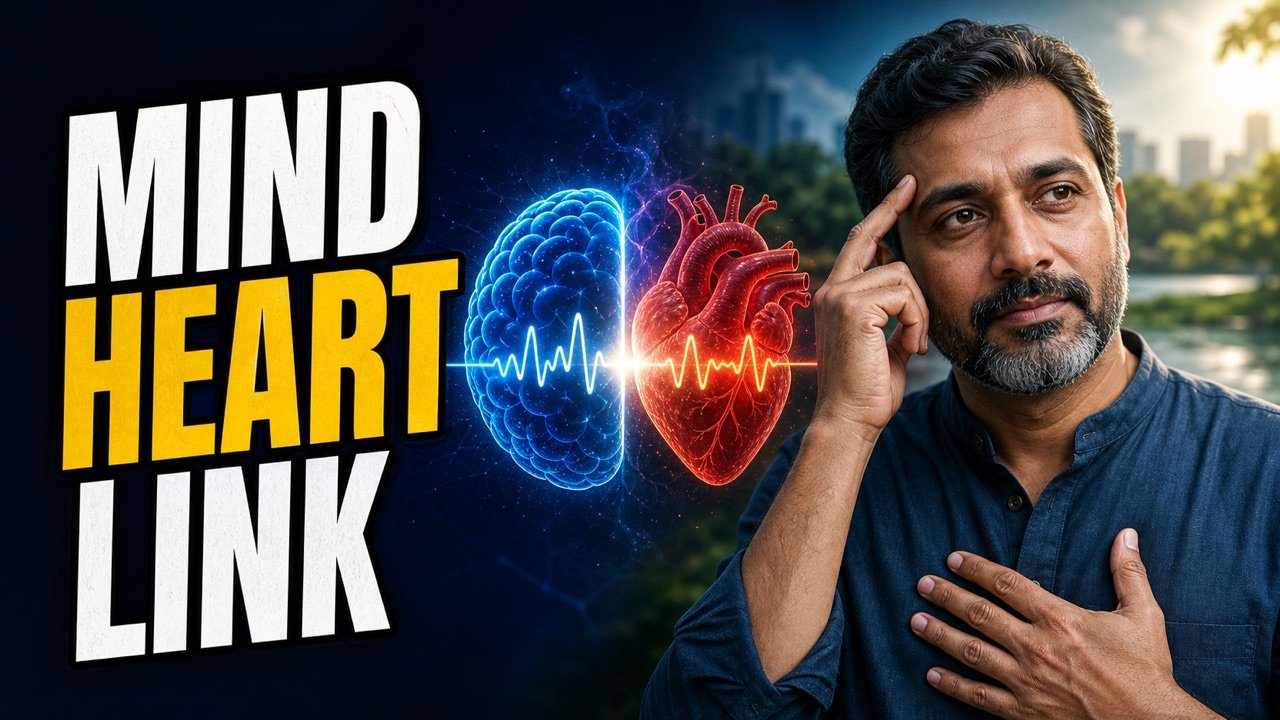
In short: The mind and heart are deeply connected. Chronic stress, anxiety and depression raise blood pressure, inflammation and unhealthy habits, increasing heart risk — and intense emotion can even cause “broken heart syndrome,” a temporary weakening of the heart. Caring for your emotional health, sleep and social connection is genuine heart care, not a luxury.
Key takeaways
- Stress and low mood genuinely affect the heart, via blood pressure, inflammation and behaviour.
- Depression and anxiety are linked to worse heart outcomes — and are treatable.
- “Broken heart syndrome” is real but usually temporary.
- Sleep, the gut and social connection all interact with the heart.
- Seeking help is a strength, not a weakness.
For centuries, cultures across the world have spoken of the heart as the seat of emotion — we say our heart “races” with fear, “aches” with grief, or feels “heavy” with worry. Modern medicine confirms that this is far more than poetry. The mind and the heart are connected through real biological pathways, and emotional health has a measurable impact on cardiovascular health. Understanding this mind-heart connection helps patients, caregivers and people at risk care for both together — because you cannot fully protect one while neglecting the other.
This article draws on the Heart Health India Foundation expert discussion Mind-Heart Connection: How Stress and Emotions Impact Your Heart Health. New to these topics? Start with our guide to understanding heart health.
How emotions reach the heart
The link runs through several channels. The nervous system directly connects the brain to the heart, adjusting heart rate, rhythm and blood pressure moment to moment in response to emotion. Stress and strong emotions trigger the release of hormones such as adrenaline and cortisol, which raise heart rate and blood pressure and, when chronic, promote inflammation and clotting tendencies in the arteries. Over time, sustained psychological stress, anxiety and depression are associated with higher rates of high blood pressure and heart disease.
The connection runs both ways. Just as the mind affects the heart, heart disease profoundly affects the mind. A heart attack, a frightening diagnosis or major surgery can trigger anxiety, depression and a loss of confidence. This is not weakness; it is a common, understandable response — and importantly, depression after a cardiac event is linked to poorer recovery, making emotional care a genuine part of cardiac treatment.
Depression, anxiety and the heart
Depression and anxiety are not merely “in the head.” In people with heart disease, depression is common and is associated with worse outcomes, partly through biology and partly through behaviour — depressed patients may struggle to take medicines, attend appointments, exercise or eat well. Anxiety can cause palpitations, chest tightness and breathlessness that both mimic and overlap with cardiac symptoms, creating a distressing cycle. Recognising and treating these conditions is therefore an essential, often underappreciated, part of protecting the heart.
“Broken heart syndrome” — when emotion strikes the heart directly
One of the most striking demonstrations of the mind-heart connection is stress-induced cardiomyopathy, popularly called “broken heart syndrome.” Intense emotional or physical stress — the loss of a loved one, a severe shock — can cause a sudden, temporary weakening of the heart muscle that mimics a heart attack, complete with chest pain and breathlessness. Most people recover, but it requires urgent medical assessment and is a powerful reminder that emotions can affect the heart in very physical ways.
Caring for mind and heart together
Protecting the mind-heart connection means treating emotional wellbeing as seriously as blood pressure or cholesterol. Build daily stress-reducing practices such as slow breathing, meditation, yoga, prayer or simply quiet time. Stay physically active, since exercise is one of the most effective natural antidepressants and is heart-protective at the same time. Protect sleep and limit alcohol and tobacco, which worsen both mood and heart health. Nurture relationships and stay connected, because social support is strongly protective for the heart.
Crucially, seek help when you need it. Persistent low mood, loss of interest, hopelessness, severe anxiety or thoughts of self-harm are signals to reach out to a doctor or mental health professional. Talking about emotional struggles after a cardiac event is a sign of strength, and effective help — from counselling to medication where appropriate — is available. If physical symptoms like chest pain or palpitations occur, always get them medically evaluated rather than assuming they are “only anxiety.”
How the gut, sleep and heart join the conversation
The mind-heart connection does not operate in isolation; it is woven into a wider web that includes sleep and even the gut. Sleep is a powerful example. Chronic poor sleep and untreated sleep disorders raise blood pressure, stress hormones and inflammation, and are linked to higher heart risk, while also worsening mood and resilience to stress. Protecting sleep therefore benefits mind and heart together. Stress and emotions also affect the gut — the “butterflies” and stomach upset of anxiety are familiar to everyone — and emerging understanding of the gut-brain axis suggests these systems are deeply interconnected. The practical message is integration: you cannot fully separate emotional health, sleep, digestion and heart health, because they constantly influence one another. Caring for one supports the others, which is why a holistic approach — addressing stress, sleep, mood, activity and nutrition together — is far more powerful than treating any single piece in isolation.
The healing power of connection and purpose
One of the most striking findings in heart research is how protective human connection is. People with strong social ties — family, friends, community, faith groups — tend to have better heart health and recover better after cardiac events than those who are isolated. Loneliness and social isolation, by contrast, are increasingly recognised as genuine risk factors for poor health, including heart disease. Connection works partly by buffering stress, partly by encouraging healthier behaviour, and partly through the simple comfort of feeling cared for and understood. A sense of purpose and meaning — through work, family, service, faith or hobbies — similarly supports both emotional and physical wellbeing. This is deeply relevant for heart patients, who can feel frightened and alone after a diagnosis. Reaching out, staying connected, and allowing others to support you is not merely nice; it is genuine medicine for the heart.
Practical tools for everyday emotional care
Caring for the mind-heart connection can be woven into ordinary days through small, sustainable practices. Begin with a few minutes of slow breathing or meditation, which directly calms the nervous system. Move your body daily, since exercise is one of the most effective natural mood-lifters and is heart-protective at the same time. Keep a simple gratitude or reflection habit, spend time in nature, and protect moments of genuine rest and play. Limit doom-scrolling and excessive news, which can fuel anxiety. Nurture your relationships actively, and don’t hesitate to talk about what you’re feeling rather than bottling it up. Notice your early warning signs of emotional overload and respond before they build. And remember that seeking professional help — counselling, therapy or medical treatment — is a sign of strength, not weakness. Tending to your emotional life is one of the kindest and most effective things you can do for your heart.
Frequently Asked Questions
Yes. Chronic stress, anxiety and depression are linked to higher blood pressure and heart disease, and extreme emotional stress can even cause a temporary heart-muscle weakening known as “broken heart syndrome.”
A cardiac event is frightening and life-changing, and biological and psychological factors make depression common afterward. It is treatable, and addressing it improves recovery.
Anxiety can mimic cardiac symptoms like palpitations and chest tightness, and the two can overlap. Because you often can’t tell them apart yourself, any such symptoms should be medically evaluated.
Treating depression and anxiety supports better self-care, medication adherence and lifestyle, and is considered an important part of overall heart health and recovery.
Regular exercise, good sleep, stress-reduction practices, strong social connections, and avoiding tobacco and excess alcohol benefit mood and the heart simultaneously. This article touches on mental health, including depression and self-harm. This is a sensitive topic, and if you are struggling personally, please reach out to a doctor or mental health professional — support is available and you deserve it.
When and how to seek professional help
Caring for the mind-heart connection sometimes means recognising that self-help is not enough and reaching out for professional support — a sign of strength, not weakness. Consider seeking help if low mood, hopelessness, persistent anxiety or loss of interest lasts for more than a couple of weeks, if these feelings interfere with daily life, sleep, relationships or self-care, or if you find yourself withdrawing, relying on alcohol or tobacco to cope, or neglecting your heart treatment. After a cardiac event in particular, persistent sadness or fear that does not ease deserves attention, since untreated depression and anxiety can hinder recovery. And any thoughts of self-harm or that life is not worth living are a clear signal to reach out for help straight away.
Help can take several forms, and effective options exist. Talking to your doctor is a good starting point; they can assess your mood, rule out physical contributors, and refer you to a counsellor, psychologist or psychiatrist as appropriate. Talking therapies, lifestyle measures and, where needed, medication can all be effective, and your cardiac team can ensure any treatment is suitable alongside your heart care. Confiding in trusted family or friends, and connecting with others who understand, also lightens the load. The key message is simple: emotional pain is real, common after heart problems, and treatable. Reaching out is a courageous and caring act toward both your mind and your heart.
The bottom line for mind and heart together
The connection between the mind and the heart is real, biological and bidirectional — emotions shape the heart, and heart disease shapes emotions. Honouring this connection means treating emotional wellbeing as seriously as blood pressure or cholesterol. Chronic stress, anxiety and depression genuinely affect cardiovascular health, while connection, purpose, good sleep and emotional care genuinely protect it. For heart patients, addressing the anxiety and low mood that so often follow a cardiac event is part of recovery, not separate from it. For caregivers and people at risk, the same holds: nurturing the mind supports the heart. And seeking professional help when emotional pain persists is a sign of strength. Caring for your heart, in the fullest sense, means caring for your whole self — body and mind, woven together. Tending to both is one of the kindest and most effective things you can do for a long, healthy life.
Join the HHIF Heart Health Community
Caring for your emotional and heart health together is far easier with people who understand. You don’t have to carry it alone.
Heart disease is India’s number one killer, and the emotional side of it is too often ignored, leaving patients and caregivers isolated. That’s why patient communities matter: they offer a safe, understanding space alongside reliable, expert-backed guidance.
The Heart Health India Foundation (HHIF) is India’s first patient-led heart health organisation. Members get real-time guidance from cardiologists and other experts, myth-busting content, wellbeing support, webinars and resources, and compassionate circles such as Emotional Recovery After a Heart Attack. Joining takes about two minutes, connects you to our WhatsApp and Facebook groups, and is 100% free, forever.
Join the HHIF Heart Health Community today »
Medical disclaimer
This article is for general education and awareness and is not a substitute for professional medical advice. Always consult a qualified doctor about your own heart health and before starting, stopping or changing any medication. If you or someone near you may be having a heart attack or other medical emergency, seek emergency care immediately.
Related reading from Heart Health India Foundation
- How chronic stress impacts heart health
- Simple grounding techniques to reduce stress
- Why emotional health is part of preventive heart care
- How social support improves mental well-being
- Understanding heart health: the basics