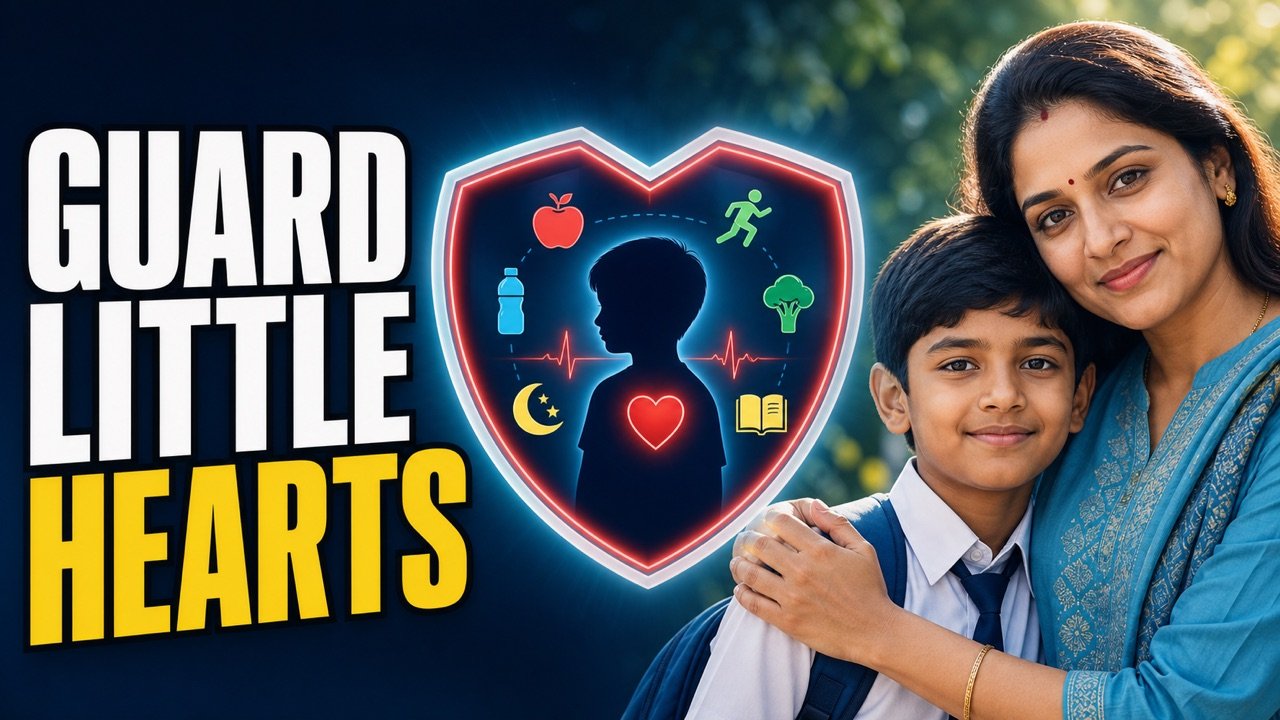
In short: Heart health starts in childhood. The early stages of artery narrowing, and risk factors like obesity, high blood pressure and unhealthy cholesterol, can begin young — and Indian children develop heart disease risk earlier than many populations. The most powerful protection is a home built around wholesome food, daily active play, limited screens, good sleep and no tobacco, plus awareness of a few warning signs and family-history clues.
Key takeaways
- The earliest changes of heart disease can begin in childhood, shaped by daily habits.
- Two separate issues: inherited or structural heart conditions (uncommon) and lifestyle-related risk (widespread).
- A family history of sudden, unexplained young death should always be mentioned to a doctor.
- Children learn by imitation — model the food and activity you want.
- Watch for fainting or chest pain during exercise, unusual breathlessness, or a racing heartbeat.
We tend to think of heart disease as a problem of middle and old age, but the foundations of a healthy — or unhealthy — heart are laid much earlier, often in childhood. The eating habits, activity levels and body weight a child develops can echo across an entire lifetime. With childhood obesity, screen time and processed food on the rise across India, protecting children’s heart health has never been more important. This guide is for parents, grandparents and caregivers who want to give the next generation the strongest possible cardiac start.
Why heart health starts in childhood
Atherosclerosis — the gradual build-up of fatty deposits in arteries that eventually causes heart attacks — can begin silently in childhood and adolescence. The habits formed in these years strongly shape adult risk. A child who grows up active, eating mostly wholesome home food and maintaining a healthy weight is far more likely to carry those protective patterns into adulthood. Conversely, childhood obesity, high blood pressure and unhealthy cholesterol are increasingly common and track forward into adult disease. Because Indians develop heart disease about a decade earlier than Western populations, building protective habits early is especially valuable here.
Two kinds of heart concerns in children
It helps to distinguish two separate issues. The first is congenital and structural heart conditions — heart problems a child is born with, or inherited heart muscle and rhythm disorders that can run in families. These are relatively uncommon but important, and a family history of sudden, unexplained death at a young age should always be mentioned to a doctor, as it can flag inherited conditions worth screening for.
The second, and far more widespread, is lifestyle-related risk — the early seeding of obesity, high blood pressure, diabetes and unhealthy cholesterol through diet and inactivity. This is the area where families have the most day-to-day influence, and where small, consistent choices pay enormous long-term dividends.
Building heart-healthy habits early
Nutrition is the cornerstone. Favour home-cooked meals built around whole grains, dal, vegetables, fruit and dairy, and treat sugary drinks, packaged snacks, fried foods and fast food as occasional rather than everyday items. Children learn by imitation, so a household that eats well together raises children who eat well. Avoid using junk food as a reward, which teaches the brain to associate unhealthy food with comfort and celebration.
Physical activity should be a natural, joyful part of childhood. Encourage outdoor play, sports, cycling and simply running around — children need substantial active time most days. Equally important is limiting recreational screen time, which displaces movement and is linked to weight gain and poorer health. Protect sleep, too, since poor sleep is associated with weight and metabolic problems even in the young.
Avoiding tobacco exposure is vital. Children in smoking households breathe secondhand smoke that harms their developing hearts and vessels, and adolescents who start tobacco set themselves up for early cardiovascular damage. A smoke-free home is a gift to a child’s heart.
Warning signs and when to seek help
Most childhood heart symptoms are not dangerous, but some deserve prompt medical attention: fainting during exercise or exertion, chest pain with activity, unusual breathlessness or tiring far more easily than peers, a racing or irregular heartbeat, or bluish lips in a young child. A family history of inherited heart disease or sudden cardiac death in a young relative should prompt a conversation with a doctor about whether screening is appropriate. When in doubt, it is always reasonable to have a child evaluated.
Making healthy choices the easy choices at home
Children rarely respond to lectures about cholesterol or arteries, but they respond powerfully to environment and example. The most effective strategy is to make the healthy choice the easy, default choice at home. Stock the kitchen with fruit, nuts, roasted snacks, milk and wholesome options within easy reach, and keep sugary drinks, chips and biscuits out of the house rather than relying on willpower. Eat meals together as a family at the table, without screens, which improves both food choices and the parent–child bond. Cook with children sometimes, so they grow up understanding and valuing real food. Crucially, model the behaviour you want — children of active, healthy-eating parents tend to become active, healthy-eating adults. Avoid labelling children as “fat” or restricting food in shaming ways, which can damage self-esteem and relationship with food; instead, focus positively on health, energy and strength for play and sport.
Screens, sleep and the modern childhood
Two features of modern childhood deserve special attention because both quietly affect heart health. The first is screen time. Hours spent on phones, tablets, television and games displace active play, are often paired with snacking, and are linked to weight gain. Setting clear, consistent limits on recreational screen time — and keeping screens out of bedrooms and away from mealtimes — protects activity levels and sleep alike. The second is sleep itself. Children and teenagers need substantial, regular sleep, and chronic sleep deprivation is associated with weight gain, poorer food choices and metabolic problems even in the young. A predictable bedtime routine, a screen-free wind-down period, and a dark, quiet sleeping environment all help. Protecting movement and sleep in childhood lays down habits and biology that pay heart dividends for decades.
A lifelong gift, not a short-term project
It helps parents to remember that the goal is not a “perfect” diet or a slim child by some arbitrary standard, but the gradual building of lifelong habits and a healthy relationship with food and movement. Children are constantly learning what is normal, and the patterns established in these years — what a typical meal looks like, whether activity is part of daily life, how the family handles treats and celebrations — tend to persist into adulthood. This is also a wonderful opportunity to involve grandparents and the wider family, since heart-healthy traditions passed across generations are especially durable. Every wholesome meal, every active evening, every smoke-free room is a small, lasting investment in a child’s heart. You are not just protecting them today; you are shaping the adult heart they will carry for the rest of their lives.
Frequently Asked Questions
Can children really develop the beginnings of heart disease? Yes. The early stages of artery narrowing and risk factors such as obesity, high blood pressure and unhealthy cholesterol can begin in childhood, which is why early habits matter so much.
How much physical activity do children need? Children generally need a substantial amount of active play and exercise most days. The exact amount varies with age, but the practical goal is daily, enjoyable movement and limited screen time.
Should my child’s cholesterol or blood pressure be checked? Routine checks may be advised in children with obesity, a strong family history of early heart disease, or other risk factors. Discuss your child’s individual situation with your paediatrician.
Does a family history of young sudden cardiac death affect my child? It can. Some heart conditions are inherited. Tell your doctor about any sudden, unexplained deaths at a young age in the family so they can advise whether screening is warranted.
What is the single most important thing I can do for my child’s heart? Build a home environment of wholesome food, daily activity, limited screen time and no tobacco. Consistent everyday habits matter far more than any single intervention.
Talking to teenagers about their hearts
Adolescence brings its own heart-health challenges and opportunities. Teenagers gain more independence over their food, activity and habits, and they face new pressures — junk food, sugary and energy drinks, long hours on screens, irregular sleep, exam stress, and sometimes the temptation of tobacco, alcohol or, in fitness-focused circles, supplements. This is a crucial window in which the patterns of adulthood take shape, so engaging teenagers thoughtfully matters. Lecturing rarely works; teens respond better to respect, honest information and being treated as capable of making their own informed choices.
Frame heart health in terms that resonate with them — energy, sporting performance, looking and feeling good, mental wellbeing and independence — rather than distant fears of disease decades away. Involve them in food shopping and cooking, encourage sports and activities they genuinely enjoy, and model healthy habits yourself, since example speaks louder than instruction. Talk frankly about the real cardiac risks of smoking, vaping, excessive energy drinks and unsupervised supplements or steroids, which are increasingly relevant to young people. Support good sleep and help them manage stress in healthy ways. And take seriously any warning symptoms, such as fainting during exercise, that warrant medical attention. Empowering teenagers with knowledge and respect helps them carry protective habits into adult life.
How much screen time is safe for children? There’s no single number that fits every age, but recreational screen time should be clearly limited, kept out of bedrooms and away from mealtimes, and balanced with plenty of active play. Quality sleep and daily movement should always take priority over screens.
How do I talk to my teenager about heart health without nagging? Frame it around things teens care about — energy, sport, looking and feeling good, and independence — rather than distant disease. Involve them in cooking and activity, model healthy habits yourself, and be honest about the real risks of tobacco, vaping and unsupervised supplements.
The bottom line for parents and families
Protecting a child’s heart is one of the most valuable, lasting gifts a family can give, because the habits and health of childhood echo across an entire lifetime. The foundations are simple and within every family’s reach: wholesome home food, daily active play, limited screen time, good sleep, and a smoke-free home. Equally important is taking family history seriously and seeking medical advice for warning signs such as fainting during exercise. For parents, the most powerful tool is example — children become what they see lived around them. For grandparents and the wider family, heart-healthy traditions passed down are especially durable. The goal is not perfection or a particular body shape, but the gradual building of lifelong healthy habits and a positive relationship with food and movement. Start early, lead by example, and you shape the adult heart your child will carry for decades.
Join the HHIF Heart Health Community
Raising heart-healthy children is easier with reliable guidance and a community of like-minded families. You don’t have to navigate it alone.
Heart disease is India’s number one killer, and the habits that prevent it begin in childhood — yet parents are flooded with conflicting advice and marketing. That’s why patient communities matter: they cut through misinformation with expert-backed, practical knowledge and shared experience.
The Heart Health India Foundation (HHIF) is India’s first patient-led heart health organisation, welcoming parents, caregivers, health professionals and health-conscious individuals. Members receive real-time guidance from cardiologists, dietitians and physiotherapists, myth-busting content, family-friendly challenges, webinars and resources, and the support of a caring community. Joining takes about two minutes, connects you to our WhatsApp and Facebook groups, and is 100% free, forever.
Join the HHIF Heart Health Community today »
Medical disclaimer
This article is for general education and awareness and is not a substitute for professional medical advice. Always consult a qualified doctor about your own heart health and before starting, stopping or changing any medication. If you or someone near you may be having a heart attack or other medical emergency, seek emergency care immediately.
Related reading from Heart Health India Foundation
- Sudden arrhythmic death syndrome (SADS)
- Why sleep matters for the heart
- Good fats vs bad fats, explained
- Hidden salt in everyday Indian foods
- Understanding heart health: the basics