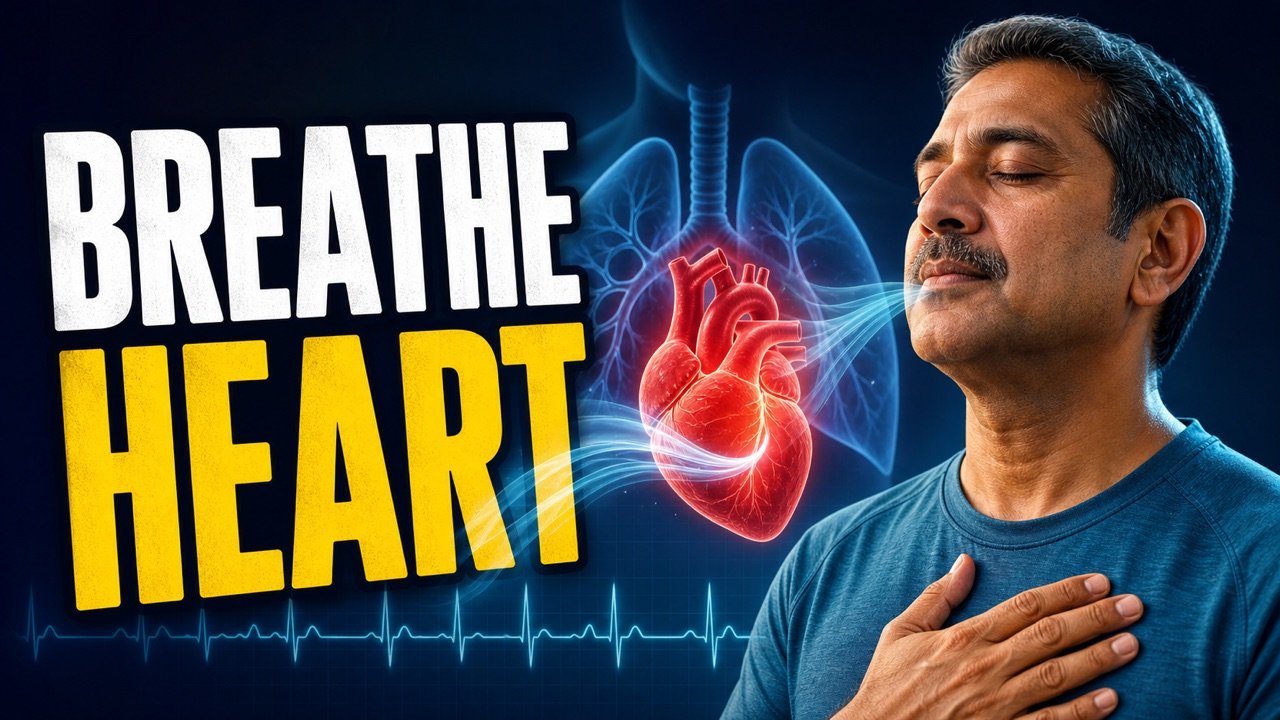
In short: Slow, deep breathing gently shifts the body toward its “rest and digest” state, easing heart rate, calming the nervous system and supporting healthy blood pressure over time. Simple techniques — slow diaphragmatic breathing, an extended exhale, and gentle pranayama — take a few minutes a day and complement (never replace) your medicines and medical care.
Key takeaways
- Slow breathing activates the calming (parasympathetic) nervous system.
- A few minutes daily helps stress, heart rate and blood pressure.
- Techniques are free and portable — no equipment needed.
- Breathing complements, not replaces, your medicines.
- Heart patients should keep it gentle and avoid forceful breath-holding without guidance.
We breathe about twenty thousand times a day without thinking about it, yet how we breathe has a direct, measurable effect on the heart. Slow, deliberate breathing can calm the nervous system, lower heart rate and blood pressure, reduce stress hormones and improve a sense of wellbeing. For heart patients and anyone wanting to protect their cardiovascular health, learning a few simple breathing exercises is one of the easiest, cheapest and most portable tools available — no equipment, no cost, and you carry the technique with you everywhere.
This article draws on the Heart Health India Foundation expert discussion Simple Breathing Exercises for a Healthier Heart. New to these topics? Start with our guide to understanding heart health.
The science: how breathing influences the heart
Your heart rate is constantly adjusted by the autonomic nervous system, which has two branches: the sympathetic (“fight or flight”), which speeds things up, and the parasympathetic (“rest and digest”), which slows them down. Fast, shallow, upper-chest breathing tends to activate the stress response. Slow, deep breathing — especially with a longer exhale — does the opposite, gently engaging the parasympathetic system, slowing the heart and relaxing blood vessels. Over time, regular slow-breathing practice is associated with lower blood pressure and reduced stress, both of which protect the heart.
Breathing exercises also improve lung expansion and oxygen exchange, which is particularly valuable for people recovering from heart surgery or living with heart and lung conditions. And because stress and anxiety are themselves cardiac risk factors, the calming effect of breathwork has real cardiovascular value.
Simple techniques you can start today
Diaphragmatic (belly) breathing is the foundation. Sit or lie comfortably, place one hand on your chest and one on your abdomen, and breathe in slowly through the nose so that your belly — not your chest — rises. Exhale gently and fully. Practising for a few minutes daily trains a calmer, more efficient breathing pattern.
Slow-paced breathing simply means reducing your breathing rate. Aim to breathe at a relaxed, unhurried pace, making the exhale a little longer than the inhale. A common gentle pattern is to breathe in for a count of about four and out for about six, but the exact numbers matter less than the slow, comfortable rhythm.
Pursed-lip breathing — inhaling through the nose and exhaling slowly through gently pursed lips, as if blowing out a candle — helps ease breathlessness and is often used by people with heart and lung conditions.
Traditional pranayama practices, such as gentle alternate-nostril breathing, are popular in India and can be calming. The key for heart patients is to keep all techniques gentle: avoid forceful, rapid or breath-holding practices unless specifically cleared and guided by a qualified instructor or your doctor.
How to practise safely and build a habit
Begin with just five minutes once or twice a day, ideally at a calm time such as morning or before sleep. Sit comfortably, relax your shoulders, and never strain. Mild light-headedness can occur if you over-breathe, so keep it gentle and return to normal breathing if you feel dizzy. Heart patients, especially those recovering from surgery or with significant heart or lung disease, should check with their doctor or cardiac rehabilitation team before starting vigorous breathing practices, and should favour gentle techniques. Consistency is what brings benefit — a few minutes daily does far more than an occasional long session.
A simple daily routine you can follow
If you’d like a structure to begin with, here is a gentle routine suitable for most people (after clearing it with your doctor if you have significant heart or lung disease). Find a quiet spot and sit comfortably with your back supported and shoulders relaxed. Spend the first minute simply noticing your natural breath without changing it. Then practise diaphragmatic breathing for two to three minutes, letting your belly rise on the inhale and fall on the exhale. Next, move into slow-paced breathing for a few minutes, gently lengthening the exhale so it is a little longer than the inhale, at a relaxed and comfortable pace. Finish with a minute of stillness, breathing normally and noticing how your body feels. Practising this once in the morning and once in the evening — or whenever you feel tense — builds a calming habit. Over time you may notice you breathe more slowly and deeply even without thinking about it, which is exactly the goal.
When breathing exercises are especially helpful
Certain moments lend themselves naturally to breathwork. Slow breathing is a wonderful tool in the face of acute stress — before a difficult conversation, during a traffic jam, or when worry spikes — because it gives you an immediate, portable way to calm your nervous system. It can help ease the racing-heart sensation of anxiety, though any new or severe chest symptoms should always be medically checked rather than simply “breathed through.” Breathing practices are valuable before sleep, helping the body shift into rest mode. For people recovering from heart surgery, gentle breathing exercises support lung re-expansion and recovery. And for those managing high blood pressure, regular slow breathing can be a helpful complement to medical treatment. The beauty of breathwork is that it asks for nothing but a few quiet minutes, and it is always available to you.
Combining breathing with a heart-healthy life
Breathing exercises are most powerful as one thread in a broader heart-healthy lifestyle rather than a standalone fix. They pair naturally with gentle movement such as walking and yoga, with good sleep, and with a calm wind-down routine. They complement, but never replace, the essentials of cardiac care: taking prescribed medicines, eating well, staying active, not smoking and attending check-ups. Think of breathwork as a tool that helps you manage the stress and tension that quietly harm the heart, while supporting a sense of calm and control over your own wellbeing. Many people find that a few minutes of conscious breathing each day becomes a small anchor of peace — a reminder that, amid the demands of life, they can always return to the steady rhythm of their own breath, and in doing so, give their heart a moment of ease.
Frequently Asked Questions
Slow, deep breathing can produce a modest, real reduction in blood pressure and stress, especially when practised regularly. It complements, rather than replaces, prescribed treatment.
Gentle techniques such as diaphragmatic and slow-paced breathing are generally safe and beneficial. Avoid forceful or breath-holding practices unless cleared by your doctor, particularly after surgery or with significant heart or lung disease.
Starting with about five minutes once or twice a day is enough to begin. Regular short sessions are more effective than occasional long ones.
Gentle pranayama can be calming and supportive for heart health. Choose slow, comfortable techniques and avoid vigorous or rapid forms unless guided by a qualified instructor.
No. Breathing exercises are a helpful complement to medical treatment, not a substitute. Continue all prescribed medicines and discuss any changes with your doctor.
Common mistakes to avoid
While breathing exercises are simple and safe, a few common mistakes can reduce their benefit or cause discomfort. The first is breathing too forcefully or too fast in an attempt to “do it properly” — this can cause light-headedness and tingling from over-breathing, and it defeats the calming purpose. Breathwork for the heart should always be gentle and unhurried. The second mistake is breathing into the chest rather than the belly; shallow upper-chest breathing keeps the body in a tenser state, whereas allowing the abdomen to rise engages the diaphragm and promotes relaxation. The third is straining to hold the breath for long periods, which heart patients in particular should avoid unless specifically guided.
Other pitfalls include practising with tense shoulders and poor posture, which restricts easy breathing, and trying to force relaxation, which paradoxically creates tension — the aim is to allow calm, not to manufacture it. Some people also give up too soon, expecting instant transformation; the benefits of breathwork build gently with regular practice over weeks. Finally, never use breathing exercises to dismiss or “push through” worrying symptoms such as new chest pain, severe breathlessness or palpitations, which always need medical attention. Approached gently, patiently and sensibly, breathing exercises are a safe, accessible and genuinely beneficial tool for supporting a calmer heart and mind.
What is the best time of day to do breathing exercises? Any calm moment works, but many people find mornings and the period before sleep especially helpful. The most important thing is consistency — a few minutes regularly matters more than the exact time of day.
Can breathing exercises help with anxiety and palpitations? Slow, gentle breathing can calm the nervous system and ease the racing-heart feeling of anxiety. However, new or severe palpitations or chest symptoms should always be medically evaluated rather than simply breathed through.
Do I need any equipment or a teacher to start? No. Simple techniques like belly breathing and slow-paced breathing need no equipment and can be self-taught. If you have significant heart or lung disease, check with your doctor, and consider guidance for more advanced practices.
The bottom line for a calmer heart
Breathing is the one autonomic function we can consciously control, and that makes it a uniquely accessible tool for heart health. Slow, gentle breathing calms the nervous system, eases blood pressure and stress, supports lung recovery and brings a sense of control — all with no cost, no equipment and no side effects when practised sensibly. For heart patients, gentle techniques are a valuable complement to medical care, never a replacement for it. For people under stress, a few minutes of conscious breathing offers an instant, portable way to reset. And for anyone wanting to protect their heart, a daily breathing habit is a small investment with quiet, cumulative rewards. The key is gentleness, consistency and patience — and the willingness to return, again and again, to the steady rhythm of your own breath. In a hurried world, that simple act gives your heart a moment of ease.
Join the HHIF Heart Health Community
Building calming, heart-healthy habits is easier with guidance and a supportive community around you. You don’t have to learn it all alone.
Heart disease is India’s number one killer, and stress is a major, under-addressed contributor. Misinformation about “miracle” techniques is everywhere. That’s why patient communities matter: they offer reliable, expert-led practices and shared encouragement.
The Heart Health India Foundation (HHIF) is India’s first patient-led heart health organisation. Members get real-time guidance from cardiologists, physiotherapists and other experts, myth-busting content, wellbeing challenges, webinars and resources, and the support of a caring community. Joining takes about two minutes, connects you to our WhatsApp and Facebook groups, and is 100% free, forever.
Join the HHIF Heart Health Community today »
Medical disclaimer
This article is for general education and awareness and is not a substitute for professional medical advice. Always consult a qualified doctor about your own heart health and before starting, stopping or changing any medication. If you or someone near you may be having a heart attack or other medical emergency, seek emergency care immediately.
Related reading from Heart Health India Foundation
- Simple grounding techniques to reduce stress
- How chronic stress impacts heart health
- Why sleep matters for the heart
- HHIF session: yoga-based cardiac rehabilitation
- Understanding heart health: the basics