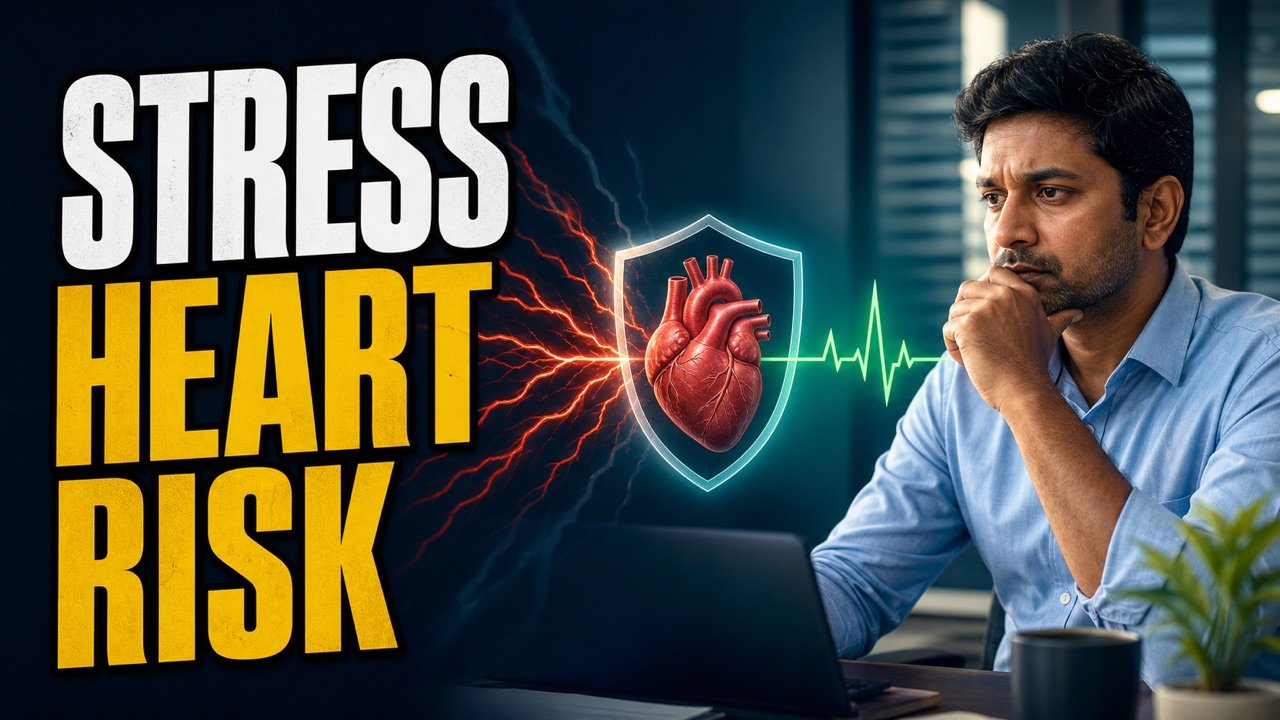
In short: Chronic workplace stress and burnout quietly raise heart risk — by lifting blood pressure and inflammation and by driving unhealthy habits like poor sleep, skipped meals, smoking and inactivity. Recognising burnout early and protecting your heart at work — through boundaries, movement, sleep and support — is realistic and worthwhile. Workplaces share responsibility too.
Key takeaways
- Chronic work stress harms the heart directly and indirectly.
- Burnout has warning signs: exhaustion, cynicism, reduced performance.
- The stress-and-unhealthy-habits cycle is the bigger danger.
- Small, realistic boundaries and routines help — sleep is the overlooked link.
- Workplaces and families share responsibility for heart-healthy work.
Long hours, relentless deadlines, job insecurity, difficult bosses and the blurred line between office and home have made chronic stress an almost universal feature of modern working life. We often treat stress as merely unpleasant — something to be endured. But mounting evidence shows that sustained mental and workplace stress is a genuine risk factor for heart disease. For India’s hardworking professionals, understanding the link between workplace stress and heart disease is essential self-care, not a luxury.
This article draws on the Heart Health India Foundation expert discussion Work and Mental Stress Leading to Cardiac Ailments. New to these topics? Start with our guide to understanding heart health.
How chronic stress harms the heart
Stress is meant to be a short-term survival response. When you face a threat, your body releases hormones like adrenaline and cortisol that raise your heart rate and blood pressure to prepare you for action. This is harmless in brief bursts. The problem arises when stress becomes chronic — when the body stays in a low-grade “fight or flight” state for months and years. Persistently elevated stress hormones contribute to higher blood pressure, inflammation in the arteries, and a tendency for the blood to clot more easily.
Stress also acts indirectly, through behaviour. Stressed people are more likely to smoke, drink too much, sleep poorly, skip exercise, and reach for fried, sugary or excessive comfort food. They are more likely to miss medical appointments and neglect their medicines. In this way, chronic work stress quietly worsens almost every traditional heart risk factor at once. Extreme emotional stress can even trigger a temporary heart-muscle weakening sometimes called “broken heart syndrome,” and acute stress can precipitate events in vulnerable people.
Recognising the warning signs of burnout
Burnout is more than tiredness; it is a state of chronic physical and emotional exhaustion often accompanied by cynicism and a sense of reduced effectiveness. Warning signs include persistent fatigue that rest does not fix, difficulty sleeping, irritability, frequent headaches or stomach upset, palpitations, loss of motivation, and feeling constantly overwhelmed. Physical symptoms such as a racing heart, chest tightness or breathlessness should always be evaluated medically rather than simply attributed to stress, because they can overlap with genuine cardiac problems.
Practical ways to protect your heart at work
You cannot always control your workload, but you can change how you respond to it and build buffers that protect your heart. Start with the basics that stress tends to erode: protect your sleep, keep moving, and eat real food rather than skipping meals or living on snacks and caffeine. Even short walks during the day lower stress hormones and break up sitting.
Build deliberate recovery into your routine. Brief, regular pauses — a few minutes of slow breathing, stepping away from the screen, or a short walk — help reset the nervous system far better than pushing through for hours. Techniques such as deep breathing, meditation, yoga and mindfulness have measurable calming effects on heart rate and blood pressure. Set realistic boundaries where you can: define when the workday ends, resist the urge to be constantly reachable, and learn to say no to non-essential demands.
Equally important is connection. Talking to colleagues, friends or family about pressures reduces their weight, and strong social support is itself protective for the heart. If stress tips into persistent anxiety, low mood or hopelessness, treat it as seriously as any physical symptom and seek help from a mental health professional. Caring for your mind is caring for your heart.
When to seek medical help
Do not dismiss physical symptoms as “only stress.” Chest pain or tightness, breathlessness, palpitations, dizziness or fainting deserve prompt medical evaluation. If you have existing heart disease or risk factors, tell your doctor about high stress levels, since it is a relevant part of your overall risk picture and may influence your care.
The vicious cycle of stress and unhealthy habits
One of the most important things to understand about workplace stress and heart disease is that much of the damage is indirect, flowing through the habits stress pushes us toward. When deadlines loom and pressure mounts, the first casualties are usually the very behaviours that protect the heart. Exercise gets skipped because there’s “no time.” Meals become irregular, hurried and reliant on fried, sugary or processed convenience food. Sleep shortens as work bleeds into the night. Many people self-medicate stress with extra cigarettes, alcohol or caffeine. Medical appointments get postponed, and prescribed medicines are forgotten. Each of these, on its own, raises cardiovascular risk; together, under chronic stress, they compound. Recognising this pattern is empowering, because it reveals where to intervene: protecting sleep, movement and nutrition during stressful periods is not a luxury but a direct form of heart protection. The aim is to break the cycle at any point you can.
Building resilience, not just managing crises
Resilience — the capacity to recover from pressure — can be deliberately built, and doing so protects both mind and heart. Resilient people are not those who never feel stress, but those who recover from it well. The foundations are the same habits that protect the heart: regular physical activity, good sleep, real food and strong relationships. On top of these, simple daily practices help reset the nervous system: a few minutes of slow breathing or meditation, time in nature, prayer or reflection, hobbies that absorb attention, and laughter and play. Learning to recognise your own early warning signs of overload — irritability, poor sleep, a short temper, physical tension — lets you act before stress becomes chronic. It also helps to question unrealistic expectations, both those imposed by others and those we impose on ourselves; perfectionism and an inability to switch off are powerful drivers of burnout.
Workplaces, families and shared responsibility
While individuals can do a great deal, it is worth acknowledging that chronic work stress is not solely a personal failing to be fixed by more willpower. Workplace culture, workload, job security and management style all shape stress levels, and healthier workplaces — with reasonable hours, clear expectations, supportive managers and respect for time off — protect employees’ hearts. Where you have any influence, advocating for these is worthwhile. At home, families can help by creating genuine downtime, sharing domestic loads, and not treating constant availability as normal or admirable. Talking openly about pressure, rather than hiding it behind a brave face, reduces its toll and strengthens the relationships that themselves protect the heart. Caring for your heart in a stressful world is partly individual and partly collective — and you deserve support on both fronts.
Frequently Asked Questions
Stress is a contributing risk factor rather than usually a sole cause. Chronic stress raises blood pressure and inflammation and worsens other risk factors, while extreme acute stress can trigger events in vulnerable people.
It is a temporary weakening of the heart muscle, usually triggered by intense emotional or physical stress, that can mimic a heart attack. Most people recover, but it requires medical evaluation.
You often cannot tell them apart on your own, which is why chest pain, breathlessness and palpitations should always be checked by a doctor rather than assumed to be “just stress.”
Yes. Practices such as deep breathing, meditation and yoga can lower heart rate and blood pressure and reduce stress hormones, supporting overall cardiovascular health.
Absolutely. Stress is a meaningful part of your risk profile and can affect blood pressure, symptoms and habits, so it is worth discussing openly.
Sleep: the overlooked link between stress and the heart
When people think about protecting the heart from stress, they often overlook sleep — yet it may be one of the most important factors of all. Chronic stress and poor sleep feed each other in a vicious cycle: worry and an overactive mind make it hard to fall and stay asleep, while sleep deprivation raises stress hormones, blood pressure and inflammation, and erodes the emotional resilience needed to cope the next day. Over time, persistent short or poor-quality sleep is associated with higher blood pressure and increased cardiovascular risk, making it a genuine heart-health concern rather than merely a matter of feeling tired.
Protecting sleep is therefore a direct way to protect the heart. Aim for a regular sleep schedule, going to bed and waking at consistent times. Create a calming wind-down routine and keep screens, work and stimulating content out of the last part of the evening, since blue light and mental stimulation delay sleep. Limit caffeine later in the day, avoid heavy late meals and alcohol close to bedtime, and keep the bedroom cool, dark and quiet. If racing thoughts keep you awake, brief relaxation or slow-breathing practices can help. And if you snore heavily, wake unrefreshed, or feel very sleepy by day, ask your doctor about sleep apnoea, a common and treatable condition that strains the heart. Good sleep is not a luxury; it is foundational cardiac care.
How does poor sleep affect my heart? Chronic short or poor-quality sleep raises blood pressure, stress hormones and inflammation and is linked to higher heart risk, while also weakening your resilience to stress. Protecting sleep is a direct and important way to protect your heart.
Can a job really damage my heart? Chronic work stress contributes to heart risk both directly, through raised blood pressure and inflammation, and indirectly, by encouraging poor sleep, inactivity, unhealthy eating and tobacco or alcohol use. Managing stress and building recovery into your routine genuinely protects the heart.
The bottom line for a stressful working life
Workplace stress is a genuine, if often invisible, contributor to heart disease — partly through its direct effects on the body and partly through the unhealthy habits it encourages. The good news is that you have more power over its impact than you might think. Protecting sleep, movement and nutrition during pressured periods, building deliberate recovery into your days, setting boundaries, staying connected, and seeking help when stress tips into anxiety or depression all meaningfully protect the heart. For heart patients, managing stress is part of treatment, not an optional extra. And while individuals can do much, healthier workplaces and supportive families share the responsibility too. You deserve a working life that does not cost you your heart — and small, consistent steps toward managing stress are an investment in both your wellbeing today and your cardiovascular health for years to come.
Join the HHIF Heart Health Community
Managing stress for your heart is far easier when you are not carrying it alone. Support and shared experience are powerful medicine.
Heart disease is India’s number one killer, and chronic stress quietly fuels it — yet stress and emotional wellbeing are rarely discussed openly. That’s why patient communities matter: they create a safe space to share, learn evidence-based coping skills, and feel understood.
The Heart Health India Foundation (HHIF) is India’s first patient-led heart health organisation. Joining gives you real-time guidance from cardiologists and other experts, myth-busting content, habit-building challenges, webinars and resources, and a supportive community — including focused circles such as Emotional Recovery After a Heart Attack. It takes about two minutes, connects you to our WhatsApp and Facebook groups, and is 100% free, forever.
Join the HHIF Heart Health Community today »
Medical disclaimer
This article is for general education and awareness and is not a substitute for professional medical advice. Always consult a qualified doctor about your own heart health and before starting, stopping or changing any medication. If you or someone near you may be having a heart attack or other medical emergency, seek emergency care immediately.
Related reading from Heart Health India Foundation
- How chronic stress impacts heart health
- Simple grounding techniques to reduce stress
- Why sleep matters for the heart
- Stay active during busy workdays
- Understanding heart health: the basics