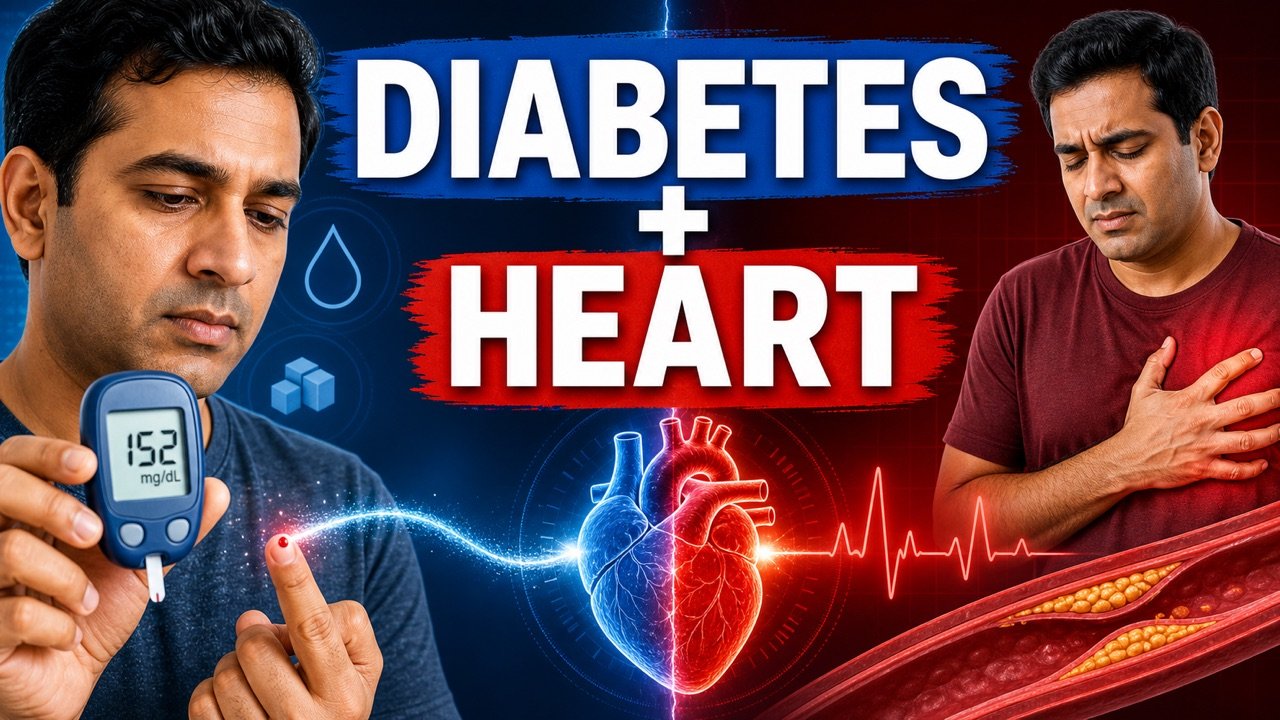
In short: Diabetes and heart disease are deeply linked. Persistently high blood sugar damages the arteries that feed the heart and usually travels with high blood pressure and abnormal cholesterol, multiplying risk. In India this strikes a decade earlier than in Western populations. Diabetes can also cause “silent” heart attacks with little chest pain — so screening and protecting blood pressure, cholesterol and weight matter as much as blood sugar.
Key takeaways
- Diabetes is treated by doctors as a high cardiovascular-risk condition, even before symptoms.
- High blood glucose causes roughly 11% of cardiovascular deaths worldwide (WHO).
- Diabetic nerve damage can cause “silent” heart attacks with no classic chest pain.
- Protect the heart by managing blood sugar, blood pressure, cholesterol, weight and tobacco together.
- Indians develop diabetes younger and at lower body weight — so screen earlier.
India is often described as the diabetes capital of the world, and that statistic carries a hidden, heavier tragedy: diabetes is also one of the most powerful drivers of heart disease. Many people manage their blood sugar carefully yet never realise that the bigger threat to their lives is what diabetes is quietly doing to their heart and arteries. Understanding the link between diabetes and heart disease — and acting on it early — can add years of healthy life.
Why diabetes is so hard on the heart
Persistently high blood sugar damages blood vessels throughout the body, including the coronary arteries that supply the heart. Over time this accelerates atherosclerosis, the build-up of fatty plaque that narrows arteries and sets the stage for heart attacks and strokes. Diabetes rarely travels alone, either — it often comes bundled with high blood pressure, abnormal cholesterol (high triglycerides and low HDL), and excess abdominal fat, a combination sometimes called metabolic syndrome. Each of these is a heart risk factor in its own right, and together they multiply the danger.
People with diabetes are considerably more likely to develop coronary artery disease and to develop it earlier. They are also prone to a specific weakening of the heart muscle and to heart failure. This is why doctors often treat a person with diabetes as already being in a high cardiovascular risk category, even before any heart symptoms appear.
The “silent” danger: heart attacks without typical pain
One of the most frightening aspects of diabetic heart disease is that nerve damage from long-standing diabetes can blunt the sensation of pain. As a result, a person with diabetes may have a heart attack with little or no classic chest pain — a so-called “silent” heart attack. They might instead feel only unusual fatigue, breathlessness, indigestion, sweating or a vague sense of being unwell. Because the warning is muted, the danger is greater. This makes regular heart screening and attention to subtle symptoms especially important for anyone living with diabetes.
How to protect your heart when you have diabetes
The encouraging news is that the same actions that control diabetes also protect the heart, and modern care can dramatically reduce risk.
Keeping blood sugar within your target range is the foundation, but it is only part of the picture. Equally important is controlling blood pressure and cholesterol. Many people with diabetes benefit from cholesterol-lowering treatment to reach lower LDL targets, because Indians develop heart disease about a decade earlier than Western populations and the high-risk thresholds are stricter. Newer classes of diabetes medicines have been shown not only to lower blood sugar but also to protect the heart and kidneys — ask your doctor whether these are appropriate for you.
Lifestyle remains powerful. A diet rich in whole grains, legumes, vegetables and healthy fats, with limited sugar, refined carbohydrates, fried foods and salt, helps blood sugar, weight and the heart simultaneously. Regular physical activity improves insulin sensitivity and cardiovascular fitness. Stopping tobacco is non-negotiable, because smoking and diabetes together are an especially deadly combination. And regular check-ups — including blood pressure, lipids, kidney function and an assessment of heart risk — let problems be caught and treated early.
Why Indians with diabetes face higher heart risk
There are specific reasons the diabetes–heart connection is so dangerous in the Indian context. South Asians tend to develop type 2 diabetes at a younger age and at a lower body weight than many other populations, often carrying excess fat around the abdomen even when overall weight looks normal — the so-called “thin-fat” pattern. This abdominal fat is metabolically active and drives insulin resistance, inflammation and harmful changes in cholesterol. Indians also frequently have a particular lipid pattern with high triglycerides and low protective HDL cholesterol, which is especially atherogenic. Combine this with high rates of high blood pressure, a strong genetic predisposition, and lifestyle shifts toward refined carbohydrates, sugar and inactivity, and you have a population in which diabetes translates into heart disease unusually early and aggressively. Understanding this is not cause for despair but for vigilance: it means screening and risk-factor control should begin earlier and be pursued more determinedly.
The other organs diabetes affects — and why it’s connected
Diabetes does not damage the heart in isolation; it harms the entire vascular system, and these effects are interlinked. The same processes that injure the coronary arteries also damage the arteries to the brain (raising stroke risk), the kidneys (diabetic kidney disease, which in turn worsens blood pressure and heart risk), the eyes and the nerves and blood vessels of the legs and feet. Kidney disease and heart disease in particular feed on each other, which is why doctors increasingly think in terms of protecting the heart and kidneys together. The encouraging flip side is that the steps that protect your heart — controlling sugar, blood pressure and cholesterol, staying active, eating well and not smoking — protect all of these organs simultaneously. One coherent set of healthy habits defends your whole body.
Building a daily routine that protects your heart
Translating knowledge into daily life is what matters. Aim for a consistent routine: regular meals built around vegetables, dal, whole grains and adequate protein, with sugar, sweets, fried foods and refined carbohydrates kept to a minimum; daily physical activity such as a brisk walk, which lowers blood sugar and strengthens the heart; taking all medicines reliably; and monitoring as advised. Keep a simple record of your blood sugar, blood pressure and weight so you and your doctor can spot trends. Don’t smoke, limit alcohol, prioritise sleep, and manage stress, since all of these influence blood sugar and the heart. Attend your check-ups even when you feel well, because the most dangerous complications develop silently. Small, consistent actions, repeated daily, are what keep both diabetes and heart disease under control over a lifetime.
Frequently Asked Questions
Does having diabetes mean I will definitely get heart disease? No, but it significantly raises your risk. With good control of blood sugar, blood pressure, cholesterol and lifestyle, many people with diabetes substantially lower their heart-disease risk.
Can a person with diabetes have a heart attack without chest pain? Yes. Diabetes-related nerve damage can blunt pain, leading to “silent” heart attacks that show up as fatigue, breathlessness or indigestion. This makes screening and symptom awareness vital.
What blood sugar level protects my heart? Your individual targets should be set with your doctor, since they depend on your age, health and medicines. Consistent control, rather than chasing a single number, is what protects the heart over time.
Are some diabetes medicines better for the heart? Yes. Certain newer diabetes drugs have proven heart and kidney benefits beyond lowering blood sugar. Ask your physician whether they suit your situation.
How often should a diabetic get their heart checked? At minimum, blood pressure, cholesterol and overall cardiovascular risk should be reviewed regularly — often annually or as your doctor advises — and any new symptoms should prompt earlier evaluation.
Recognising a heart emergency when you have diabetes
Because diabetes can blunt the classic warning signs of a heart attack, people with diabetes and their families need to be especially alert to subtler signals. A diabetic heart attack may show up not as crushing chest pain but as unusual breathlessness, profound fatigue, sweating, nausea or indigestion-like discomfort, light-headedness, or pain in the jaw, neck, back or arm. Sometimes there is only a vague sense of being unwell. Because these symptoms are easy to dismiss, the safest approach is to treat any sudden, unexplained or severe symptoms seriously and seek medical help promptly rather than waiting to see if they pass.
It helps to have a plan in advance. Know the location of the nearest hospital with cardiac facilities, keep emergency numbers accessible, and ensure family members understand that in a possible heart attack, getting to hospital quickly saves heart muscle and lives. People with diabetes should also keep their condition well documented, since blood sugar can fluctuate during an illness or emergency. Regular check-ups, good day-to-day control, and awareness of these atypical warning signs together form a powerful safety net. When it comes to the diabetic heart, a cautious, prepared approach is always wiser than hoping a worrying symptom is nothing.
Why do Indians with diabetes develop heart disease earlier? South Asians tend to develop diabetes younger and at lower body weights, often with harmful belly fat, a lipid pattern of high triglycerides and low HDL, and high rates of high blood pressure — a combination that drives heart disease unusually early and aggressively.
Does diabetes affect organs other than the heart? Yes. High blood sugar damages blood vessels throughout the body, raising the risk of stroke, kidney disease, eye and nerve damage, and poor circulation in the legs. The good news is that the same habits that protect the heart protect these organs too.
Can lifestyle changes reverse the heart risk from diabetes? Lifestyle changes cannot erase all risk, but they can dramatically lower it. Good control of blood sugar, blood pressure, cholesterol, weight and tobacco, combined with regular activity, substantially reduces the chance of heart attacks and strokes in people with diabetes, and the benefits grow the earlier you start.
The bottom line for patients, caregivers and people at risk
Diabetes and heart disease are deeply intertwined, and in India that link strikes early and hard. But this knowledge is power, not doom. For people with diabetes, protecting the heart means looking beyond blood sugar alone to blood pressure, cholesterol, weight, activity and tobacco — and asking your doctor about medicines that protect the heart and kidneys. For caregivers, awareness of “silent” diabetic heart attacks and the value of regular screening can be life-saving. And for the many people with pre-diabetes or a family history, acting early — through lifestyle and timely medical care — can prevent or delay both diabetes and its cardiac complications. The same set of healthy habits defends the heart, brain, kidneys and more. With consistent care and the right support, people with diabetes can substantially lower their heart risk and live long, full lives.
Join the HHIF Heart Health Community
Managing diabetes and your heart at the same time is a lot to carry — and far lighter with a community beside you. You don’t have to manage it alone.
Heart disease is India’s number one killer, and diabetes is one of its biggest accelerators, yet too many people get fragmented advice and little ongoing support. Misinformation is rampant, and patients often feel isolated juggling diet, medicines and monitoring. That’s why patient communities matter: they bring reliable, expert-backed knowledge and shared experience into one supportive space.
The Heart Health India Foundation (HHIF) is India’s first patient-led heart health organisation. Joining connects you with cardiologists, dietitians and physiotherapists for real-time guidance, plus myth-busting content, habit-building challenges, webinars and resources, and focused circles such as Nutrition & Cholesterol. It takes about two minutes, adds you to our WhatsApp and Facebook communities, and is 100% free, forever.
Join the HHIF Heart Health Community today »
Medical disclaimer
This article is for general education and awareness and is not a substitute for professional medical advice. Always consult a qualified doctor about your own heart health and before starting, stopping or changing any medication. If you or someone near you may be having a heart attack or other medical emergency, seek emergency care immediately.
Related reading from Heart Health India Foundation
- Understanding LDL, Lp(a) and triglycerides
- Why some Indians don’t respond to BP medicines
- What a basic heart-risk screening includes
- Hidden salt sources in everyday Indian foods
- Understanding heart health: the basics