After heart surgery, one question almost every patient and family asks is:
“When can I start moving again?”
There’s often a lot of confusion around this. Some people feel they should rest completely. Others are unsure how much activity is safe.
The truth is simple—movement is not just safe, it’s necessary for recovery.
The key is knowing when to start and how to do it the right way.
Why Movement Matters More Than You Think
After surgery, your body is healing—but it’s also getting weaker due to inactivity.
If you stay completely inactive:
• your muscles lose strength
• your stamina drops
• recovery becomes slower
But when you start moving safely and gradually, your body begins to rebuild itself.
Movement helps:
• improve blood circulation
• support breathing and lung function
• rebuild muscle strength
• restore confidence
In fact, recovery programmes often begin with something as simple as walking in the hospital corridor.
So, When Should You Start Moving?
This is where most people are surprised.
You don’t wait weeks—you start early
In many cases:
• patients begin sitting or standing within a day
• light walking starts within 1–2 days after surgery
Even small steps count.
Why starting early helps
Early movement:
• reduces risk of complications like lung infections
• prevents stiffness
• improves circulation
• speeds up overall recovery
👉 The important thing to remember:
This isn’t about exercising hard. It’s about starting gently and safely.
How Activity Builds Over Time
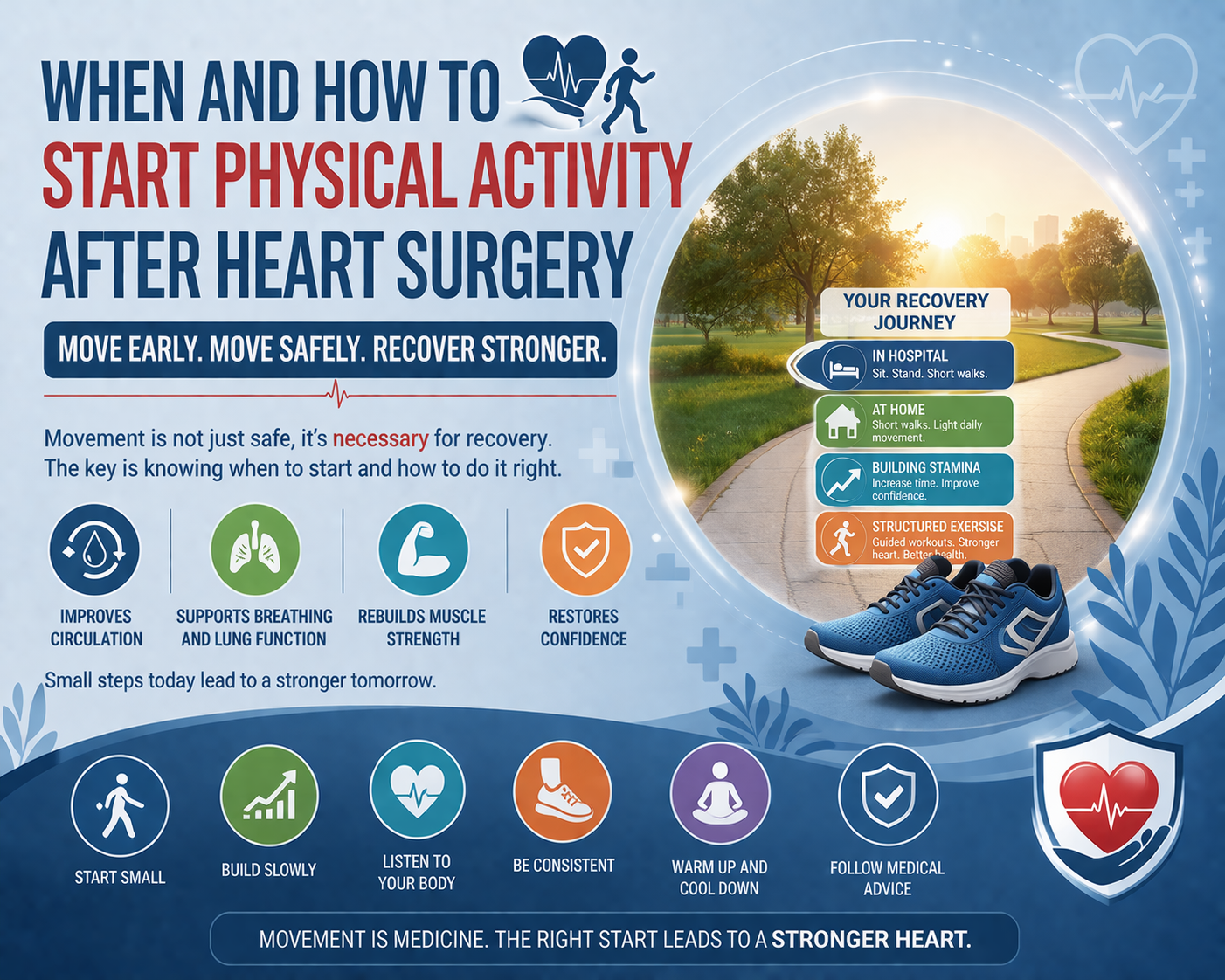
Recovery doesn’t happen all at once. It progresses step by step.
Phase 1: In the Hospital
This is the starting point.
You begin with:
• sitting up
• standing with support
• short, supervised walks
Everything is guided and monitored.
Phase 2: First Few Weeks at Home
Once you’re home, activity continues—but at your pace.
You may start with:
• short walks around the house
• light daily movements
A common starting point is:
• 5–10 minutes of walking
• once or twice a day
Phase 3: Gradually Building Stamina
As your body gets stronger:
• walking becomes easier
• duration increases
• confidence improves
Over time, many patients work up to:
• 20–30 minutes of walking daily
Phase 4: Structured Exercise
After a few weeks (based on your doctor’s advice), you may move to:
• brisk walking
• cycling
• light strengthening exercises
But this progression should always be gradual.
What About Cardiac Rehabilitation?
This is one of the most important parts of recovery—and often overlooked.
What it involves
• supervised exercise
• monitoring heart rate and blood pressure
• guidance on safe limits
Why it matters
Cardiac rehab is not just helpful—it’s strongly recommended in heart recovery guidelines because it improves outcomes and long-term health.
👉 Think of it as structured support that helps you recover safely and confidently.
How to Start Safely
Starting activity is not the challenge—starting correctly is.
Start small
Walking is the safest place to begin:
• flat surface
• comfortable pace
• short duration
Even 5–10 minutes is enough in the beginning.
Build slowly
• increase time gradually
• don’t rush intensity
• focus on consistency
Listen to your body
Stop or slow down if you feel:
• dizziness
• chest discomfort
• unusual breathlessness
• extreme tiredness
Add warm-up and cool-down
Start slowly and end slowly. This helps your heart adjust better.
Common Mistakes People Make
Recovery often becomes harder because of avoidable mistakes.
Waiting too long to start
Fear can delay recovery.
Doing too much too soon
Pushing too hard can set you back.
Comparing with others
Recovery is personal. Everyone progresses differently.
Ignoring medical advice
Your doctor or physiotherapist knows your limits—follow them.
When Can You Return to Normal Exercise?
This depends on your recovery, but generally:
• light activity starts immediately
• moderate activity begins after a few weeks
• more intense exercise is added after medical clearance
Avoid:
• heavy lifting
• high-impact workouts
especially in the first few weeks while your chest heals.
How Caregivers Can Help
Caregivers play a big role in how recovery progresses.
What often happens
Families become overprotective:
“Don’t move, just rest.”
What actually helps
• encouraging safe movement
• supporting routine
• helping build confidence
Recovery improves when patients feel supported—not restricted.
How Much Activity Is Enough?
Over time, most people aim for:
• 30 minutes of moderate activity
• 5 days a week
You don’t need to do it all at once. Even shorter sessions add up.
The Mental Side of Restarting Activity
Starting again can feel intimidating.
Many patients feel:
• scared of overexertion
• unsure about their limits
• anxious about symptoms
This is completely normal.
The best way forward is:
• start small
• stay consistent
• build confidence gradually
FAQs
When can I start walking after surgery?
Walking usually begins within 1–2 days after surgery, often under supervision in the hospital. This early movement helps improve circulation, prevents complications like stiffness or lung issues, and supports faster recovery. The idea is not to push yourself, but to start gently and build confidence step by step as your body adjusts.
What is the safest exercise to begin with?
Walking is considered the safest and most recommended starting point after heart surgery. It is low impact, easy to control, and can be adjusted based on your comfort level. Starting with a flat surface and a slow pace allows your body to adapt safely while helping improve stamina and overall recovery without putting strain on your heart.
How much should I walk initially?
In the beginning, even 5–10 minutes of walking once or twice a day is enough. This is because your body is still healing and rebuilding strength. The goal is consistency, not intensity. As your stamina improves, you can gradually increase the duration, but always based on how your body feels and your doctor’s advice.
When can I return to normal exercise?
Returning to normal exercise usually takes a few weeks to a few months, depending on your recovery and overall health. Light activity starts early, but more structured or intense exercise should only be added after medical clearance. This gradual progression ensures your heart adapts safely without unnecessary strain or risk of complications.
Is exercise really necessary?
Yes, exercise is a core part of recovery and not optional. It helps improve circulation, rebuild muscle strength, and enhance heart efficiency. Without activity, recovery can slow down, and complications may increase. The key is to follow a safe, gradual plan rather than avoiding movement altogether or pushing too hard too soon.
Final Thoughts
Starting physical activity after heart surgery can feel uncertain at first.
But recovery is not about doing more—it’s about doing it right.
Start early, go slow, and stay consistent.
That’s what helps your body rebuild safely.
CTA: You Don’t Have to Do This Alone
Recovery becomes easier when you have the right support.
📌 JOIN THE COMMUNITY
Connect. Share. Learn.
Join the Heart Health India Foundation community to:
• learn from experts
• understand real patient experiences
• get practical recovery guidance
👉 Join on WhatsApp:
https://wa.me/message/ILWWO3FXZ2UHC1
Stay Connected
• Facebook: https://www.facebook.com/hearthealthindia/
• X (Twitter): https://x.com/HeartHealthInd
• YouTube: https://youtube.com/@hearthealthindia
• LinkedIn: https://www.linkedin.com/company/hearthealthindia
• Instagram: https://www.instagram.com/hearthealthindia