Recovering after a heart procedure can feel reassuring in the beginning. The surgery is done,
you’re back home, and things seem to be moving in the right direction.
But then, something feels off.
A sudden discomfort. A bit of breathlessness. A strange feeling you can’t quite explain.
And the question comes back:
“Is this normal, or should I be worried?”
This phase of recovery is critical. Knowing which symptoms to take seriously can make a real
difference—sometimes even prevent complications.
Let’s break it down in a way that’s easy to understand.
Why Paying Attention Matters
Even after a successful surgery, your body is still settling.
Your heart, lungs, and overall system are adjusting. Healing is ongoing. So yes, you may feel a
few things that are part of recovery.
But not everything is.
The key is noticing:
• how intense the symptom is
• whether it improves or worsens
• how long it lasts
👉 Picking up warning signs early can help avoid bigger issues later.
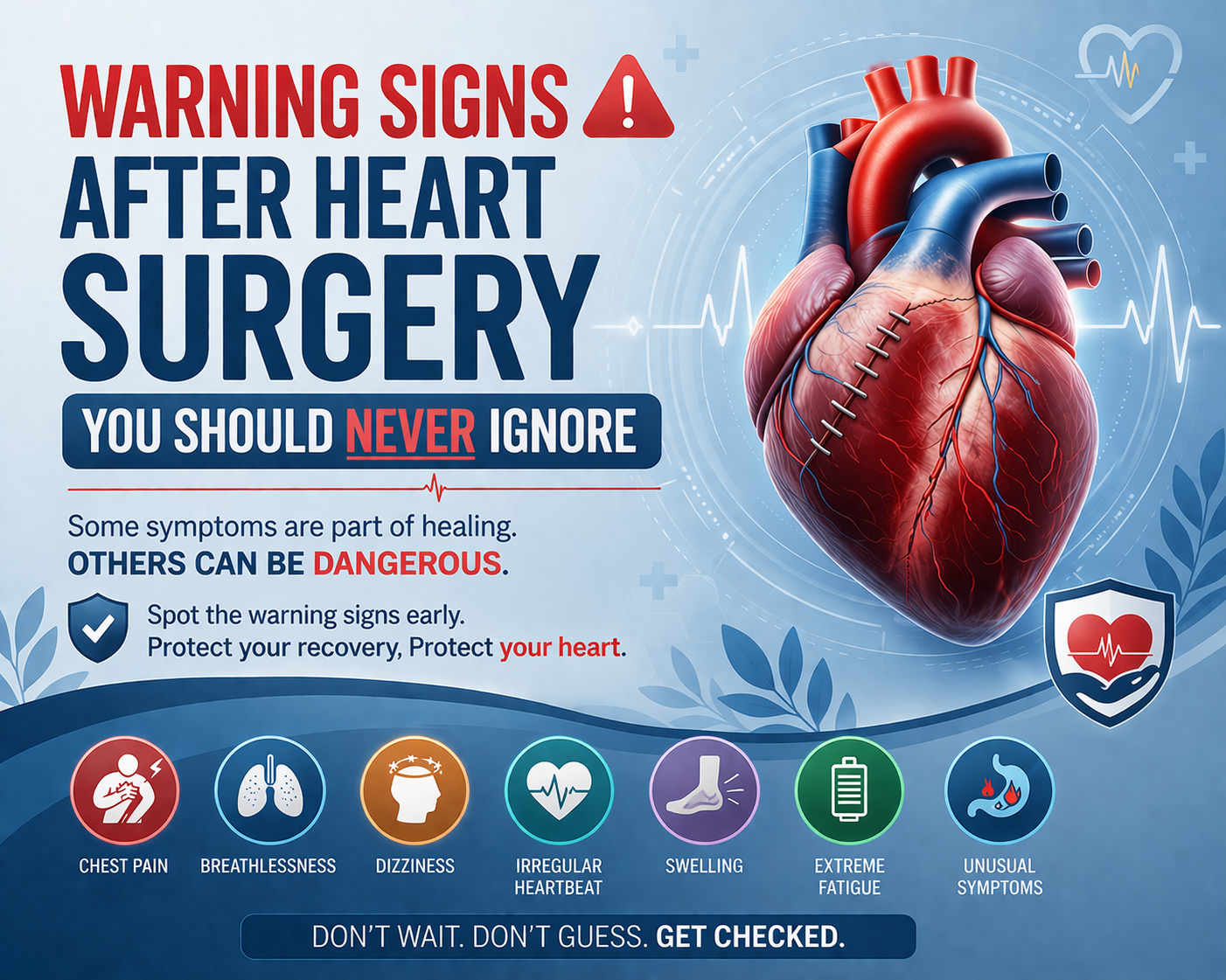
Warning Signs You Should Not Ignore
Here are the symptoms that need attention. Not all of them mean something serious—but
none of them should be ignored.
1. Chest Pain That Feels Unusual
Some soreness in the chest is expected after surgery. But certain types of pain are different.
Be careful if you notice:
• pressure or heaviness in the centre of the chest
• pain spreading to your arm, jaw, or back
• discomfort that doesn’t settle with rest
👉 Surgical pain is usually surface-level and improves slowly.
👉 Deeper or spreading pain needs to be checked.
2. Breathlessness That Feels Worse or Sudden
It’s common to feel slightly breathless during recovery—but it should gradually improve.
Watch out if:
• you feel breathless even while resting
• simple activities become difficult
• breathing suddenly feels harder than before
👉 If your breathing isn’t improving—or is getting worse—it’s worth getting medical advice.
3. Sweating, Dizziness, or Feeling Faint
These can feel minor at first, but they shouldn’t be ignored.
Take note if you experience:
• cold sweats without any exertion
• frequent dizziness
• feeling like you might faint
👉 These symptoms can be linked to circulation or rhythm issues.
4. Irregular or Racing Heartbeat
You might become more aware of your heartbeat after surgery. That’s normal.
But not all rhythm changes are harmless.
Look out for:
• very fast heartbeat
• irregular or skipping beats
• a pulse that feels too slow
👉 If something feels consistently off, it’s best to get it checked.
5. Swelling in Legs or Abdomen
This is often overlooked but can be important.
Signs to notice:
• swelling in your feet or ankles
• sudden increase in body weight
• tightness or heaviness in the abdomen
👉 These could point to fluid build-up and should be reviewed.
6. Fatigue That Doesn’t Improve
Feeling tired after surgery is completely normal.
But there’s a difference between expected tiredness and something more concerning.
Normal fatigue:
• comes after activity
• improves with rest
• gradually gets better
Concerning fatigue:
• present even at rest
• not improving over time
• comes with breathlessness or discomfort
👉 If your energy levels aren’t improving, don’t ignore it.
7. Symptoms That Don’t Feel Like “Heart Problems”
This is where many people get confused.
Sometimes, warning signs don’t look obvious.
You might feel:
• acidity
• burning sensation
• general uneasiness
• mild nausea
These can easily be dismissed—but they can still be linked to your heart.
👉 If something feels unusual or out of place, it’s better to check.
Why These Symptoms Happen
After surgery, your body is still adjusting.
• your heart is adapting to new circulation patterns
• your lungs are recovering from reduced activity
• your strength and stamina are lower than before
So some symptoms are expected.
But if they:
• worsen suddenly
• don’t settle with rest
• appear alongside other warning signs
they may need medical attention.
When Should You Act Immediately?
Some symptoms should not be delayed.
Seek immediate help if you notice:
• chest pain that doesn’t go away
• severe breathlessness
• fainting or near-collapse
• irregular heartbeat with discomfort
• sudden weakness or confusion
👉 Acting early can prevent serious complications.
A Common Mistake: Waiting It Out
Many people hesitate.
They think:
• “Let’s see if it settles”
• “Maybe I’m overthinking”
But when it comes to heart-related symptoms, waiting too long can be risky.
👉 It’s always safer to check early.
The Role of Caregivers
Caregivers often notice changes before the patient does.
They can pick up on:
• unusual tiredness
• changes in breathing
• discomfort or restlessness
• reduced activity
Encouraging timely action can make a big difference.
How to Stay on Track During Recovery
You don’t need complicated tools.
Simple things can help:
• keep a note of your symptoms
• track how you feel day to day
• follow your medication and rehab plan
• attend follow-ups regularly
👉 Knowing what’s normal for you makes it easier to spot changes.
Recovery Doesn’t End With Surgery
Surgery is just one step.
Long-term care matters just as much.
Focus on:
• staying active
• eating balanced meals
• managing BP, sugar, and cholesterol
• reducing stress
👉 Recovery is about building a routine you can sustain.
FAQs
Is chest pain always serious after surgery?
Not always. Mild chest soreness is common after surgery because the chest muscles and
bones are healing. This type of pain is usually localised and improves with rest. However,
pain that feels like pressure, spreads to the arm or jaw, or does not settle should not be
ignored, as it may indicate a heart-related issue rather than normal healing.
How do I know if breathlessness is normal?
Some breathlessness is expected during recovery, especially with activity, because your body
is regaining strength. If it improves with rest and gradually gets better over time, it is usually
normal. However, if you feel breathless even at rest, or it suddenly worsens, it may signal a
problem and should be checked promptly.
Are palpitations normal?
After surgery, you may become more aware of your heartbeat, which can feel like
palpitations and is often harmless. However, if the heartbeat feels irregular, very fast, or
persistent, it may indicate a rhythm issue. This is important because the heart’s electrical
activity may still be stabilising after surgery and should be evaluated if symptoms continue.
Can symptoms appear weeks later?
Yes, symptoms can appear even weeks after surgery because recovery is a gradual process
and the body continues to adjust over time. Changes in activity levels, medications, or
healing patterns can bring up new symptoms. This is why ongoing monitoring is important,
even if the initial recovery period seemed smooth.
Should I ignore mild discomfort?
Mild discomfort can be part of healing, especially if it improves with rest and reduces over
time. However, if the discomfort is new, unusual, or persists longer than expected, it should
not be ignored. This is because early signs of complications can sometimes feel mild at first,
and timely evaluation helps prevent more serious issues.
Final Thoughts
Recovery isn’t always straightforward. Some days feel better, others don’t.
That’s normal.
What matters is knowing when something is part of healing—and when it’s not.
You don’t need to panic at every symptom. But you also shouldn’t ignore what your body is
telling you.
CTA: You Don’t Have to Navigate This Alone
Recovery becomes easier when you have the right support.
📌 JOIN THE COMMUNITY
Connect. Share. Learn.
Join the Heart Health India Foundation community to:
• learn directly from experts
• hear real patient experiences
• get practical guidance
👉 Join on WhatsApp:
https://wa.me/message/ILWWO3FXZ2UHC1
Stay Connected
• Facebook: https://www.facebook.com/hearthealthindia/
• X (Twitter): https://x.com/HeartHealthInd
• YouTube: https://youtube.com/@hearthealthindia
• LinkedIn: https://www.linkedin.com/company/hearthealthindia
• Instagram: https://www.instagram.com/hearthealthindia