Recovering from a heart procedure—whether it’s bypass surgery, angioplasty, or something similar—can feel uncertain.
Some days you feel fine. Other days, even a small change—like an unusual sensation or sudden tiredness—can make you pause and wonder:
“Is this normal, or should I be concerned?”
If you’ve felt this way, you’re not alone. Most people experience this during recovery.
Your body is going through a lot of changes. The real challenge is learning how to understand these signals—without overthinking them or ignoring something important.
Why Paying Attention to Your Body Matters
After a heart procedure, recovery doesn’t happen overnight. Your body is healing, adjusting, and gradually building strength again.
It’s not just the heart that’s affected. Your muscles, breathing, and energy levels all take time to settle.
So yes, some discomfort is expected. But at the same time, certain symptoms shouldn’t be overlooked.
The key difference often lies in how your body responds over time.
Recovery isn’t only about resting. It’s also about:
• moving safely
• rebuilding stamina step by step
• noticing how your body reacts
What Your Body Has Been Through
Understanding what your body has gone through makes recovery easier to accept.
In procedures like bypass surgery:
• the chest bone is opened and takes time to heal, often a few months
• the heart may take time to regain full efficiency
• muscles weaken due to reduced activity
• even breathing patterns can feel slightly different
So if things feel slower or more difficult than expected, it’s completely normal. Your body is rebuilding—not just recovering.
What Is Considered Normal During Recovery
Let’s begin with what most people experience during healing.
You may notice:
• mild chest soreness
• discomfort in the upper back or shoulders
• itching around the incision
• numbness or tingling near the scar
• lower energy levels
• a stretching or pulling feeling when you move
These sensations can feel uncomfortable, but they are usually linked to healing tissues and muscles.
👉 A simple way to understand this:
If a symptom improves with rest and gradually gets better, it is usually part of normal recovery.
Fatigue: The Most Common Concern
Feeling tired after a heart procedure is very common.
But this isn’t regular tiredness—it can feel deeper, as if your energy has dropped significantly.
When It’s Normal
• you feel tired after activity
• rest helps you recover
• your energy improves slowly over time
When It Needs Attention
• you feel exhausted even without activity
• rest does not improve your energy
• fatigue comes with breathlessness, sweating, or discomfort
👉 If something feels unusual or more intense than expected, it’s better to get it checked.
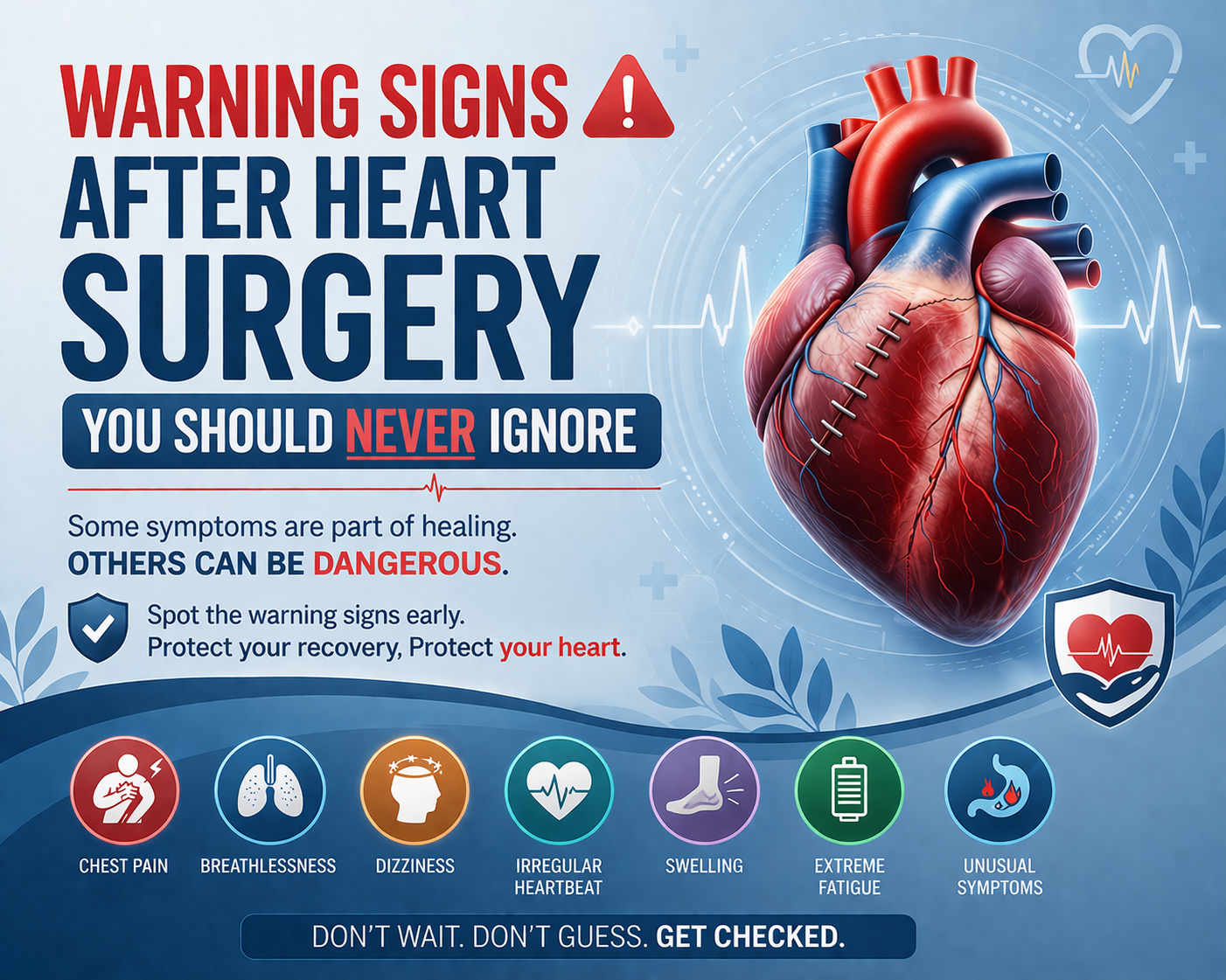
Warning Signs You Should Not Ignore
Some symptoms are not part of normal recovery and require immediate attention.
Watch for:
• chest pain, especially in the centre
• pain spreading to the arm, jaw, or back
• shortness of breath, even at rest
• dizziness or cold sweating
• fainting or near-fainting
• irregular or fast heartbeat
• swelling in the legs or abdomen
These are not symptoms to wait and watch.
When It Doesn’t Feel Like a Heart Issue
Not all heart-related problems feel like chest pain.
Sometimes symptoms show up as:
• acidity
• a burning sensation
• general uneasiness
These are often ignored, but they can still be important signals.
Why Movement Is Important
Many people believe complete rest is best after a heart procedure.
In reality, that is not the case.
Controlled and guided movement is an important part of recovery.
What Usually Happens
• movement begins within a day or two, under supervision
• it starts with sitting, standing, and short walks
• activity gradually increases over time
By discharge, many patients can comfortably walk short distances.
Why Movement Matters
Movement helps:
• improve blood circulation
• prevent complications
• rebuild strength
• support heart recovery
👉 Staying inactive for too long can actually slow down recovery.
Caregivers: Supporting the Right Way
If you’re caring for someone, it’s natural to want to protect them.
However, being overly protective can sometimes delay recovery.
What Doesn’t Help
• restricting all movement
• constant caution without guidance
What Helps
• encouraging safe activity
• helping create a routine
• following medical advice
Recovery works best when both the patient and caregiver understand the process.
Tracking Your Progress
You don’t need complex tools to monitor recovery.
Simple Ways to Keep Track
• check your pulse occasionally
• observe how your body responds to activity
• use a smartwatch or oximeter if available
When to Stop and Rest
If you feel:
• dizzy
• breathless
• discomfort in your chest
• excessive sweating
👉 pause and rest. These are signs your body needs a break.
Recovery Is More Than Medicines
Medicines are essential—but they are only one part of recovery.
How Cardiac Rehabilitation Helps
Cardiac rehab includes:
• guided exercises
• gradual increase in activity
• monitoring your progress
Why It Matters
It helps:
• improve heart function
• build stamina
• strengthen the body
• restore confidence
Long-Term Recovery: What Matters Most
Recovery doesn’t end in a few weeks. It becomes part of your lifestyle.
Focus on:
• avoiding tobacco
• managing blood pressure, sugar, and cholesterol
• maintaining a healthy weight
• staying physically active
👉 A practical goal:
30 minutes of activity, five days a week
Keeping It Simple
You don’t need complicated routines.
Simple activities like:
• walking
• cycling
• light exercises
• group activities
are enough.
Doing it with others often makes it easier to stay consistent.
FAQs
How long does recovery take?
Recovery usually takes a few months for initial healing, but it varies from person to person. This is because your body is not only healing surgical areas but also rebuilding strength and heart function. Some people recover faster, while others take more time. What matters is steady improvement rather than how quickly you reach a certain stage.
Is chest discomfort normal?
Mild chest discomfort or soreness is common, especially after procedures like bypass surgery, because the chest and surrounding muscles are healing. This type of pain usually improves with rest. However, severe or spreading pain is not normal and should be checked immediately, as it may indicate a heart-related issue rather than normal recovery.
When can I start walking?
Most patients can begin walking within one to two days after the procedure, but this should be done under supervision at first. Early movement helps improve circulation and prevents complications. The important part is to start slowly and increase activity gradually, rather than pushing yourself too quickly.
How do I know if I’m overdoing it?
Your body usually signals when you’re doing too much. Symptoms like dizziness, breathlessness, chest discomfort, or unusual sweating are signs to stop and rest. These happen because your heart is still recovering and may not be ready for that level of effort. Listening to these signals helps prevent unnecessary strain.
Is rehabilitation necessary?
Yes, cardiac rehabilitation is an important part of recovery. It provides structured and supervised support to help you rebuild strength safely. It improves heart function and reduces the risk of future complications. Without proper guidance, people may either do too little or overexert themselves, which can slow recovery.
Final Thoughts
Recovery isn’t always smooth. Some days will feel better than others, and that’s completely normal.
What matters most is:
• listening to your body
• staying consistent
• not ignoring warning signs
You don’t have to manage everything on your own.
CTA: You Don’t Have to Do This Alone
Recovery can feel confusing—but the right support can make it much easier.
📌 JOIN THE COMMUNITY
Connect. Share. Learn.
Join the Heart Health India Foundation community to:
• learn from experts
• hear real experiences
• get practical guidance
👉 Join on WhatsApp:
https://wa.me/message/ILWWO3FXZ2UHC1
Stay Connected
• Facebook: https://www.facebook.com/hearthealthindia/
• X (Twitter): https://x.com/HeartHealthInd
• YouTube: https://youtube.com/@hearthealthindia
• LinkedIn: https://www.linkedin.com/company/hearthealthindia
• Instagram: https://www.instagram.com/hearthealthindia