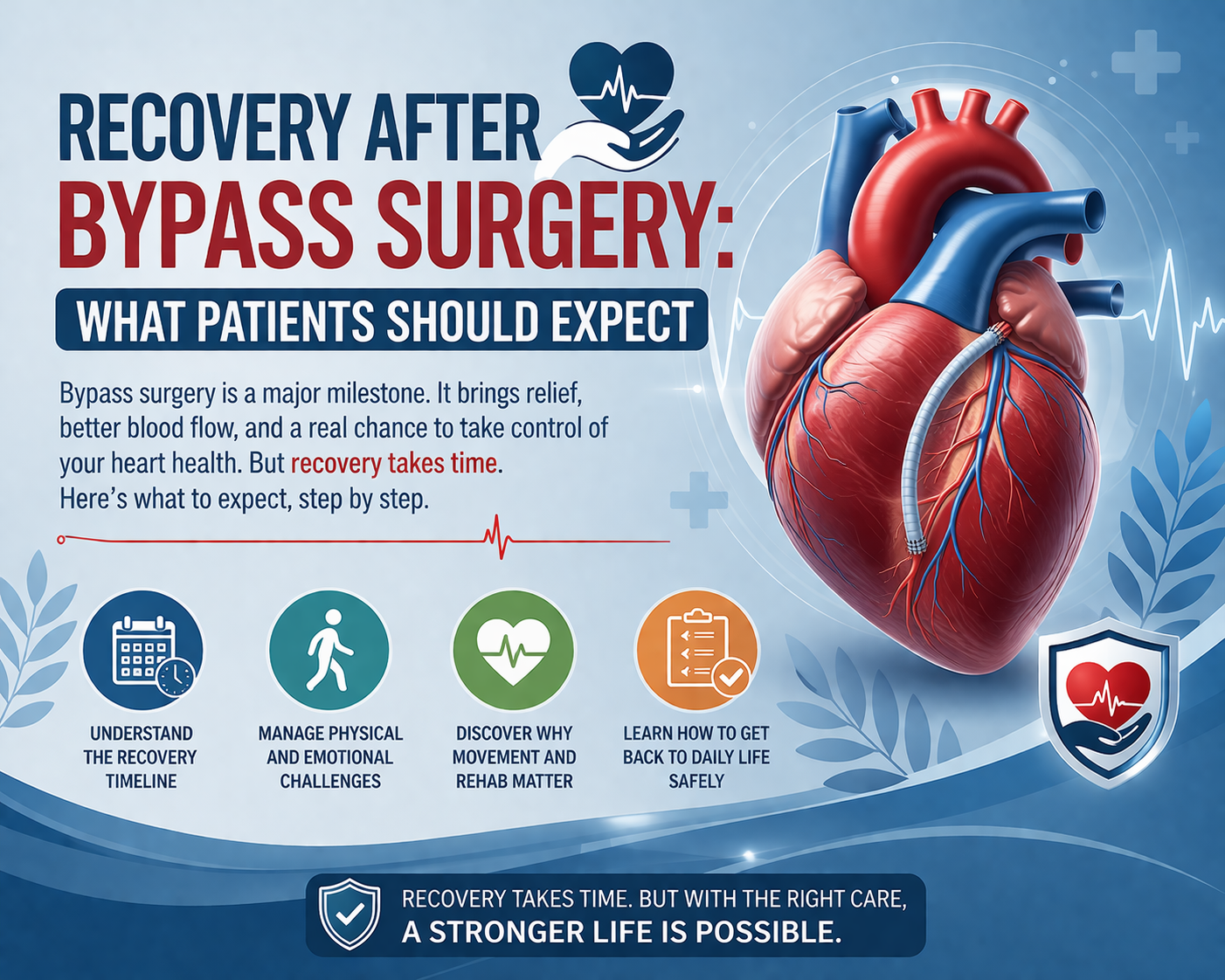
Bypass surgery is a major milestone. For many people, it brings relief—better blood flow, fewer symptoms, and a real chance to take control of heart health.
But once the surgery is done, another important phase begins: recovery.
This is where most patients and families feel unsure.
“How long will it take?”
“Is what I’m feeling normal?”
“When can I get back to my routine?”
The honest answer is—recovery takes time. It doesn’t happen overnight, and it doesn’t look the same for everyone.
What helps is understanding what to expect, step by step.
What Happens Right After Surgery
In the first few days, you’re closely monitored in the hospital.
• usually 1–2 days in ICU
• followed by a few more days in the ward
During this time:
• your heart rhythm is monitored
• your breathing stabilises
• pain is managed
• light movement begins
If everything is stable, most patients go home within a week.
Understanding the Recovery Timeline
Recovery doesn’t happen all at once. It moves in phases.
First Few Weeks at Home (0–4 Weeks)
This is the most delicate phase.
You may feel:
• tired most of the time
• soreness in your chest, back, or shoulders
• low appetite
• disturbed sleep
• emotional ups and downs
All of this is normal. Your body is healing from major surgery.
What to Focus On
• taking medicines regularly
• short, gentle movement
• caring for your wound
• getting enough rest
At this stage, avoid lifting anything heavy or putting strain on your upper body.
Weeks 4 to 8: Slowly Getting Stronger
This is when things begin to feel a bit easier.
• your energy starts improving
• walking becomes more comfortable
• daily tasks feel manageable
You’ll notice small improvements, and those matter.
This is also a good time to start structured cardiac rehabilitation, if advised.
Weeks 6 to 12: Returning to Routine
By now:
• many people resume light work
• daily life feels more stable
• stamina improves gradually
You’re not fully back to normal—but you’re getting there.
3 to 6 Months: Full Recovery
Complete recovery takes longer than most expect.
Over time:
• your strength returns
• your energy stabilises
• your routine settles
By this stage, most people feel much more like themselves again.
What Recovery Feels Like Physically
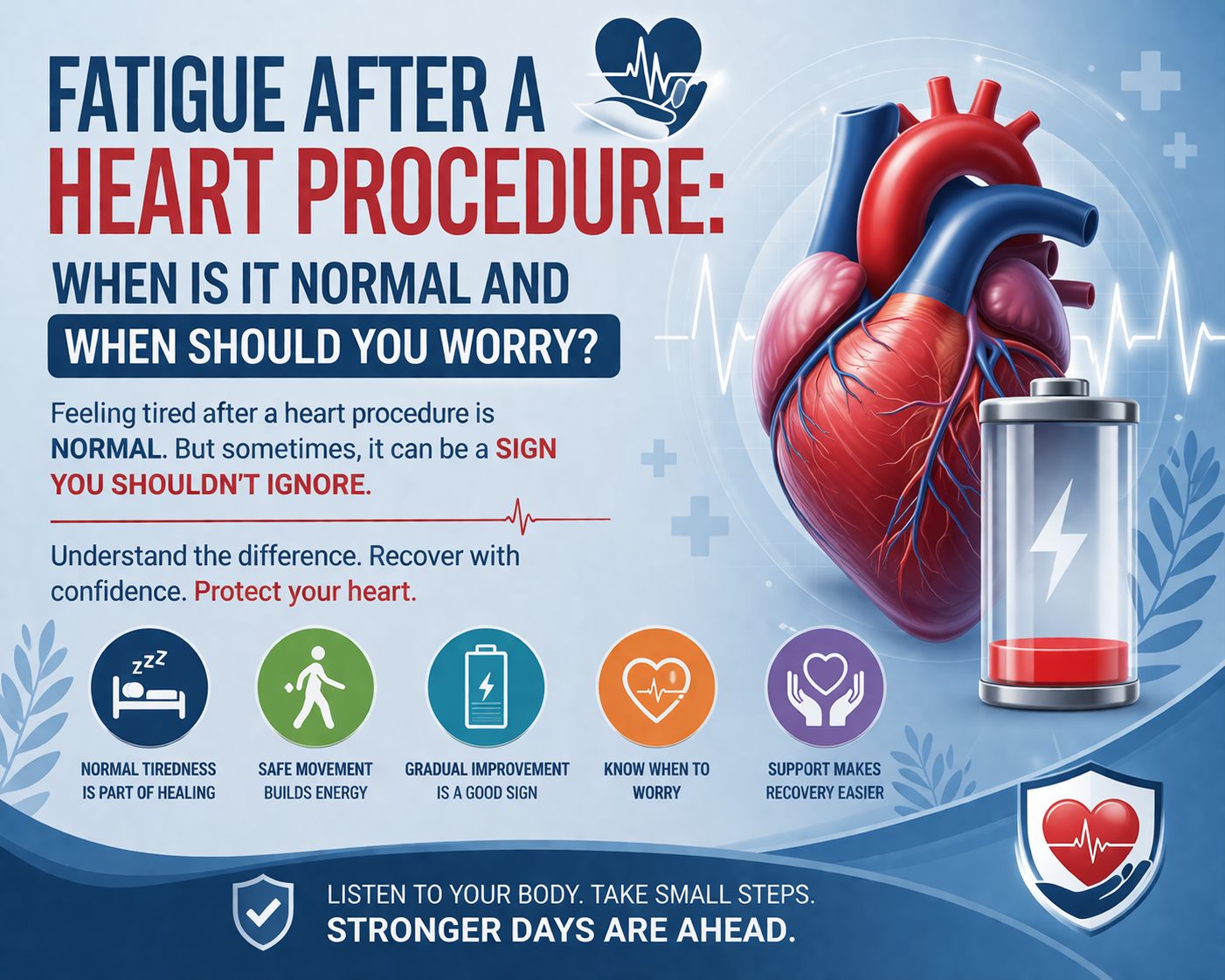
Recovery can feel slower than expected, and that’s okay.
You might notice:
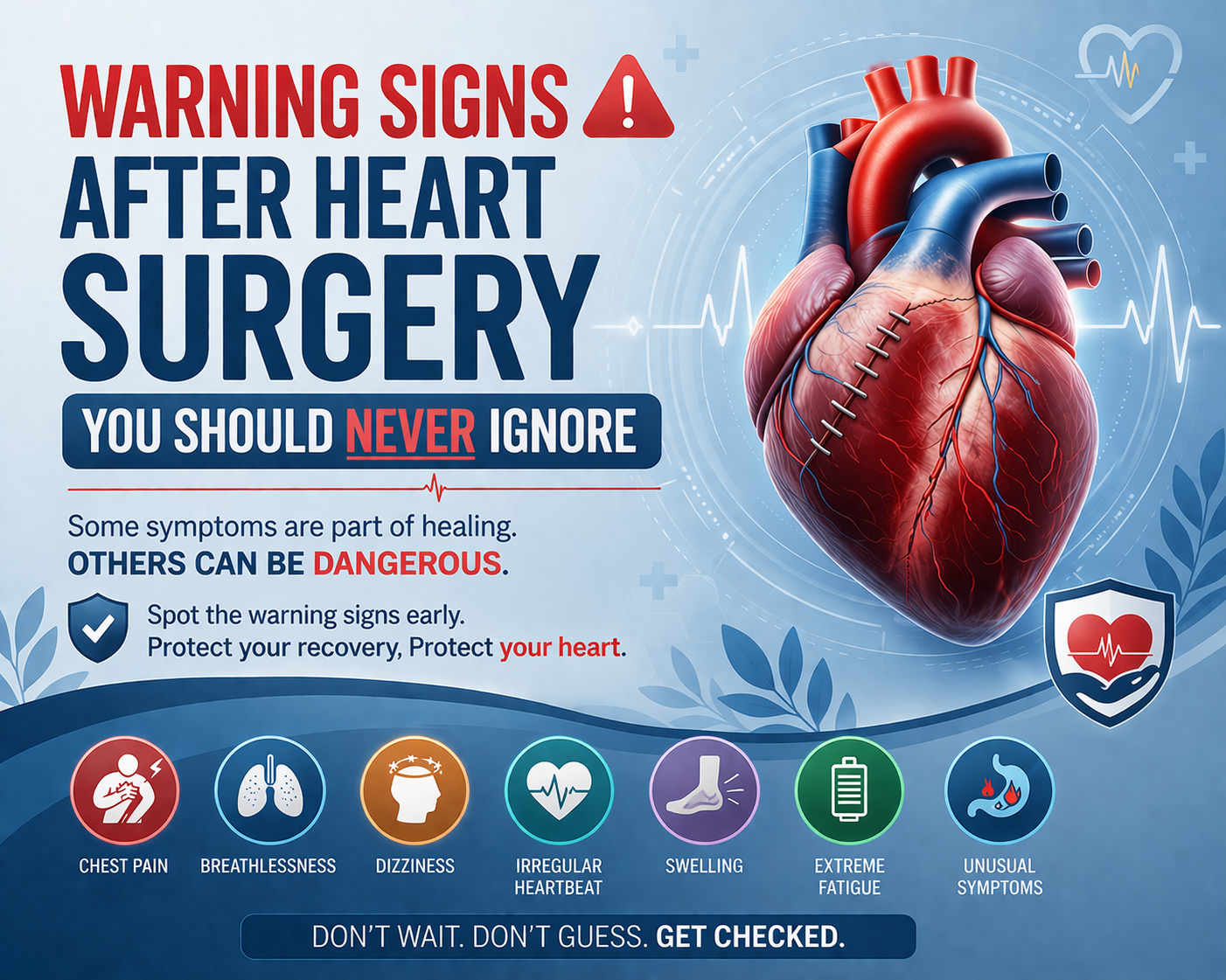
Chest discomfort
Your chest bone is healing, so mild pain or tightness is common.
Fatigue
Even small tasks can feel tiring in the beginning.
Reduced strength
Your body has been through surgery and rest—so rebuilding takes time.
Breathing changes
You may feel slightly breathless at first.
All of this improves gradually with time and movement.
What Recovery Feels Like Emotionally
This part often catches people off guard.
You might feel:
• anxious
• low or unmotivated
• worried about your health
These feelings are completely normal.
Recovery isn’t just physical—it’s emotional too.
Having support, conversations, and reassurance can make a big difference.
Why Movement Is So Important
A common misconception is that you should just rest and avoid activity.
But complete rest can actually slow recovery.
What Helps Instead
• gentle, guided movement
• gradually increasing activity
• staying consistent
Movement supports:
• better circulation
• improved breathing
• stronger muscles
• overall recovery
You usually start small—sitting, standing, short walks—and build from there.
The Role of Cardiac Rehabilitation
Cardiac rehab is one of the most helpful parts of recovery, but many people skip it.
What It Involves
• supervised exercise
• monitoring your heart response
• guidance on safe activity
• lifestyle advice
Why It Matters
• helps you recover safely
• builds confidence
• reduces future risk
Think of it as structured support for getting back on track.
Getting Back to Daily Life
As you recover, you’ll slowly return to your routine.
You Can Start With
• walking regularly
• light household work
• desk-based tasks
Take It Slow With
• heavy lifting
• driving (usually avoided for a few weeks)
• intense physical effort
There’s no need to rush. Recovery works best when it’s steady.
Long-Term Changes That Make a Difference
Surgery fixes the blockage—but long-term health depends on your habits.
Focus on:
• staying active
• eating balanced meals
• managing BP, sugar, and cholesterol
• reducing stress
• avoiding tobacco
These changes help prevent future heart problems.
FAQs
How long does recovery take?
Most people start feeling better within 6 to 12 weeks, but full recovery can take a few months depending on age, fitness, and any complications. This is because the body is healing internally, rebuilding strength, and adjusting to improved blood flow. Recovery is gradual, so steady progress matters more than how fast you recover.
Is it normal to feel very tired?
Yes, fatigue is very common after bypass surgery because your body is healing and your energy reserves are low. Even simple activities can feel exhausting at first. This improves gradually as your strength builds. However, if fatigue is severe, persistent, or worsening, it may need medical attention to rule out complications.
When can I start walking?
Walking usually begins within a few days after surgery, often under supervision in the hospital. This is important because early movement improves circulation, prevents stiffness, and supports recovery. You should start slowly and increase gradually based on your comfort and medical advice, rather than pushing yourself too quickly.
When can I go back to work?
Most people return to work within 6 to 8 weeks, but this depends on the type of job and individual recovery. Desk jobs may resume earlier, while physically demanding roles take longer. This is because your body needs time to regain strength and stamina, and returning too soon can delay recovery.
Do I need cardiac rehab?
Yes, cardiac rehabilitation is strongly recommended because it provides structured and supervised recovery. It helps improve heart function, builds stamina, and reduces the risk of future heart problems. Without rehab, patients may either avoid activity or overexert themselves, whereas rehab ensures a safe and balanced approach.
Is it normal to feel anxious?
Yes, emotional changes like anxiety or low mood are common after surgery because recovery affects both the body and mind. Uncertainty about health and lifestyle changes can contribute to these feelings. With time, support, and guidance, these emotions usually improve. If they persist, speaking to a professional can help.
Final Thoughts
Recovery after bypass surgery isn’t always smooth—and that’s okay.
Some days will feel better than others.
What matters is:
• staying consistent
• moving safely
• following medical advice
• being patient with yourself
This is not just recovery—it’s a chance to rebuild your health in a better way.
CTA: You Don’t Have to Do This Alone
Recovery feels easier when you have the right support around you.
📌 JOIN THE COMMUNITY
Connect. Share. Learn.
Join the Heart Health India Foundation community to:
• learn from experts
• hear real patient experiences
• get practical guidance
👉 Join on WhatsApp:
https://wa.me/message/ILWWO3FXZ2UHC1
Stay Connected
• Facebook: https://www.facebook.com/hearthealthindia/
• X (Twitter): https://x.com/HeartHealthInd
• YouTube: https://youtube.com/@hearthealthindia
• LinkedIn: https://www.linkedin.com/company/hearthealthindia
• Instagram: https://www.instagram.com/hearthealthindia