One of the most common concerns people have after a heart procedure—whether it’s bypass surgery, angioplasty, or any cardiac treatment—is this:
“Why do I feel so tired all the time?”
Many patients expect to feel better right after the procedure. But instead, they often feel weak, low on energy, and sometimes even frustrated with how slow things seem.
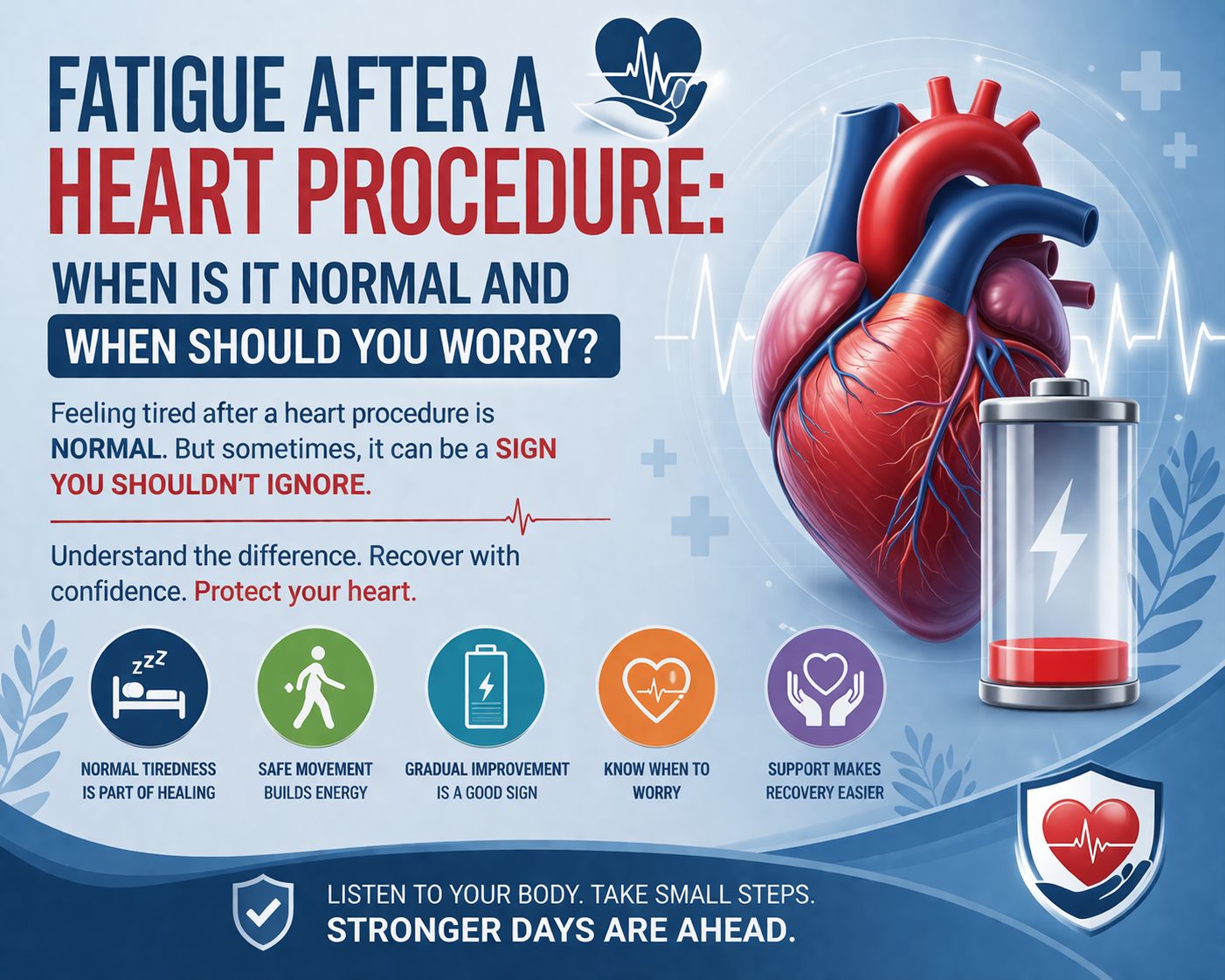
The reality is—fatigue is a normal part of recovery.
At the same time, it’s important to know that not all fatigue should be ignored. Understanding the difference can help you recover with more confidence and avoid unnecessary worry.
Why Do You Feel So Tired After a Heart Procedure?
Fatigue after a heart procedure is not just ordinary tiredness. It’s your body’s way of coping with what it has just gone through.
Here’s what’s happening:
Your body is healing
A heart procedure is a major event. Your body is using a lot of energy to repair tissues and stabilise itself. Naturally, that leaves you feeling drained.
You’ve been less active
During your hospital stay and early recovery, your movement is limited. Muscles weaken, stamina drops, and even simple tasks can feel tiring.
Medications can affect energy
Some heart medications can make you feel drowsy or low on energy. This usually settles over time, but you may notice it in the beginning.
Emotional stress plays a role
Recovery is not just physical. Worry, fear, or uncertainty about your health can quietly drain your energy.
Your body needs to rebuild strength
After a cardiac event, your body’s overall capacity reduces for a while. Fatigue is part of rebuilding that strength.
What Does Normal Fatigue Feel Like?
Fatigue is expected—but it usually follows a pattern.
You may notice:
• feeling tired after activity
• needing more rest than usual
• having good days and slower days
• gradual improvement over time
It’s also quite common to:
• feel energetic one day and low the next
• take short naps during the day
• feel like recovery is slower than expected
And that’s okay.
👉 A simple way to look at it:
If your energy is slowly improving, even if it’s not perfect yet, it’s likely part of normal recovery.
When Should Fatigue Raise Concern?
While fatigue is common, there are times when it needs attention.
Watch out for these signs
• feeling exhausted even while resting
• no improvement after sleep
• sudden worsening of energy levels
• fatigue along with:
o chest pain
o breathlessness
o sweating
o dizziness
👉 A simple rule:
Fatigue on its own is usually normal.
Fatigue with other symptoms should not be ignored.
If something feels unusual or disproportionate, it’s always better to check with your doctor.
Why Fatigue Feels So Different During Recovery
Many patients say this kind of fatigue feels different from anything they’ve experienced before.
It can feel like:
• heavy exhaustion
• low motivation
• mental tiredness
It may affect:
• daily routines
• confidence
• mood
This is because your body and mind are both adjusting at the same time.
Can Fatigue Last for a Long Time?
For some people, yes.
Fatigue is one of the most common symptoms during heart recovery and can continue for weeks or even months. But it usually improves with time, especially when recovery is handled well.
How Cardiac Rehabilitation Helps
This is one area where many people see real improvement.
Cardiac rehabilitation is not just about exercise—it’s about rebuilding your body safely.
What it does
• improves stamina
• strengthens muscles
• helps your body use oxygen better
• builds confidence
👉 Important to remember:
Fatigue improves faster when you move safely—not when you avoid activity completely.
How to Manage Fatigue in Daily Life
Recovery is not about pushing yourself hard—it’s about finding the right balance.
Start with small, manageable steps
Pace your energy
Do a little, then rest before you feel exhausted.
Build activity gradually
Short walks, light movement—slowly increase over time.
Focus on sleep
Keep a regular sleep schedule and allow your body to rest properly.
Eat regularly
Skipping meals or poor nutrition can make fatigue worse.
Manage stress
Simple things like breathing exercises, light music, or spending time with loved ones can help.
Be patient with yourself
Recovery is not linear. Some days will feel better than others—and that’s completely normal.
The Emotional Side of Fatigue
This is something many people don’t expect.
Fatigue often comes with:
• low mood
• anxiety
• frustration
You may feel like:
• you’re not recovering fast enough
• something is wrong
• you’ve lost your normal routine
If these feelings stay for a long time, it’s important to talk about them. Emotional health is just as important as physical recovery.
What Caregivers Should Know
Caregivers play a huge role—but fatigue is often misunderstood.
What not to do
• don’t force complete rest
• don’t push too much activity
What helps instead
• encourage gentle movement
• support a routine
• observe symptoms
• provide reassurance
Recovery works best when there is a balance between rest and activity.
FAQs
How long does fatigue last after a heart procedure?
Fatigue can last from a few weeks to a few months depending on your overall health, type of procedure, and how well recovery is managed. This happens because your body is healing and rebuilding strength at the same time. Gradual improvement is expected, so steady progress matters more than how quickly your energy returns.
Is it normal to feel tired every day?
Yes, it is quite normal to feel tired daily, especially in the early stages of recovery. Your body is still healing and adjusting, which uses a lot of energy. Over time, as your strength improves and activity increases gradually, this daily tiredness should reduce and become more manageable.
Should I ignore fatigue and push through it?
No, you should not ignore fatigue or force yourself to push through it. Fatigue is your body’s signal that it needs rest or a slower pace. The right approach is to balance activity and rest. Pushing too hard can delay recovery, while complete inactivity can also slow progress.
When should I be concerned?
You should be concerned if fatigue feels severe, sudden, or does not improve with rest. It is especially important to seek help if it is accompanied by symptoms like chest pain, breathlessness, sweating, or dizziness. These may indicate that your heart needs further evaluation.
Can exercise help reduce fatigue?
Yes, safe and gradual exercise plays an important role in reducing fatigue over time. It helps improve circulation, strengthens muscles, and increases stamina. The key is to start slowly and increase activity under guidance, as this allows your body to rebuild energy safely.
Is fatigue only physical?
No, fatigue after a heart procedure can be both physical and emotional. Along with physical tiredness, you may also feel mentally drained, anxious, or low in mood. This happens because recovery affects both body and mind, and addressing both aspects helps improve overall energy levels.
Final Thoughts
Feeling tired after a heart procedure can be confusing and sometimes discouraging.
But it’s important to remember—this is part of the healing process.
The goal is not to rush recovery, but to understand it.
Stay aware of your body, move safely, and give yourself time.
CTA: You Don’t Have to Figure This Out Alone
Recovery feels easier when you have the right support.
📌 JOIN THE COMMUNITY
Connect. Share. Learn.
Join the Heart Health India Foundation community to:
• learn from experts
• hear real patient experiences
• get practical guidance
👉 Join on WhatsApp:
https://wa.me/message/ILWWO3FXZ2UHC1
Stay Connected
• Facebook: https://www.facebook.com/hearthealthindia/
• X (Twitter): https://x.com/HeartHealthInd
• YouTube: https://youtube.com/@hearthealthindia
• LinkedIn: https://www.linkedin.com/company/hearthealthindia
• Instagram: https://www.instagram.com/hearthealthindia