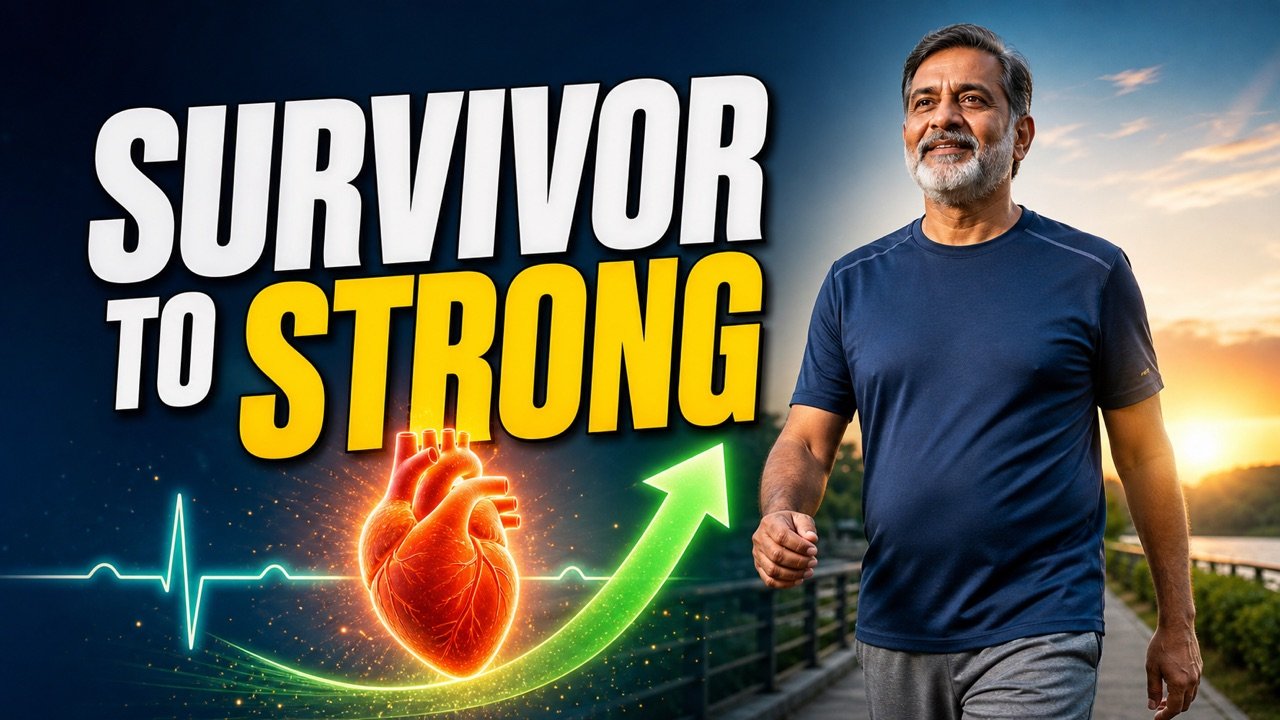
In short: Getting active again after a cardiac event is one of the best things you can do for your heart — but it must be done safely and gradually. Start with cardiac rehabilitation, build activity step by step, listen to your body, and let consistency beat intensity. Most survivors can return to a full, active life with the right, medically guided plan.
Key takeaways
- Activity is protective after a cardiac event — but build it gradually.
- Start with cardiac rehabilitation and a medically guided plan.
- Listen to your body; stop and seek help for chest pain, severe breathlessness or dizziness.
- Consistency beats intensity.
- Active living is more than the workout — move more all day.
One of the most inspiring stories on the HHIF channel is of a heart attack survivor who went on to run marathons. It captures a truth that surprises many patients: a cardiac event does not have to be the end of an active life — for many people, it becomes the start of the most active, intentional chapter yet. If you are wondering whether you will ever feel strong, capable and confident in your body again, this article is your encouragement and your safe, step-by-step plan.
This article draws on the Heart Health India Foundation discussion From Heart Attack Survivor to Marathon Runner: Dhananjay’s Story. New to these topics? Start with our guide to understanding heart health.
Why being active is one of the best things you can do
After a heart attack, bypass or stent, fear often makes people freeze: they worry that any exertion might trigger another event, so they sit still and shrink their lives. This is understandable but counterproductive. Appropriate physical activity strengthens the heart muscle, improves circulation, lowers blood pressure, improves cholesterol and blood sugar, helps weight and mood, and reduces the risk of future events. Inactivity, by contrast, weakens you and worsens nearly every risk factor. As we explain in our article on the sedentary lifestyle and heart disease, too much sitting is itself a danger to the heart.
Active living is not only about formal exercise. It is a whole approach to daily life — walking more, sitting less, staying engaged and mobile — that keeps heart patients stronger and more independent for longer.
Start with cardiac rehabilitation
The safest and most effective way to return to fitness is through cardiac rehabilitation, a supervised programme where physiotherapists and exercise specialists build an individualised plan, monitor you as you progress, and teach you what safe exertion feels like. Rehab does something powerful: it replaces fear with confidence. Patients who once panicked at a flight of stairs learn, with professionals at their side, that their hearts can be trusted again.
If a formal programme is not available near you, ask your cardiac team for a structured written plan, and read our guidance on safe exercise for heart patients, which covers the do’s and don’ts in detail.
The step-by-step comeback
Rebuilding fitness is a gradual progression, and each safe step makes the next one easier. Most survivors begin with short, gentle walks, increasing the distance and pace over weeks as comfort grows. From there, activity can broaden to longer walks, cycling, swimming, gentle yoga (see yoga-based cardiac rehabilitation), and, with medical clearance, light strength training. Always warm up and cool down, use the “talk test” to keep intensity moderate, and stop and seek help for chest pain, undue breathlessness, dizziness or palpitations.
The marathon-running survivors did not start by running marathons. They started with a single walk around the block, then two, then a kilometre — building over months and years, always under guidance. Whatever your starting point, the principle is the same: consistency beats intensity, and the best activity is the one you will keep doing.
Active living beyond the workout
For heart patients, the goal is not only a daily exercise session but an active lifestyle woven through the whole day: taking the stairs, walking to nearby shops, gardening, playing with grandchildren, standing and moving regularly rather than sitting for hours. These everyday movements add up to real protection and keep you strong and independent. Active living also lifts mood and reduces the anxiety and low confidence that often follow a cardiac event — body and mind heal together, as we discuss in the mind–heart connection.
Listening to your body and staying safe
Returning to fitness safely means learning your body’s signals. Ordinary muscle tiredness and a faster heartbeat during activity are fine; chest pain, severe breathlessness, dizziness, cold sweats or an irregular pounding heartbeat are signals to stop and seek medical advice. Take prescribed medicines reliably, stay hydrated, avoid extreme heat or cold, and don’t exercise when unwell. Build in rest days — your heart and muscles get stronger during recovery, not only during effort. If you have a device such as a pacemaker or specific restrictions, follow your cardiologist’s personalised guidance.
Setting goals that build momentum
Recovery motivation thrives on clear, achievable goals, and the way you set them matters. Rather than a vague aim to “get fit,” choose specific, controllable targets that build on each other: a ten-minute walk daily this week, fifteen next week; managing a flight of stairs without stopping; returning to a favourite activity by a certain month. Track your progress simply, and celebrate the milestones, because each one is real evidence of a stronger heart and a more confident you. Notice the non-scale, non-distance victories too — more energy, better sleep, less breathlessness on everyday tasks, a brighter mood. These reflect genuine cardiovascular improvement even on days the numbers don’t move much. Expect plateaus and setbacks; they are a normal part of any comeback, not a sign of failure. When a setback comes — an illness, a busy stretch, a dip in motivation — return gently to your plan rather than abandoning it. Over months, this patient accumulation of small, repeated efforts is exactly how survivors go from a tentative first walk to a vigorous, active life. Ambition is wonderful; just climb to it one safe, satisfying step at a time, ideally with the guidance of a cardiac rehabilitation team and the encouragement of people who have made the same journey.
What the research says
According to PubMed, physical activity is powerfully protective. A systematic review and harmonised meta-analysis of accelerometer-measured activity (Ekelund and colleagues, BMJ, 2019) found that higher levels of physical activity of any intensity, and less sedentary time, were associated with a substantially lower risk of premature death, with the steepest benefit as inactive people became even modestly more active. And as noted in our recovery article, the Cochrane review of exercise-based cardiac rehabilitation (Anderson and colleagues, J Am Coll Cardiol, 2016) showed reduced cardiovascular mortality and hospital admissions. The message for survivors: moving more, safely, genuinely extends and improves life.
Overcoming the fear that keeps survivors still
For many survivors, the biggest barrier to activity is not the body but the mind — a deep fear that exertion will cause another event. This fear is understandable and deserves compassion, not dismissal. The antidote is graded, supervised exposure: doing a small amount of activity, safely, and discovering that your heart copes; then a little more. This is precisely what cardiac rehabilitation provides, with professionals monitoring you and reassuring you at each step. Confidence is rebuilt the same way fitness is — gradually, through repeated safe experience.
It also helps to reframe the goal. You are not trying to prove anything or return instantly to your old self; you are gently teaching your body and mind that movement is safe and good. Celebrate small wins — a longer walk, easier stairs, more energy — because these are real markers of a stronger heart. Bring a walking companion for safety and motivation, and keep your cardiac team informed of your progress.
Active living as a whole-life habit, not a chore
Sustainable fitness after a cardiac event is less about formal workouts and more about an active way of living. Weave movement into your day: walk to nearby errands, take the stairs, garden, play with grandchildren, stand and stretch regularly rather than sitting for hours. These everyday movements add up to substantial protection and keep you independent and strong, while feeling far less like a burden than a rigid exercise regimen. Pair activity with the other pillars of recovery — heart-healthy eating (heart-healthy Indian cooking), good sleep (sleep and your heart), stress care, and reliable medicines. Active living also lifts mood and eases the anxiety that often follows a cardiac event, so body and mind recover together. The aim is a life that is fuller, not smaller, than before.
What patients and caregivers ask
For most people, yes — gradual, guided activity is beneficial and protective. The key is medical clearance, a slow build-up, and ideally a cardiac rehabilitation programme. Avoid sudden intense exertion.
Appropriate, gradual exercise lowers your risk of future events rather than raising it. The danger lies in sudden, unaccustomed, intense exertion — which is exactly why supervised, step-by-step progression matters.
Some breathlessness when rebuilding fitness is expected, but new, severe or worsening breathlessness should be checked by your doctor. Cardiac rehabilitation helps you tell normal exertion from a warning sign.
Many survivors return to vigorous activity, including running, but only after building up gradually with medical clearance and guidance. Set ambitious goals, but climb to them one safe step at a time.
A common long-term target is about 150 minutes of moderate activity per week, plus reducing sitting time — but your safe level is individual. Build up gradually and follow your cardiac team’s advice.
The bottom line for survivors and families
If you take one message from this article, let it be this: a cardiac event is not the end of an active life — for very many survivors, it becomes the start of the strongest, most intentional chapter yet. The fear of moving is real and deserves compassion, but it is also the thing most worth overcoming, because appropriate, gradual activity is one of the most powerful medicines available for your heart. Begin gently, ideally through cardiac rehabilitation, build confidence one safe step at a time, and weave active living into your whole day rather than relying on a single workout. Pair movement with heart-healthy eating, good sleep, stress care and reliable medicines, and listen to your body’s signals along the way. For caregivers, the role is to encourage and accompany rather than over-protect, supporting growing independence as strength returns. Progress will not be perfectly linear — expect good days and harder ones — but the direction, with patience and guidance, is toward a fuller life, not a smaller one. The survivor who runs a marathon and the one who simply walks comfortably to the market each morning share the same victory: they refused to let fear shrink their lives, and they rebuilt their strength safely, step by step.
References (peer-reviewed)
Sources retrieved from PubMed:
Ekelund U, Tarp J, Steene-Johannessen J, et al. Dose-response associations between accelerometry measured physical activity and sedentary time and all cause mortality: systematic review and harmonised meta-analysis. BMJ. 2019;366:l4570.
Anderson L, Oldridge N, Thompson DR, et al. Exercise-Based Cardiac Rehabilitation for Coronary Heart Disease: Cochrane Systematic Review and Meta-Analysis. J Am Coll Cardiol. 2016;67(1):1–12.
Join the HHIF Heart Health Community
Rebuilding your strength is far more motivating when you are cheered on by people who have done it themselves. You don’t have to find your way back to fitness alone.
Heart disease is India’s number one killer, and too many survivors give up activity out of fear. That’s why patient communities matter: they share safe, real-world guidance and the encouragement that keeps you going.
The Heart Health India Foundation (HHIF) is India’s first patient-led heart health organisation. Members get real-time guidance from cardiologists and physiotherapists, myth-busting content, habit-building challenges, webinars and resources, and supportive circles such as Fitness After Surgery. Joining takes about two minutes, connects you to our WhatsApp and Facebook communities, and is 100% free, forever.
Join the HHIF Heart Health Community today »
Medical disclaimer
This article is for general education and awareness and is not a substitute for professional medical advice. Always consult a qualified doctor about your own heart health and before starting, stopping or changing any medication. If you or someone near you may be having a heart attack or other medical emergency, seek emergency care immediately.
Related reading from Heart Health India Foundation
- Safe exercise for heart patients
- When and how to start activity after heart surgery
- How to start a safe, progressive fitness routine
- Why consistency matters more than intense workouts
- Understanding heart health: the basics