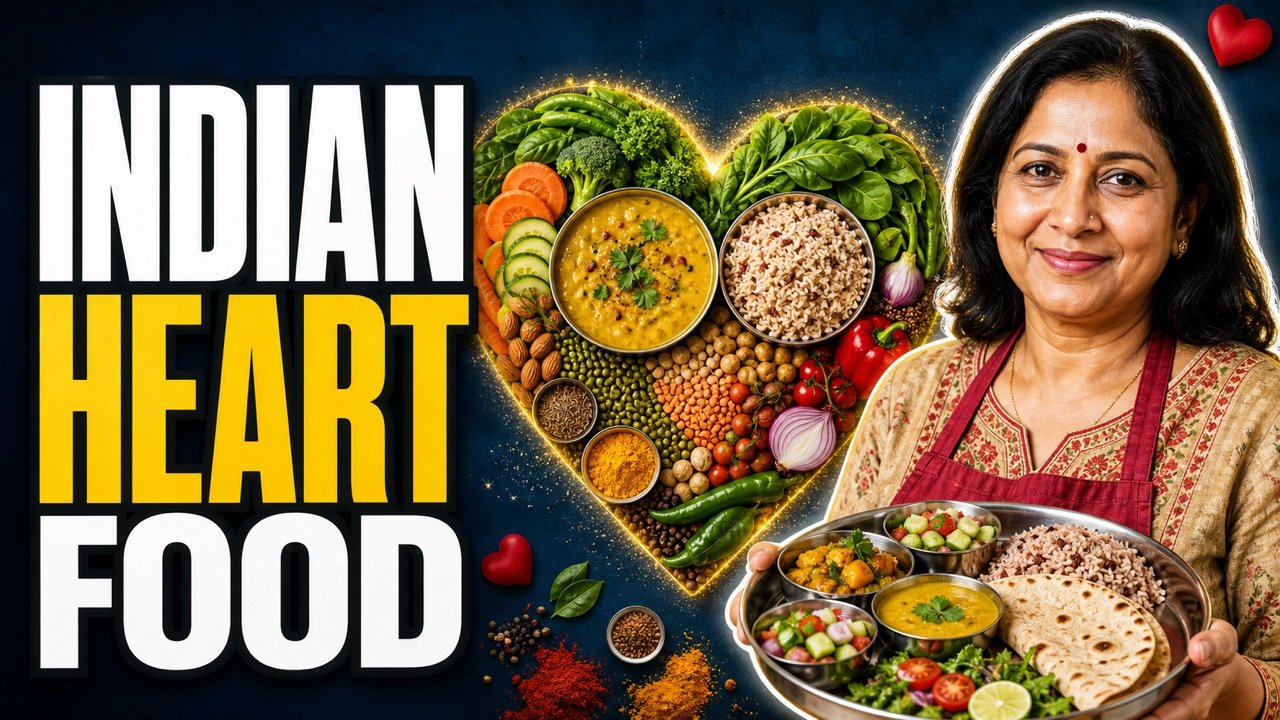
In short: Heart-healthy Indian cooking isn’t about bland, boiled food. Traditional Indian cuisine — vegetables, dals, whole grains and spices — is already close to ideal. The fixes are a few modern excesses: too much oil, too much salt, too much sugar and refined flour, and oversized portions. Smart swaps — less oil and no trans fats, less salt rebuilt with spices, whole grains over maida, and a vegetable-heavy thali — protect your heart while keeping food flavourful and familiar.
Key takeaways
- A typical Indian thali is already close to heart-healthy — just tilt it in the right direction.
- Use less oil, avoid reused oil and trans fats (vanaspati, packaged bakery items).
- Cut salt gradually and rebuild flavour with spices and herbs.
- Swap refined flour (maida) and polished grains for whole grains and millets.
- Fill half your plate with vegetables; keep fried items and sweets occasional.
There is a common myth that eating for your heart means giving up everything delicious and surviving on bland, boiled food. Nothing could be further from the truth. Traditional Indian cooking, with its vegetables, lentils, whole grains and spices, can be wonderfully heart-friendly — the challenge lies in a few modern habits: too much oil, too much salt, too much sugar and refined flour, and oversized portions. With smart, simple swaps, you can protect your heart while keeping your food flavourful and culturally familiar. This guide shows how heart-healthy Indian cooking works in practice.
This article draws on the Heart Health India Foundation expert discussion Prioritising Heart Health in Indian Cooking. New to these topics? Start with our guide to understanding heart health.
What makes a diet heart-healthy
A heart-protective diet is built on a simple foundation: more whole, plant-rich foods and less of the processed, fried, sugary and salty extras. That means plenty of vegetables and fruit, whole grains, dal and legumes, nuts and seeds in moderation, and healthy fats, with limited saturated and trans fats, added sugar, refined carbohydrates and salt. This pattern improves cholesterol, blood pressure, blood sugar and weight all at once. The good news is that a typical Indian thali is already close to this ideal — the key is to tilt it in the right direction.
Smarter fats and cooking oils
Fat is where many Indian kitchens unknowingly add heart risk. The aim is to reduce the total quantity of oil and to avoid the worst fats. Cut back on deep-frying and reusing oil repeatedly, which generates harmful compounds. Strictly limit vanaspati (partially hydrogenated fat) and heavily processed bakery and packaged snacks, which can contain trans fats — the most harmful type for the heart. Use oil with a light hand: measure it rather than pouring freely, favour cooking methods like sautéing, steaming, grilling, roasting and pressure-cooking over deep-frying, and use a moderate amount of healthier oils. Nuts, seeds and limited use of oils provide the beneficial fats your heart actually wants.
Cutting salt without losing taste
Excess salt raises blood pressure, a major heart and stroke risk, and much of our salt comes from pickles, papads, namkeen, processed and packaged foods, and added table salt. Reduce these gradually — taste buds adjust within a few weeks. Build flavour instead with spices, herbs, ginger, garlic, lemon, tamarind and roasted seasonings, which India’s cuisine offers in abundance. Be wary of hidden salt in sauces, ready mixes and processed foods, and check labels where you can. For people with high blood pressure or heart failure, careful salt control is especially important.
Taming sugar and refined carbohydrates
Sweets, sugary drinks, and refined flour (maida) products spike blood sugar and triglycerides and promote weight gain and fatty changes that harm the heart. Treat mithai, biscuits, packaged juices and sugary tea as occasional rather than daily, and shift toward whole grains — whole wheat, millets like bajra, jowar and ragi, brown rice and oats — which add fibre and steadier energy. Fibre from whole grains, legumes, vegetables and fruit also helps lower cholesterol, making it a quiet hero of heart-healthy Indian cooking.
Practical swaps and portion sense
Small changes compound powerfully. Choose whole grains over refined; add an extra vegetable to every meal; make dal and legumes a regular protein source; snack on fruit, roasted chana or a few nuts instead of fried namkeen; grill or roast instead of deep-frying; and use low-fat dairy where suitable. Mind portions — even healthy food in excess adds weight — and slow down while eating. Cook more at home, where you control the oil, salt and sugar, and treat eating out and rich festive food as enjoyable exceptions rather than the norm. Heart-healthy eating is not about a perfect day; it is about the pattern across weeks and months.
Building a heart-healthy thali
A wonderful way to picture heart-healthy Indian eating is to imagine an ideal thali. Fill half of it with vegetables — a generous sabzi, a salad or raita, and perhaps a vegetable-rich dal — so that plants form the foundation of the meal. Devote a quarter to whole grains: a couple of whole-wheat rotis, millet bhakri, or a modest portion of brown or hand-pounded rice rather than a mountain of refined white rice. Use the remaining quarter for protein — dal, beans, chana, paneer in moderation, curd, eggs, or lean fish or chicken if you are non-vegetarian. Add a small amount of healthy fat through the cooking oil, a few nuts, or seeds, used with a light hand. Keep fried accompaniments, papads and pickles as occasional rather than default. End with fruit instead of mithai most days. This simple template keeps meals satisfying, culturally familiar and naturally balanced for the heart, without any need for exotic or expensive “superfoods.”
Navigating festivals, weddings and eating out
Indian social life revolves around food, and festivals, weddings and restaurant meals can feel like minefields for anyone trying to eat well. The key is balance and strategy rather than deprivation or guilt. You do not need to refuse every sweet or fried delicacy; rather, enjoy modest portions of your favourites mindfully, and balance an indulgent occasion with lighter, vegetable-rich meals before and after. At buffets and feasts, survey the options first, fill your plate with vegetables and lighter dishes, take smaller servings of the richest items, and eat slowly so you notice fullness. Stay hydrated with water rather than sugary drinks, and be cautious with alcohol. When eating out regularly, favour grilled, roasted, steamed and tandoori options over deep-fried ones, ask for less oil or cream where possible, and watch portion sizes. One indulgent meal will not undo your health; it is the everyday pattern, sustained kindly over time, that shapes your heart.
Involving the whole family
Heart-healthy cooking is far easier and more joyful as a household habit than a lonely restriction. When the whole family eats the same wholesome food, no one feels singled out, and children absorb lifelong healthy patterns by example. Involve family members in planning and preparing meals, experiment together with reduced oil and salt, and discover that flavourful spices more than compensate. Gradually shift household staples — more whole grains and millets, more vegetables and dals, fewer fried and packaged snacks in the cupboard — so the healthy choice becomes the easy default for everyone. Treat the change as a positive shared journey toward energy and longevity rather than a joyless diet. Cooking and eating well together not only protects every family member’s heart; it also strengthens the bonds and traditions that make food such a meaningful part of Indian life. A heart-healthy kitchen is, ultimately, an act of care for the people you love.
Frequently Asked Questions
Rather than fixating on one “perfect” oil, focus on using less oil overall, avoiding repeatedly reused oil and trans fats (like vanaspati), and using a moderate amount of healthier oils. Variety and moderation matter most.
Ghee is high in saturated fat and is best used sparingly. Small amounts within an overall balanced, mostly plant-rich diet are generally fine for most people; the problem is large or frequent quantities.
Reduce salt gradually and build flavour with spices, herbs, ginger, garlic, lemon and tamarind. Cut back on high-salt items like pickles, papads and packaged snacks, and your taste will adjust.
Yes. Whole grains and millets provide fibre that helps lower cholesterol and steady blood sugar, making them better choices than refined flour (maida) and polished grains.
Absolutely. A vegetarian diet rich in vegetables, legumes, whole grains, nuts and fruit, with limited fried and sugary foods and sensible oil use, can be excellent for the heart.
Smart breakfasts and snacks that love your heart
Two parts of the day quietly shape heart health and often slip under the radar: breakfast and snacks. A heart-healthy breakfast sets a steadying tone for the day and need not be elaborate. Favour wholesome options such as vegetable-rich poha or upma, idli or dosa with sambar, oats or daliya, whole-grain rotis, sprouts, or curd with fruit, rather than deep-fried items, sugary cereals, white bread or sweetened drinks. Including some fibre and protein helps keep blood sugar and appetite steady, reducing the urge to snack on unhealthy foods later. A glass of water and limiting added sugar in tea or coffee are small touches that add up over time.
Snacks are where good intentions often unravel, since fried namkeen, biscuits, chips and sweets are everywhere. The solution is to keep heart-friendly options within easy reach so the healthy choice is the convenient one: fresh fruit, a handful of unsalted nuts, roasted chana, makhana, sprouts, cut vegetables, or curd. Be wary of packaged “health” snacks, which can be high in salt, sugar or unhealthy fats — read labels where you can. Mindful snacking, eating slowly and noticing genuine hunger rather than boredom or stress, also helps. By upgrading your everyday breakfasts and snacks, you improve a surprisingly large share of your daily nutrition, supporting your cholesterol, blood sugar, weight and heart without any dramatic sacrifice.
The bottom line for your kitchen and your heart
Heart-healthy Indian cooking is not about sacrifice or bland food — it is about reclaiming the naturally wholesome foundation of Indian cuisine while trimming the modern excesses of oil, salt, sugar and refined flour. Smarter fats, less salt built back with spices, more whole grains and fibre, sensible portions and more home cooking together protect cholesterol, blood pressure, blood sugar and weight, all without losing flavour or culture. The ideal thali — half vegetables, a quarter whole grains, a quarter protein, with a light touch of healthy fat — is a simple, satisfying template. Festivals and feasts can be enjoyed in balance, and the whole family benefits when healthy eating becomes a shared household habit rather than a lonely restriction. For patients, caregivers and people at risk alike, the everyday pattern is what matters. A heart-healthy kitchen is, in the end, a daily act of love for yourself and the people you feed.
Join the HHIF Heart Health Community
Cooking for your heart is easier and more enjoyable with recipes, tips and a community sharing the journey. You don’t have to overhaul your kitchen alone.
Heart disease is India’s number one killer, and diet misinformation — fad diets, miracle oils, conflicting advice — is everywhere. That’s why patient communities matter: they offer reliable, expert-backed, India-specific guidance and shared encouragement.
The Heart Health India Foundation (HHIF) is India’s first patient-led heart health organisation. Members get real-time guidance from cardiologists and dietitians, myth-busting content, practical food challenges, webinars and resources, and focused circles such as Nutrition & Cholesterol. Joining takes about two minutes, connects you to our WhatsApp and Facebook groups, and is 100% free, forever.
Join the HHIF Heart Health Community today »
Medical disclaimer
This article is for general education and awareness and is not a substitute for professional medical advice. Always consult a qualified doctor about your own heart health and before starting, stopping or changing any medication. If you or someone near you may be having a heart attack or other medical emergency, seek emergency care immediately.
Related reading from Heart Health India Foundation
- Hidden salt sources in everyday Indian foods
- Why reducing salt is essential for heart health
- How to read Indian food labels correctly
- Good fats vs bad fats, explained
- Understanding heart health: the basics