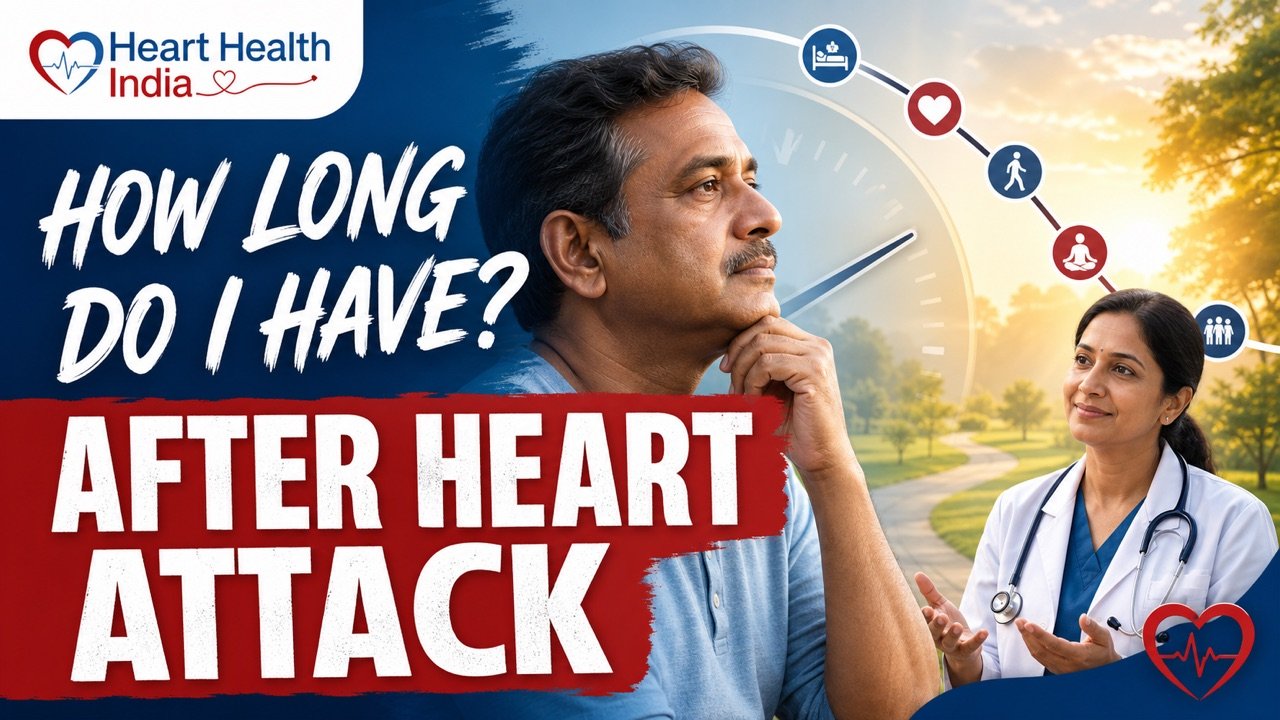
The Story of Arjun Mehta (name changed)
The question had lived inside Arjun for as long as he could remember.
Not always in words.
Sometimes it appeared as a quiet thought while watching his friends play cricket under the blazing Hyderabad sun.
Sometimes it came when he climbed a flight of stairs and had to stop halfway while everyone else continued without noticing.
Sometimes it arrived late at night, when the house was silent and the future felt louder than usual.
But the question was always there.
“How long do I have?”
At twenty-four years old, most people are busy building their future.
They think about careers.
Relationships.
Travel.
Dreams.
Possibilities.
Arjun thought about all those things too.
But he also thought about oxygen levels, hospital reports, surgical risks, medical terminology, and the next appointment with a cardiologist.
Because Arjun had never known life without heart disease.
It was there before he understood what a heart even was.
His earliest memories of childhood are different from those of most children.
He remembers hospital corridors.
The smell of disinfectant.
The sound of machines that seemed to beep endlessly.
The worried expressions exchanged between adults who thought he wasn’t paying attention.
Children notice more than adults think.
Even when nobody explains what is happening, they understand that something is different.
Something is wrong.
Something is serious.
He did not fully understand congenital heart disease.
But he understood enough to know that his body followed different rules.
At school, he often wondered why other children seemed to possess endless energy.
They ran.
They jumped.
They played football until sunset.
And then they did it all again the next day.
For Arjun, energy felt like a limited resource.
Like money in a wallet.
Every activity required calculation.
If he spent too much in the morning, there might not be enough left for the afternoon.
Some days he would return home exhausted from activities that seemed effortless for others.
People called him quiet.
Some called him reserved.
What they rarely understood was that fatigue can sometimes look like silence.
As he grew older, he became skilled at hiding it.
The breathlessness.
The exhaustion.
The frustration.
The disappointment.
He learned how to smile when relatives asked if he was doing well.
He learned how to say “I’m fine” even when he wasn’t.
Most patients eventually become experts in appearing normal.
Not because they are normal.
Because they are tired of explaining why they are not.
The years passed.
There were surgeries.
Procedures.
Follow-up visits.
Investigations.
Medical files that grew thicker with every passing year.
Each doctor added another chapter.
Each report added another question.
And each answer seemed to create two new uncertainties.
One consultation remains vivid in his memory.
The cardiologist was speaking carefully.
The way doctors speak when they know the conversation matters.
There was discussion about a Fontan-related intervention.
Possible options.
Possible outcomes.
Possible risks.
Possible benefits.
And then a number entered the conversation.
Five percent.
A chance of success.
Five percent.
The number settled heavily in the room.
For a moment, everything else disappeared.
The medical explanations.
The diagrams.
The technical language.
Only the number remained.
Five percent.
What does a person do with a number like that?
Is it hope?
Or is it a warning?
Is five percent enough to take a risk?
Or too little?
Nobody teaches patients how to process probabilities.
Nobody teaches families how to make decisions when the future arrives disguised as percentages.
The search for answers continued.
Hyderabad.
Then another city.
Then another.
Even Kerala.
Each journey began with hope.
Perhaps this doctor would know.
Perhaps this hospital would have a solution.
Perhaps someone, somewhere, had seen a patient exactly like him.
He carried reports across state borders.
Repeated his story countless times.
Answered the same questions.
Listened to the same examinations.
Waited outside consultation rooms.
Looked for certainty.
But certainty remained elusive.
Different doctors had different opinions.
Different hospitals suggested different approaches.
Different experts saw different possibilities.
And after every consultation, he often returned home carrying something unexpected.
Not answers.
More questions.
Yet his own condition was not the only burden he carried.
Another story lived inside him.
A story about his father.
A story that had shaped him in ways he still struggles to explain.
His father had suffered a heart attack at a relatively young age.
At first, it did not seem catastrophic.
Life continued.
The family hoped things would improve.
But delayed treatment carries consequences.
Damage accumulates quietly.
The heart changes.
The body adapts until it can no longer adapt.
Over time, his father’s heart weakened.
The diagnosis evolved.
The risks increased.
Doctors eventually recommended a pacemaker.
The family stood at a crossroads.
The kind of crossroads that thousands of families encounter every year.
One path involved intervention.
The other involved waiting.
Thinking.
Considering.
Hoping.
Looking back now, it is easy to imagine that there was a correct answer.
But life rarely feels that simple when you are standing inside the moment.
Decisions are rarely made with perfect information.
They are made with fear.
With uncertainty.
With financial constraints.
With differing opinions.
With hope.
Sometimes with denial.
Sometimes with faith.
Sometimes with exhaustion.
The pacemaker was not implanted.
Time moved forward.
Until one day it didn’t.
His father suffered another cardiac event.
This time there was no recovery.
No second chance.
No revised treatment plan.
No follow-up appointment.
Only silence.
The kind of silence that permanently changes a family.
Years have passed since then.
Yet some memories remain untouched by time.
The empty chair.
The missing voice.
The conversations that will never happen.
And the questions.
Always the questions.
Would things have been different?
Would another decision have changed the outcome?
Could the future have been rewritten?
Nobody can answer those questions now.
Perhaps nobody ever could.
Today, when Arjun thinks about his own health, he does so through the lens of everything his family has lived through.
His father’s story.
His own story.
The uncertainty that connects them.
The fragility that connects them.
The resilience that connects them.
Some mornings he wakes up feeling grateful.
Not because life is easy.
Not because the future is guaranteed.
Not because all the answers have finally arrived.
But because he is still here.
Still working.
Still dreaming.
Still searching.
Still learning.
Still hoping.
Still showing up.
There is something profoundly courageous about continuing when certainty is unavailable.
About building a future even when the road ahead cannot be clearly seen.
And perhaps that is why patient communities matter so much.
Because medicine can explain anatomy.
Medicine can explain procedures.
Medicine can explain probabilities.
But sometimes only another patient can explain what it feels like to carry uncertainty every single day.
Only another patient understands what it means to sit across from a doctor and leave with more questions than answers.
Only another patient understands what it means to live between hope and fear.
What About You?
Have you ever spent years searching for answers?
Have you ever carried the weight of a medical decision long after it was made?
Have you ever wondered if another family somewhere is living the same story?
Have you ever felt alone because your condition is too complex for people around you to understand?
You are not alone.
Across India, thousands of patients and caregivers are navigating congenital heart disease, heart failure, cardiomyopathy, arrhythmias, surgeries, uncertainty, and hope.
Join the Community
Heart Health India Foundation was created so that no patient or family has to walk this journey alone.
By joining the community, you can:
❤️ Connect with patients and caregivers who understand your journey
❤️ Learn from lived experiences and expert sessions
❤️ Access educational resources in simple language
❤️ Share your story and hear the stories of others
❤️ Participate in advocacy and awareness initiatives
❤️ Become part of a growing movement to improve heart health in India
Join the community:
https://hearthealthindia.org/join-the-community/
Because sometimes the question is not:
“How long do I have?”
Sometimes the more important question is:“How can I make the time I have meaningful, informed, and connected with others who understand?”