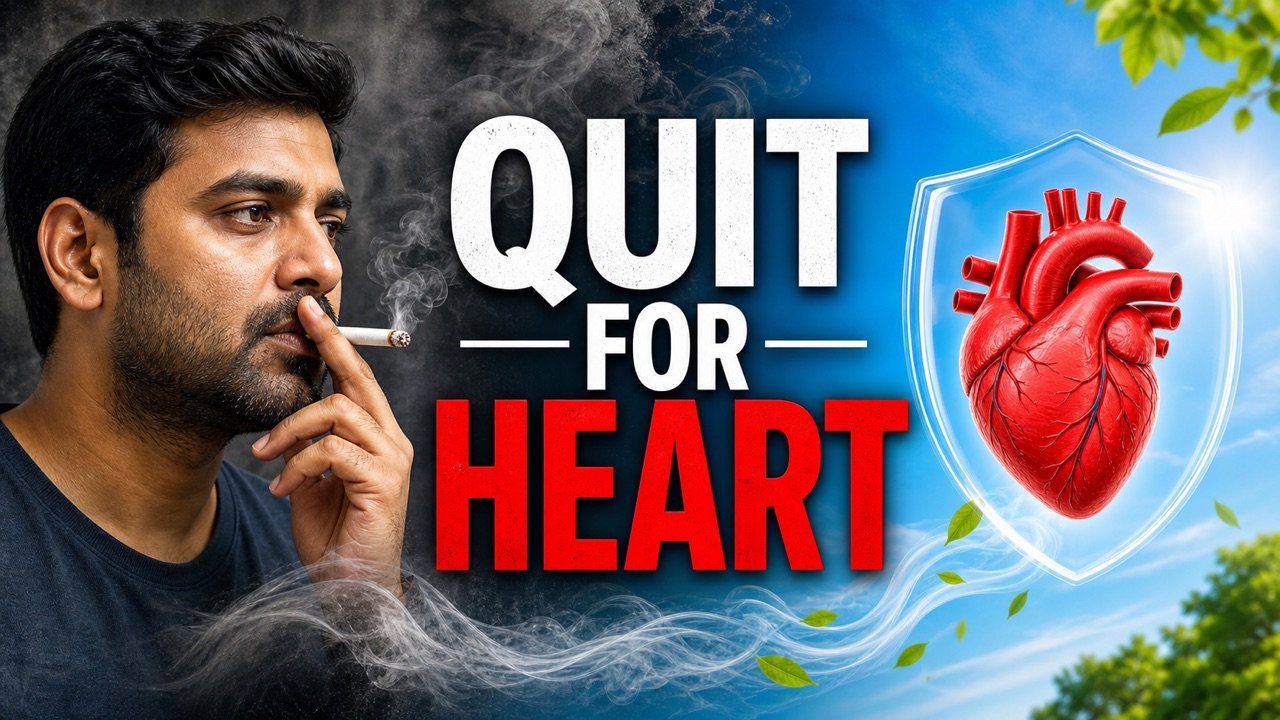
Many people still believe: “Don’t get tested until you feel something.” But heart disease does not work like that — and anyone who has lived through a cardiac event knows this truth far too well.
1. Young people often get no early warning signs
From the outside, others might say “You must have had some symptoms.” But experiencing symptoms and identifying them are two different things.
In reality:
- Early symptoms in young and mid-age adults are often subtle, confusing, or completely absent.
- Most people dismiss them as acidity, stress, lack of sleep, or fatigue from daily life.
- Very few can correctly recognize whether a sensation is cardiac or non-cardiac.
- Many do not get any warning at all.
By the time clear symptoms appear, significant damage is already done.
2. Waiting for symptoms is a dangerous gamble
When a cardiac event begins:
- You rush to a hospital.
- Treatment depends entirely on how fast you reach.
- If you’re lucky and timely, doctors can save your life and restore much of your health.
- If you reach late, the heart may weaken → leading to heart failure, long-term complications, or collapse.
Waiting for symptoms is like driving a car without servicing and expecting it not to break down in the middle of the highway.
3. Prevention works because it detects risk before harm begins
Developed health systems globally invest heavily in prevention, not just treatment. Prevention includes:
- Screening
- Annual and periodic tests
- Risk profiling
- Lifestyle corrections based on evidence
When you know your numbers early — BP, LDL-C, HbA1c, inflammation markers, genetic risks — you can act before plaque builds up and before inflammation silently damages your arteries.
4. Today’s risks come from all directions
We live in a world where multiple drivers accelerate heart disease:
- Behavioral risks: diet, sleep, stress, inactivity
- Cardio-metabolic risks: BP, diabetes, obesity
- Environmental risks: poor air quality, pollutants
- Hidden inflammation and plaque progression: often completely silent
Without testing, we remain blind to what’s happening inside.
5. See a Preventive Cardiologist — the right expert for the right job
A preventive cardiologist’s role is not to treat emergencies. Their role is to stop heart disease before it starts.
When you meet them:
- Share your full lifestyle details
- Share small and big family history
- Share old symptoms, even if they feel insignificant
- Ask what specific tests are relevant for your profile
Because no single test can show the full picture. Prevention works only when the picture is complete.
Final Thought
If you truly want to live a long, healthy life, don’t wait for symptoms. Get tested, learn your risks, and act early.
Heart disease is complex. Early action is simple. Your future self will thank you.
Keep learning, keep caring, and keep listening to your heart — even when it’s not showing symptoms.