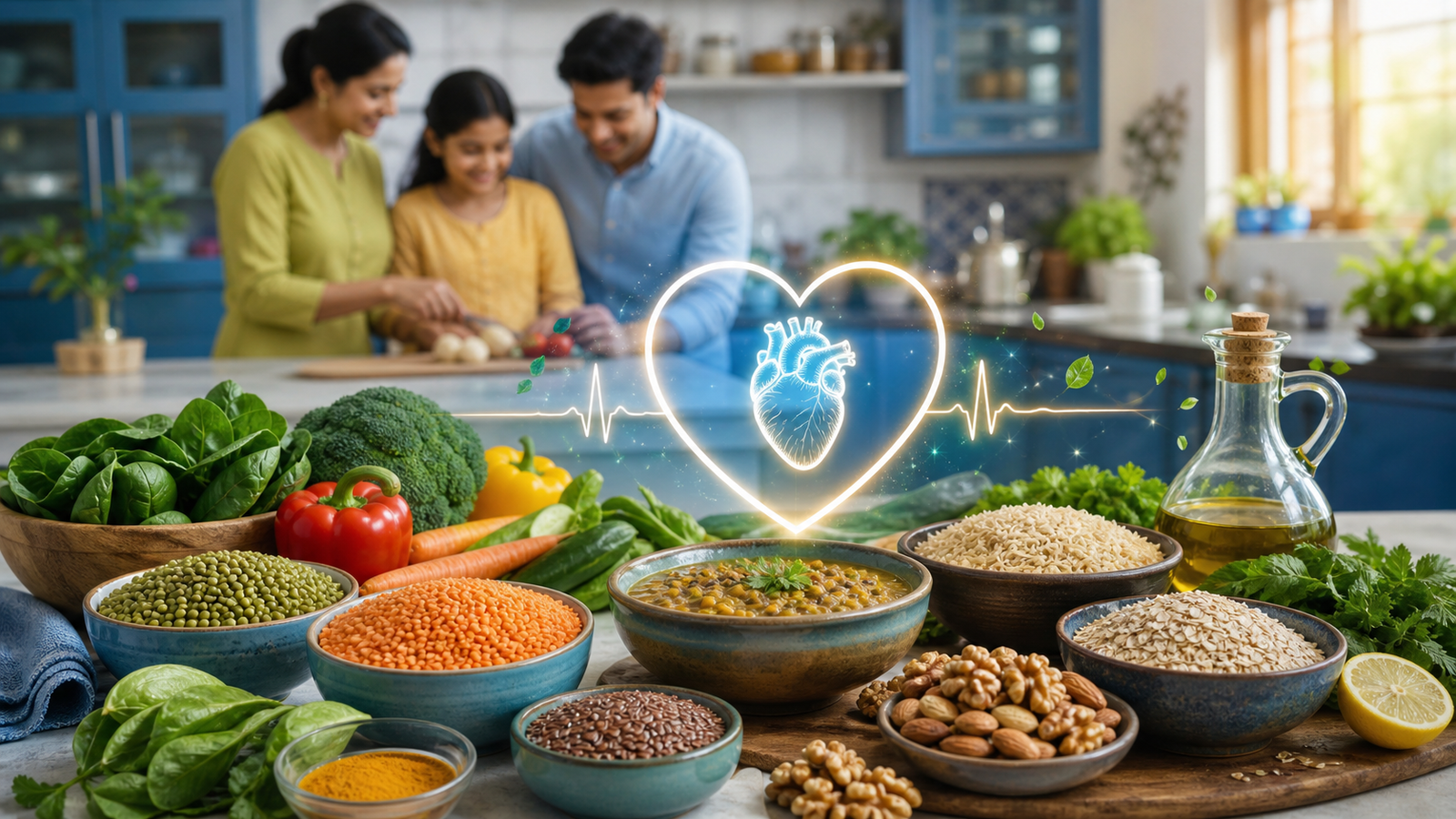
We often assume that “home food is healthy food.”
But when you look at heart health from a physiological and nutritional lens, the picture is more nuanced.
Home-cooked meals are safer than restaurant food — but not automatically heart-friendly.
Here’s why.
1. Excess oil is still excess oil — even at home
Many Indian households use 3–5 tablespoons of oil per dish.
This increases calorie load, raises triglycerides, and contributes to weight gain.
Your heart doesn’t care where the oil came from — only how much enters the system.
2. Salt levels are often underestimated
Salt is layered into dal, sabzi, rotis, raita, pickle, and papad.
One “normal” meal can quietly exceed recommended sodium limits.
High salt at home → higher BP → more strain on the heart.
3. Portion sizes can be just as large
Extra rotis, an extra bowl of rice, or heavy dinners contribute to elevated triglycerides, glucose spikes, and long-term weight drift.
Home setting doesn’t neutralize over-eating.
4. Ghee, butter, and cream are used liberally
These add saturated fats that increase LDL — the cholesterol that enters artery walls.
Cultural foods aren’t the problem; daily quantity is.
5. Tea, coffee, and sugar add-ons matter
Multiple cups of chai with sugar and full-fat milk can significantly affect lipid profiles and caloric load, even if meals are homemade.
6. Snacks prepared at home aren’t always heart-safe
Fried pakoras, mathri, namkeen, parathas, and maida-based foods carry the same risks as store-bought versions.
The correction
Home food becomes heart-healthy when it’s low on salt and oil, balanced in portion, and rich in fibre, protein, and colour.
It’s the composition, not the kitchen, that decides heart safety.